
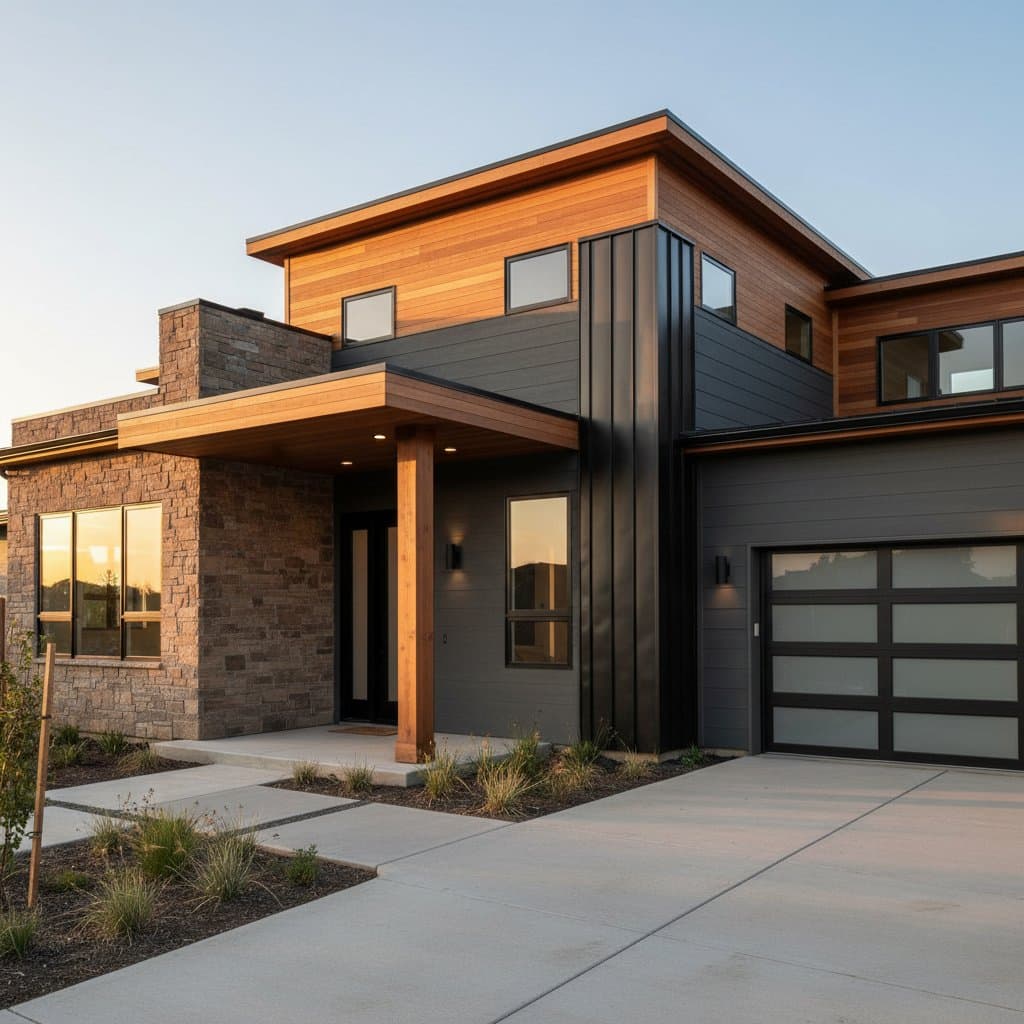
2026's Leading Siding Innovation: Mixed Materials for Enhanced Curb Appeal
Homeowners increasingly integrate diverse textures and colors to achieve distinctive facades. Mixed material siding, also known as hybrid siding, incorporates elements such as wood, fiber cement, vinyl, and metal across a unified exterior. This approach accentuates architectural features, optimizes the balance between expense and longevity, and produces personalized designs suited to regional weather conditions and building regulations. The following sections detail the components of mixed siding initiatives, budgeting and planning processes, optimal material pairings, and expectations for upkeep and functionality.
Design and Material Selection Guide
Essential Profiles and Their Applications
- Lap boards. These horizontal planks provide a classic appearance, ideal for primary wall areas.
- Board and batten. Vertical panels accented by slender battens suit gables and contemporary designs.
- Shingles or shakes. Their irregular, textured patterns work well on dormers or elevated wall sections.
- Panels. Expansive sheets crafted from fiber cement, metal, or composites deliver sleek, modern surfaces.
- Stone or brick veneer. These elements anchor lower walls or structural columns, establishing visual stability.
Material Choices: Advantages and Considerations
| Material | Advantages | Considerations |
|---|---|---|
| Vinyl | Affordable pricing, low upkeep demands, extensive color variety | Susceptible to deformation from extreme heat or physical impacts |
| Fiber Cement | Resistant to fire, dimensionally stable, receptive to painting | Substantial weight requires secure attachment methods |
| Engineered Wood | Authentic aesthetic, reduced mass compared to fiber cement | Demands sealing at all incisions and edges |
| Metal | Sleek finish, extended service life, environmentally recyclable | Prone to denting, necessitates precise flashing installation |
| Natural Wood | Inviting grain and warmth, sourced renewably | Requires periodic staining or painting applications |
| Manufactured Stone | Exceptional visual impact, robust construction | Considerable heft calls for reinforced backing |
Guidelines for Harmonious Material Combinations
Select a primary material to cover approximately two-thirds of the exposed wall surface. Employ secondary materials for highlighting gables, dormers, or entrance features. Limit combinations to no more than three distinct types per facade elevation. Ensure trim colors remain consistent across all materials to foster design cohesion.
Strategies for Trim and Accents
Trim delineates material shifts and safeguards edges from environmental exposure. Install broad trim boards at junctions to conceal seams and secure connections. When adjoining metal panels to fiber cement, incorporate hidden flashing channels beneath trim to facilitate water runoff. Position accent bands at story divisions or material transitions to correspond with window headers or floor levels, promoting proportional equilibrium.
Application Examples by Architectural Style
- Craftsman Bungalow. Apply lap fiber cement to principal walls, integrate cedar shingles in gables, and add stone veneer along the foundation.
- Modern Farmhouse. Utilize vertical board and batten on forward-facing gables alongside horizontal vinyl on lateral surfaces.
- Contemporary Residence. Alternate metal panels with fiber cement sections in varied color schemes.
- Coastal Cottage. Feature vinyl shingles above and composite clapboards below on upper and lower walls.
- Urban Infill Dwelling. Employ brick veneer on ground-level floors, fiber cement panels overhead, and metal accents around window groupings.
Comprehensive Project Preparation Steps
1. Establish Objectives and Project Boundaries
Determine if the undertaking involves complete exterior resurfacing or targeted front facade updates. Outline specific aims, including reduced maintenance needs, improved thermal efficiency, or contemporary styling. Draft a schematic of wall configurations indicating material placements. Prioritize defining the main cladding and accent zones to streamline contractor quotations.
2. Identify Qualified Contractors and Evaluate Proposals
Target installers proficient in multiple siding varieties. Request documentation of specialized manufacturer certifications. Assess proposals by overall cost, itemized material specifications, and descriptions of flashing and trim techniques. Exercise caution with unusually low estimates that omit essential steps like weather-resistive barrier renewal or sealant applications.
3. Obtain Samples, Construct Mockups, and Secure Approvals
Solicit tangible samples reflecting precise colors and textures. Numerous homeowners assemble on-site mockup sections to validate patterns and transitional trim elements. Evaluate color pairings in natural lighting conditions. Finalize approvals on all samples prior to committing to bulk material orders.
4. Prepare the Site and Manage Daily Operations
Remove nearby vegetation and relocate exterior furnishings from active areas. Arrange electrical outlets and waste container positioning. Anticipate routine sounds and particulate matter. Installation teams typically commence with demolition, followed by sheathing repairs, weather-resistive barrier application, and progressive siding installation by facade section. Conduct inspections at each stage to confirm alignment, seam intervals, and flashing integrity.
5. Perform Inspections at Key Project Phases
- Post-demolition. Examine sheathing for decay or fungal growth; replace compromised sections.
- Following weather-resistive barrier placement. Verify seamless overlaps and sealed joints.
- Upon completing initial wall. Assess reveal dimensions and attachment configurations.
- Prior to finishing coats. Confirm all seams receive sealant and trim receives full-surface priming.
- Concluding inspection. Inspect sealant uniformity, color consistency, and penetration seals.
Capture photographic evidence of each phase before releasing final compensation.
Sustaining Your Hybrid Exterior
A thoughtfully composed mixed material facade delivers aesthetic allure and structural fortitude through proper design and ongoing care. Recognize that individual materials exhibit unique aging characteristics; for instance, fiber cement retains finishes over longer periods, whereas natural wood benefits from prompt resealing. Maintain reserves of spare panels or boards for prompt fixes, labeling them by position and production batch.
Conduct yearly reviews of sealant lines, particularly at material interfaces, as solar exposure and structural shifts may widen crevices and permit moisture ingress. Ensure downspouts remain unobstructed to avert water rebound on basal areas. Employ mild brushing for cleansing, avoiding combinations of bleach and cleaning agents.
To maximize enduring performance, adopt these practices:
- Compile all manufacturer maintenance instructions into a dedicated file.
- Perform annual rinsing from roofline downward.
- Address paint or sealant repairs immediately upon detecting fissures or damage.
- Maintain a one-foot clearance between foliage and walls.
- Arrange expert evaluations every five years to assess flashing and securement elements.
This regimen ensures your exterior preserves its visual and functional excellence for years ahead.