
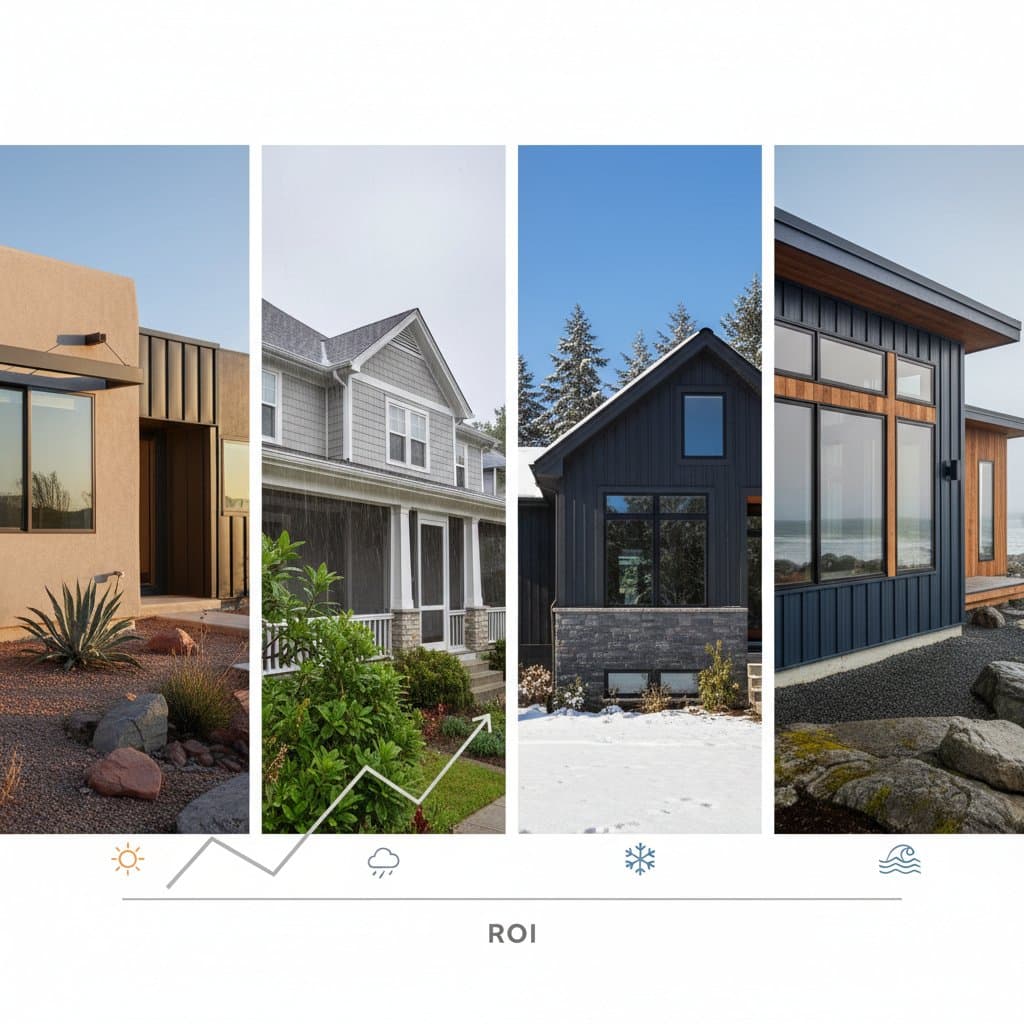
Find Best ROI Siding for Your Climate Zone in 2026
Choosing the right siding ranks among the most visible and durable decisions a homeowner can make. The best return on investment depends on how well the material fits the local climate, the available budget, and the maintenance plan. A smart match reduces long-term costs, prevents early failure, and improves curb appeal.
Style and Selection Guidance
Siding choice influences both curb appeal and weather protection. Each profile and material performs differently according to regional conditions.
Core Profiles
- Lap siding consists of horizontal boards that shed water effectively and suits moderate climates.
- Board and batten uses vertical panels with battens over seams and fits farmhouse or rustic designs.
- Shingle or shake provides a textured appearance often applied to gables as accent areas.
- Panel systems employ large sheets suited to modern or commercial style homes.
Material Options
| Material | Advantages | Limitations |
|---|---|---|
| Vinyl | Low cost, wide color range, minimal upkeep | Can crack in cold temperatures or fade under intense UV exposure |
| Fiber cement | Fire resistant, stable under heat, holds paint well | Heavy, requires specialized cutting tools and periodic repainting |
| Engineered wood | Natural appearance, lighter than fiber cement | Needs sealing at cuts and remains sensitive to standing water |
| Metal | Long service life, pest proof, recyclable | Can dent under impact and produces more noise during rain |
| Natural wood | Classic appearance, renewable source | Requires frequent sealing and repainting |
Mixing Rules for Balanced Facades
Apply one dominant texture and one accent texture. Fiber cement lap siding on main walls paired with cedar look shingles in the gables offers a common example. Keep trim color one or two shades lighter or darker than the field color to create contrast without visual clutter.
Climate Specific Recommendations
- Cold snowy zones benefit from insulated vinyl or fiber cement installed over proper underlayment to limit heat loss and ice buildup.
- Hot humid zones favor metal or fiber cement because these materials resist rot and termite damage.
- Dry windy zones perform well with engineered wood or heavy gauge steel that withstands wind uplift and grit abrasion.
- Coastal zones require PVC or coated aluminum to avoid salt corrosion.
Step by Step Project Preparation
- Define goals and scope. Decide whether the project targets resale value, energy efficiency, or reduced maintenance. List problem areas such as peeling paint or warped boards. Establish a budget range before requesting estimates.
- Shortlist contractors. Obtain at least three bids from licensed installers. Verify insurance coverage, manufacturer training credentials, and recent references. Compare flashing methods, trim materials, and cleanup procedures in addition to price.
- Review samples and mockups. Request full size samples mounted on the wall. Outdoor light alters color perception. Approve layout lines, corner details, and vent trims before work begins.
- Prepare the site. Clear landscaping and furniture from the perimeter. Ensure power access and dumpster space. Cover air conditioning units and delicate plants. Confirm parking arrangements and daily work hours with the crew.
- Conduct quality checks. Verify proper flashing and fastener placement at each milestone. Walk the completed site with the contractor before final payment. Confirm tight joints, aligned panels, and sealed penetrations. Document remaining items in writing.
Ongoing Care for Installed Siding
Quality siding protects and enhances a home for decades when maintained consistently. Clean surfaces with soft brushes and mild detergent. Avoid pressure washers above 1500 psi and never use bleach or abrasive pads. Keep gutters clear so runoff does not streak or saturate panels.
Climate appropriate selection, correct installation, and regular care together determine long term return on investment. Vinyl often provides the strongest short term financial return in moderate zones. Fiber cement and metal deliver superior durability in harsh weather regions. Engineered wood serves midrange budgets when properly sealed and offers a warm natural appearance.