
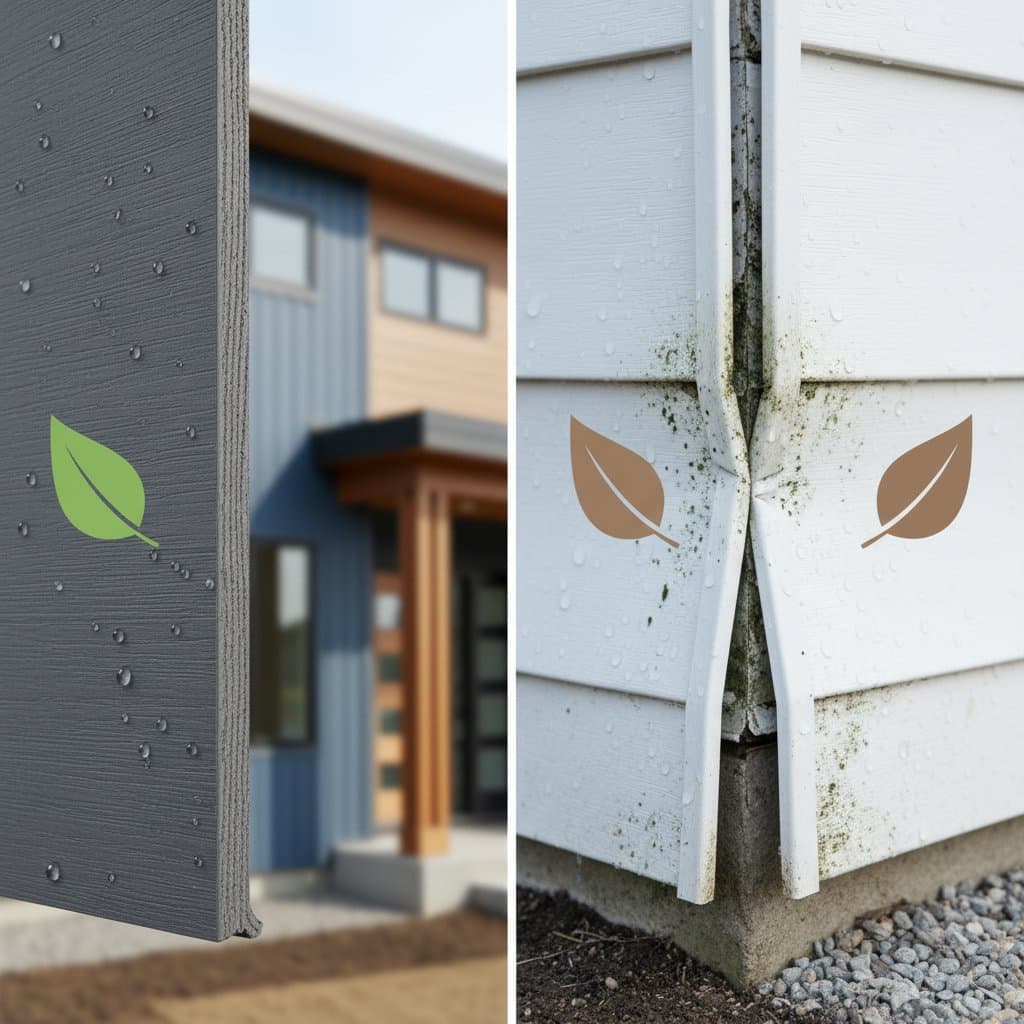
Why Fiber Cement Outperforms Vinyl in Mold Resistance
Mold on a home exterior damages paint, compromises siding integrity, and diminishes property value. Selecting between fiber cement and vinyl siding significantly influences moisture management and mold prevention. Fiber cement excels due to its inherent composition, precise installation techniques, and performance in humid environments.
Evaluating Costs and Return on Investment
Project overview:
- Scope: Complete siding replacement
- Timeline: 7 to 14 days for a standard home
- Expertise needed: Professional installation team
- Cost per square foot: $10 to $14, including labor
Factors influencing expenses include removing existing siding, addressing sheathing issues, handling multi-story access, incorporating intricate trim, and accounting for local labor and delivery fees. A typical mid-sized home project totals $25,000 to $40,000, while targeted repairs cost less. Vinyl installation ranges from $6 to $8 per square foot, yet it yields only 65 to 70 percent return upon resale. Fiber cement achieves 75 to 80 percent recovery, as prospective buyers value its robustness, fire safety, and minimal mold susceptibility. In regions with high humidity, these advantages amplify through reduced upkeep expenses.
Investing in fiber cement initially leads to fewer interventions, extended surface longevity, and enhanced market confidence.
Understanding Material Properties and Options
Fiber cement consists of cement, sand, and cellulose fibers, forming a dense, rigid, non-porous material when properly sealed. Vinyl, derived from PVC plastic, expands and contracts with temperature fluctuations, potentially creating entry points for water.
Key property comparison:
| Property | Fiber Cement | Vinyl |
|---|---|---|
| Core Material | Cement composite | PVC plastic |
| Fire Resistance | Non-combustible | Melts and deforms |
| Mold Resistance | Excellent | Moderate to poor |
| Maintenance | Repaint every 10-15 years | Clean twice yearly |
| Moisture Absorption | Very low | Can trap condensation |
Fiber cement effectively repels surface and subsurface moisture. Although vinyl appears waterproof, it often conceals vapor buildup behind panels, fostering hidden mold development. Opt for compatible textures with sealed transitions, including back flashing and permeable barriers. Steer clear of uneven overlaps or voids that accumulate condensation.
Select fiber cement to establish a secure, impermeable barrier; reserve vinyl for scenarios constrained by budget or schedule.
Enhancing Exterior Aesthetics
Effective curb appeal arises from balanced proportions, rich color applications, and seamless joints. Fiber cement accepts paint uniformly, supporting bold hues without uneven fading. Vinyl integrates color throughout but degrades under prolonged sun exposure.
Maintain moderate color contrasts at edges and accents. Apply lighter shades in sun-intensive areas to minimize thermal gain. Accentuate doorways with precise trim and strategic illumination. Ensure house numbers and hardware align flush to prevent debris-trapping crevices.
A meticulously finished fiber cement exterior conveys reliability and meticulous upkeep, qualities that resonate with potential buyers.
Ensuring Proper Installation to Mitigate Risks
Installation precision determines moisture resilience for both materials. Fiber cement requires minimal joint spacing, thorough flashing, and robust sealing. Vinyl relies on loose fastening, which accommodates airflow but exposes vulnerabilities to driven rain.
Potential pitfalls to address:
- Inadequate or offset flashing around openings
- Unsealed end joints
- Insufficient weather-resistant barriers
- Unsecured panels in windy conditions
Post-installation, prioritize site management. Fiber cement fabrication generates silica dust, necessitating vacuum-equipped tools and protective coverings. Thorough debris removal maintains community relations and safeguards adjacent surfaces.
Engage contractors experienced in fiber cement protocols to minimize rework and uphold manufacturer warranties.
Sustaining Performance Through Routine Care
Annual or biannual cleaning of fiber cement with gentle soap and a soft brush prevents mold establishment. Refrain from high-pressure washing in proximity. Evaluate sealant integrity periodically and refresh paint as needed. Vinyl demands regular attention, as electrostatic properties draw particulates.
Routine maintenance guide:
- Gently wash exteriors in spring
- Inspect coatings and seals biennially
- Repair damaged trim immediately
- Maintain clearance from ground cover at base
Regular upkeep prolongs durability and safeguards investment value.
Choosing Reliable Contractors
Identify contractors through verified references and portfolios showcasing fiber cement projects. Request detailed bids outlining material grades, labor breakdowns, and timelines. Verify licensing, insurance, and adherence to local codes. Prioritize firms offering warranties on both products and workmanship.
Compare at least three proposals, focusing on transparency in cost inclusions and exclusion of hidden fees. Schedule site visits to assess communication and professionalism.
Adapting to Daily Home Life
Fiber cement withstands everyday exposures like rain, pollen, and minor impacts without compromising appearance. In variable weather, its stability reduces seasonal adjustments. Homeowners appreciate the low-effort routine, allowing focus on interior comforts rather than exterior worries.
Over time, this choice fosters peace of mind, knowing the siding contributes to a resilient, attractive home that endures environmental challenges.