
Fiber Cement Recoups Value in Storms Where Vinyl Falls Short
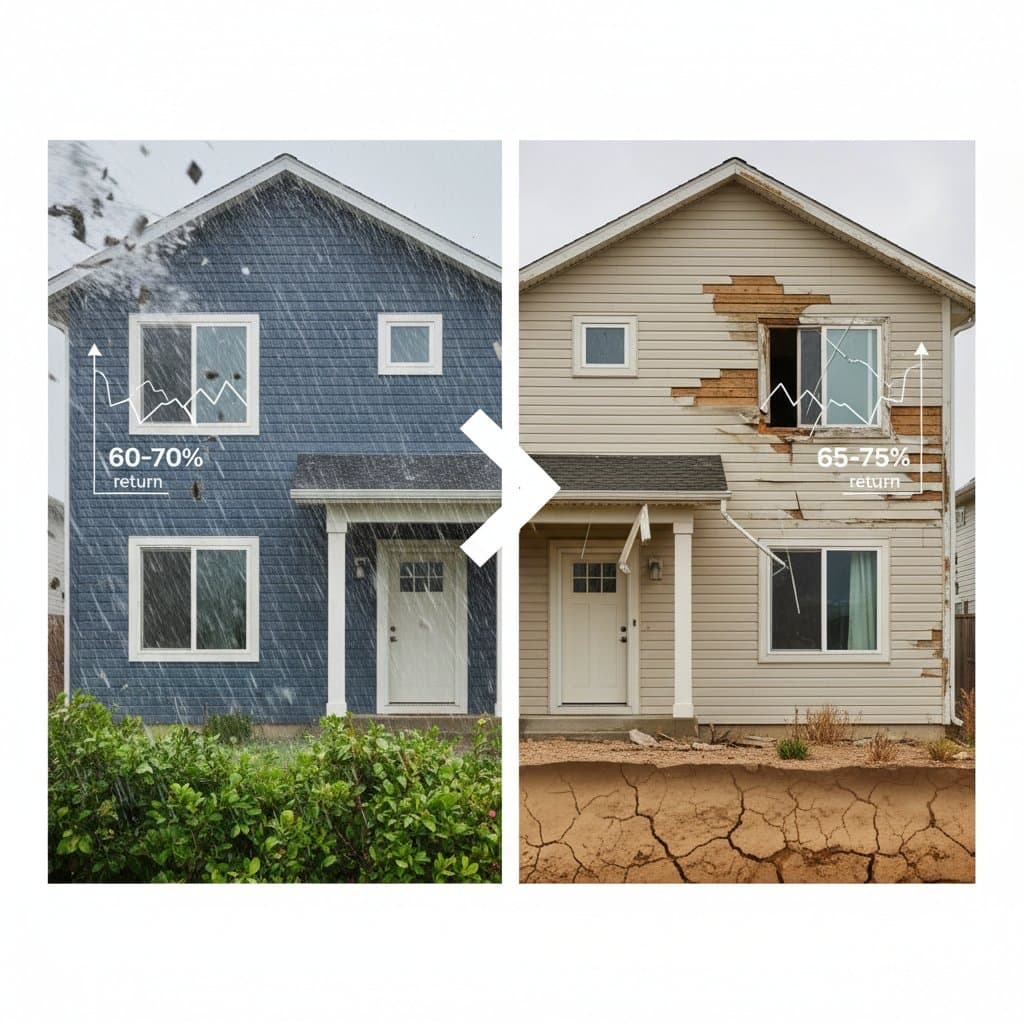
Homeowners facing severe weather need siding that balances strength, appearance, and cost. Fiber cement often recovers more of its original investment after storms, while vinyl shows faster wear under high winds and repeated impact.
Material Performance in Extreme Conditions
Fiber cement resists wind driven rain and hail better than vinyl because of its density and thickness. Vinyl expands and contracts with temperature swings, which can loosen fasteners over time.
- Align horizontal lap joints with window heads or trim lines to reduce water entry points.
- Use corner boards at least three inches wide for visual framing and added edge protection.
- Keep soffit and fascia colors neutral to reduce maintenance mismatches after repairs.
Fiber cement accepts deep color coatings without fading quickly. Vinyl colors are factory set, with lighter tones performing best in direct sun.
A clear entry path with balanced lighting and visible house numbers increases perceived value. Matching trim materials between door and siding avoids uneven texture contrast.
Consistent lines and balanced color depth increase buyer confidence and photo appeal without adding unnecessary cost.
Installation Quality and Risk Control
Proper installation defines long term performance. Wind lift failures and water leaks usually stem from skipped flashing or misaligned fasteners.
- Install a full weather resistant barrier behind all siding.
- Use corrosion resistant nails driven into studs, not sheathing.
- Flash all window and door openings with flexible flashing tape.
- Maintain a one inch clearance from roofing and horizontal surfaces.
- Keep job sites clean to avoid debris damage and neighborhood complaints.
Quality control during installation prevents callbacks and protects warranty coverage. Poor workmanship can cut siding life in half.
Maintenance and Longevity
Both materials benefit from routine inspection, though their upkeep differs.
Fiber cement requires a soft brush with mild detergent followed by a gentle rinse. Vinyl needs only a low pressure hose rinse and avoidance of abrasive tools.
Inspect twice yearly for cracks, caulk gaps, and loose panels. Repaint or touch up fiber cement every five years as needed. After storms, check corners and fastener heads.
Seal any exposed fiber cement cuts immediately. Clean vinyl joints to prevent algae buildup. Replace damaged trim before moisture spreads.
Fiber cement warranties often span several decades but require proof of proper installation and paint maintenance. Vinyl warranties cover color fade and impact cracking but exclude storm debris damage.
Regular inspection and cleaning extend siding life and preserve resale strength.
Contractor Selection and Bidding
Choosing a capable installer ensures consistent results. Request multiple written bids with identical scope to compare fairly.
Include siding type and thickness, moisture barrier and flashing materials, trim and caulking details, waste disposal plan, and permit handling in every scope.
Verify license and insurance status. Ask for recent local references. Compare per square foot labor costs, not just totals.
Use milestone based payments that include a deposit, mid point review, and final inspection. Avoid full payment before completion.
A detailed written contract with clear payment triggers reduces risk and ensures project accountability.
Matching Material to Climate and Budget
Both fiber cement and vinyl can serve well under tough weather when matched correctly to climate and budget. Fiber cement offers a longer lifespan and stronger buyer appeal in coastal or high wind zones. Vinyl remains practical where maintenance simplicity and cost control are priorities.