
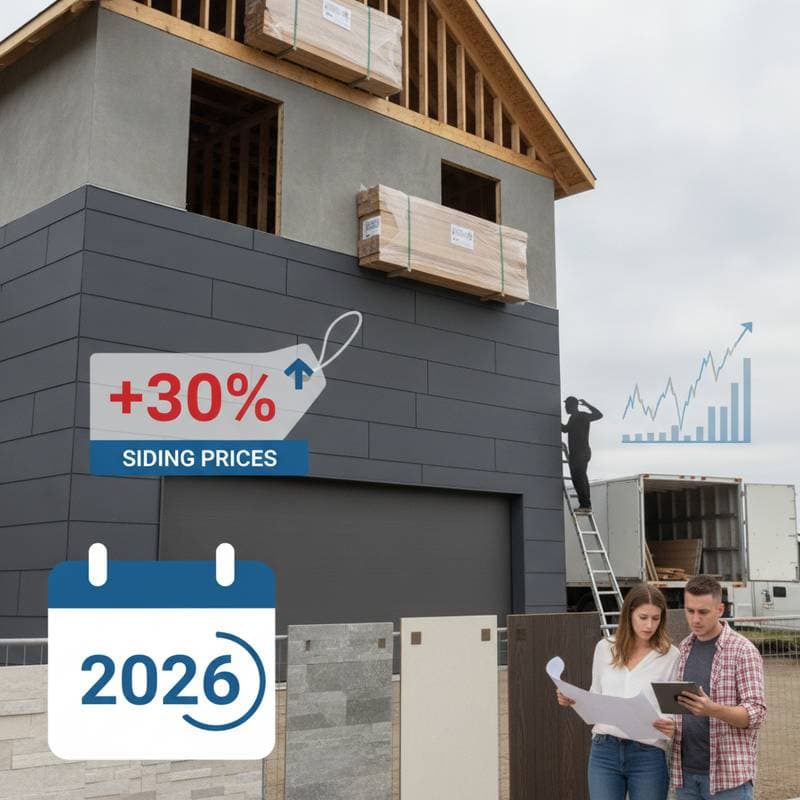
2026 Siding Shortages Expected to Increase Prices 30 Percent
Homeowners planning exterior projects face a clear warning. Supply forecasts from industry distributors now point to limited siding availability and projected price increases approaching thirty percent. Understanding the reasons behind this shortage and how it affects cost, resale value, and scheduling helps homeowners make practical, budget-smart decisions.
This guide breaks down cost expectations, material options, design strategies, installation risks, maintenance planning, and contractor selection under current supply pressures.
Material and Profile Choices
Material selection affects both short-term pricing and long-term ownership costs. Supply tightness varies by product type, so flexibility helps secure better pricing.
| Material Type | Pros | Cons | Maintenance Level | Fire & Moisture Resistance |
|---|---|---|---|---|
| Vinyl | Affordable, color-stable, easy to install | Can crack in extreme cold | Low | Moderate |
| Fiber Cement | High durability, fire-resistant | Heavier, requires repainting | Medium | Excellent |
| Engineered Wood | Natural look, lighter than fiber cement | Needs sealing at cuts | Medium | Good |
| Metal | Long life, recyclable | Higher cost, noise under impact | Low | Excellent |
| Composite Polymer | Stable color, minimal upkeep | Premium price, limited suppliers | Very Low | Excellent |
When materials are limited, consider mixing textures cautiously. Vertical accent panels or shingle profiles can highlight entries or gables, but overuse reduces visual cohesion. Keep one dominant siding texture, then add contrast through trim or color depth instead of multiple materials.
Takeaway: Choose materials with consistent availability and proven weather performance. Balance design goals against supply reliability.
Installation Quality and Risk Control
Material shortages often lead to rushed schedules and substitute crews. Poor installation erases any material advantage. Quality control starts with envelope integrity, not surface finish.
Prevent cost overruns by verifying:
- Flashing and water barrier overlap: Continuous protection behind siding prevents leaks.
- Fastener alignment: Correct spacing avoids warping and buckling.
- Expansion gaps: Vinyl and composite panels need space for movement under temperature swings.
- Site prep: Remove decayed sheathing and replace with sound substrate.
- Debris control: Plan daily cleanup to prevent damage to landscaping or neighbor property.
Common failure points include joints near windows, unsealed trim edges, and nails driven too deep. Each leads to moisture intrusion and warranty disputes.
Takeaway: Pay for experienced crews, not speed. Ask for photos of barrier layers before siding is installed.
Contractor Selection and Bidding
Supply strain increases the risk of incomplete scopes and unclear pricing. A detailed bid comparison protects against hidden costs.
Scope checklist:
- Material type, profile, and color
- Underlayment or weather barrier details
- Trim, soffit, and flashing materials
- Waste removal and disposal plan
- Permit and inspection responsibilities
- Site protection measures
Compare bids using these steps:
- Ensure all contractors quote the same square footage and material category.
- Review inclusion lists carefully for starter strips, corner trims, and accessories.
- Ask for unit pricing on materials so supply changes can be tracked separately.
- Set payment milestones tied to physical progress, such as delivery, halfway installation, and final inspection.
Avoid prepaying large deposits during volatile supply periods. Credible contractors maintain relationships with distributors and can confirm delivery timelines before starting demolition.
Takeaway: A transparent contract prevents budget drift and schedule surprises.
Protecting Long-Term Value
Siding shortages may stretch timelines and budgets, but informed planning keeps projects moving. Homeowners who define scope early, lock in material orders, and commit to preventive maintenance will see stable value even as prices rise. Choose materials that match the property scale and climate, document installation quality, and maintain surfaces regularly.
When supply chains tighten, predictability becomes the new premium. A home with secure, well-installed siding and documented maintenance stands out in any market, regardless of what the next price cycle brings.