
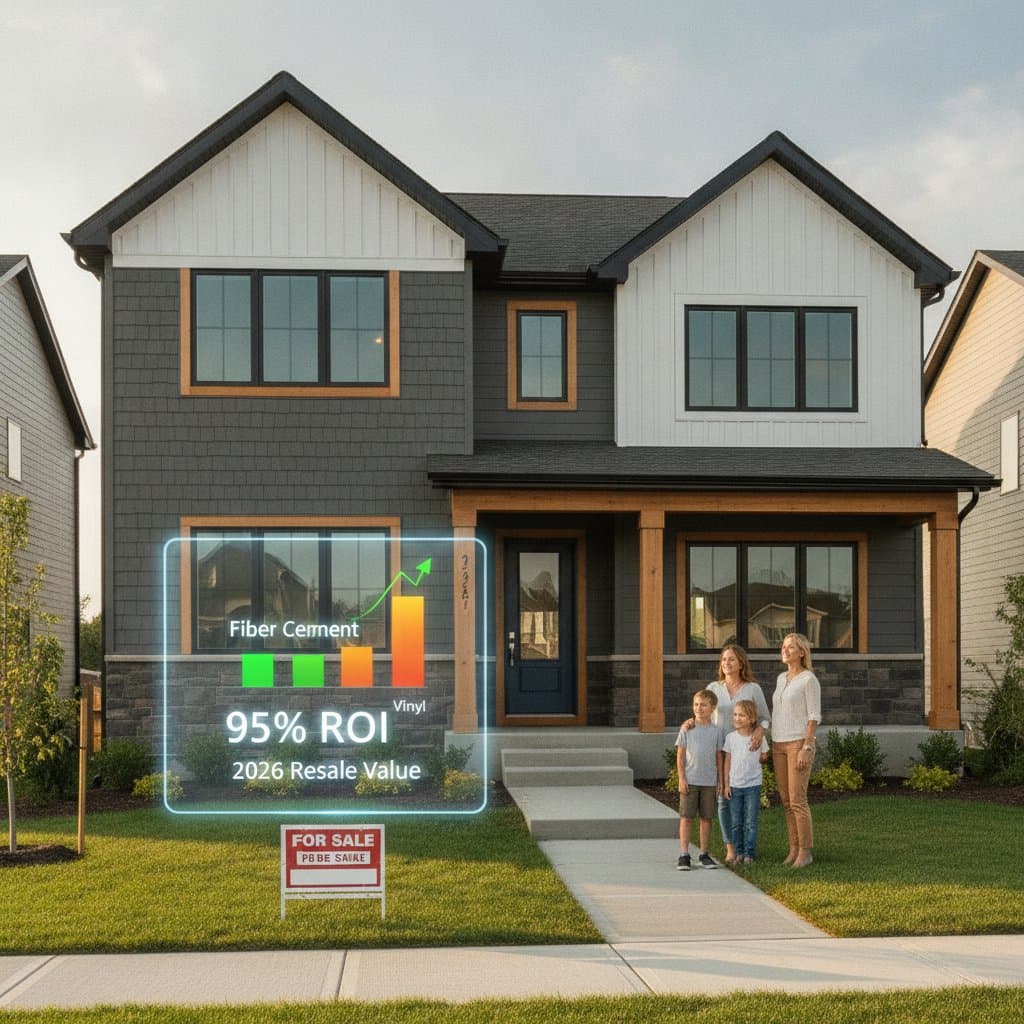
Fiber Cement Siding Delivers Strong Resale Returns
Homeowners planning a siding replacement often ask which material gives the highest return when they sell. Current market studies show that fiber cement siding leads most exterior projects with an estimated 95 percent cost recovery at resale. This figure reflects both measurable market value and strong buyer perception. The following guide explains what drives that return, how to control cost, and how to select a design and installation approach that protects long-term value.
Cost, ROI, and Impact Factors
Replacing siding ranks among the top exterior upgrades for return on investment. The project combines curb appeal, maintenance reduction, and envelope protection. Buyers see a freshly sided home as newer, cleaner, and lower risk.
Total Project Ranges
- Small project (1,000 to 1,500 square feet): 15,000 to 25,000 dollars
- Mid-size project (2,000 to 2,800 square feet): 30,000 to 45,000 dollars
- Large project (3,000 square feet or more): 50,000 to 65,000 dollars
The cost per square foot typically falls between 15 and 22 dollars, including removal, sheathing inspection, moisture wrap, and trim. Homes with complex gables, multiple stories, or heavy trim coverage skew toward the upper end.
Cost Drivers
- Removal and disposal of old siding or asbestos shingles
- Wall height and story count requiring scaffolding or lift equipment
- Trim detailing around windows, doors, and corners
- Access limits such as tight lot lines or obstacles
- Painting or factory finish selection
ROI Factors
- Curb appeal gain through clean lines, modern texture, and consistent color
- Perceived durability from long warranties and moisture resistance
- Maintenance savings with minimal repainting or caulking compared to wood
- Energy performance from improved air sealing when the wrap and flashing are updated
Set your siding budget by square footage but adjust for trim complexity and access. When bids differ widely, confirm that each includes removal, underlayment, and painting. Missing these items hides cost that erodes ROI later.
Design for Curb Appeal
Siding design influences perceived value as much as cost. A clean, balanced exterior photographs better and signals proper care.
Massing, Contrast, and Proportion
- Keep vertical and horizontal lines consistent around corners
- Use trim to frame windows evenly and define edges
- Match siding exposure across elevations
A house reads best when siding and trim create predictable rhythms. Inconsistent profiles or uneven reveals make even new siding look unplanned.
Color Depth and Undertone
Fiber cement accepts deep, rich paints that hold color for longer cycles. Choose neutral bases like slate, taupe, or coastal gray for broad buyer appeal. Warm undertones pair well with stone or brick bases, while cooler tones complement metal or stucco accents. Always test color under both shade and direct light.
Entry Emphasis and Lighting
The entry should anchor the design. Use subtle contrast between siding and trim, and ensure light fixtures sit level with door hardware. Replace faded house numbers and clean the porch ceiling before final photos. These small details confirm overall quality to buyers.
Keep the color palette limited to one body color, one trim color, and one accent. Balanced contrast increases photo appeal and makes the home look newer, which directly supports higher resale offers.
Maintenance and Longevity
A siding system should maintain its appearance for decades with routine care. Buyers value documented maintenance because it proves the home was protected.
Cleaning and Finish Care
- Wash siding annually with mild detergent and a soft brush
- Avoid pressure washers above 1,500 psi
- Repaint fiber cement every 12 to 15 years depending on exposure
- Inspect caulking at joints and penetrations each spring
Inspection Intervals and Protective Fixes
- Every year: Check for cracks, chips, or open joints
- Every two years: Inspect paint gloss and touch up high-sun areas
- After major storms: Verify flashing and sealant integrity
Small repairs prevent moisture from entering the wall cavity, which could shorten the siding service life.
Warranty Responsibilities
Fiber cement warranties typically cover the material for multiple decades but exclude labor unless installed by certified contractors. Keep all receipts and paint records, since manufacturers often require proof of upkeep for coverage.
Document cleaning and repainting work with photos and receipts. Buyers and inspectors interpret clean records as evidence of quality, strengthening your resale position.
Living With Fiber Cement
Once installed, fiber cement siding requires minimal attention. Keep vegetation trimmed back six inches from the walls to prevent moisture buildup. If repainting, use high-grade acrylic latex formulated for cementitious surfaces. Avoid darker colors on southern exposures to limit heat movement. When planning future exterior projects like decks or extensions, protect the siding edge with proper flashing rather than sealing directly to new structures.
Pro Tips for Success
- Store leftover planks in a dry place for future patching
- Keep touch-up paint labeled by brand and color code
- Photograph the wall layout before final painting to record joint lines
- Review manufacturer maintenance guides annually
Troubleshooting Common Issues
Hairline cracks near fasteners often result from overdriven nails. Seal with exterior-grade caulk and repaint. Peeling paint usually stems from surface contamination before painting, not a material defect. Clean and refinish the area. Minor swelling on edges requires light sanding, priming, and repainting to block further moisture.