
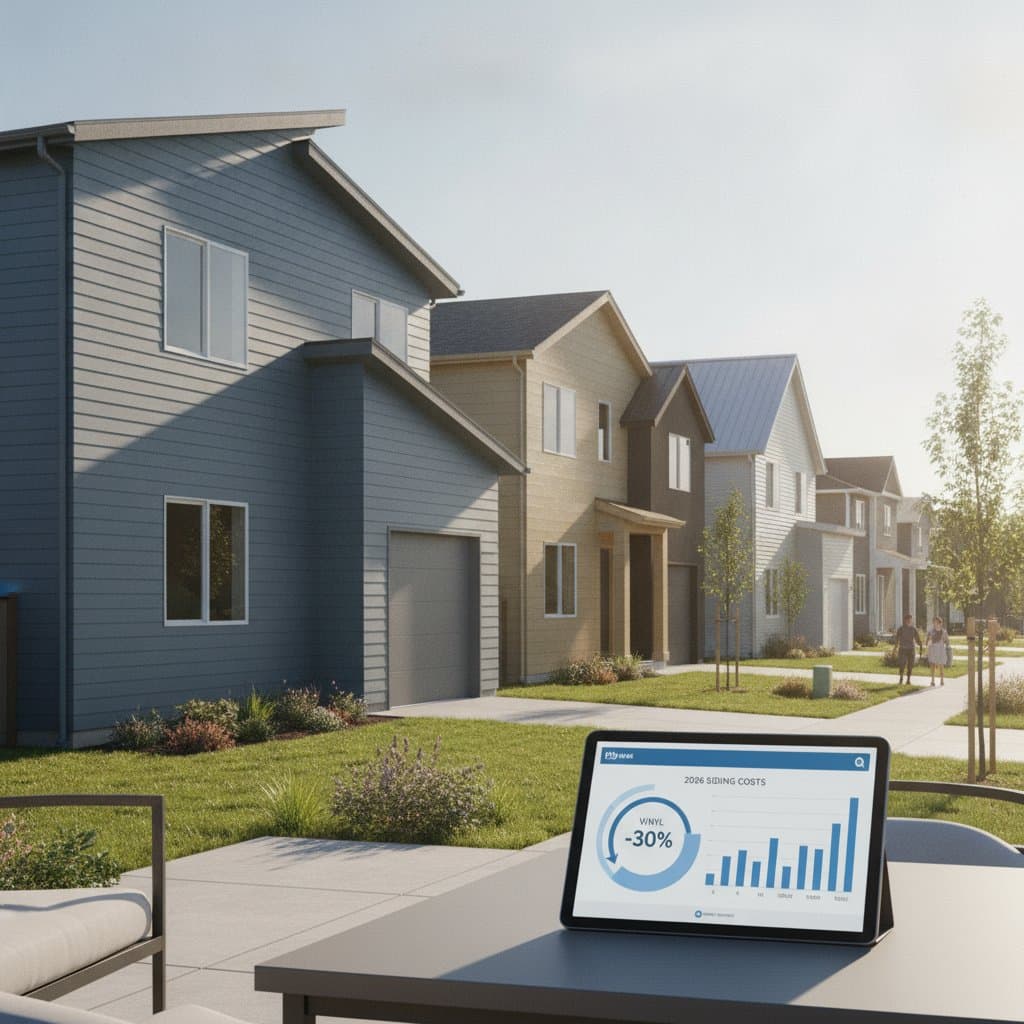
2026 Siding Prices Revealed: Which Material Drops 30 Percent
Homeowners planning exterior upgrades benefit from reviewing the updated siding cost data. Recent reports indicate a significant reduction in vinyl siding prices. Other materials show stable or modest increases. This overview covers the changes, underlying factors, and steps to maximize project value.
Cost and Planning Guide
A complete siding installation covers old material removal, surface preparation, moisture protection, trim work, and waste disposal. Vinyl occupies the most affordable category. Fiber cement, engineered wood, and metal follow in sequence. Natural wood and masonry command the highest prices.
Estimated Installed Costs
| Material | Low ($/sq ft) | High ($/sq ft) | Notes |
|---|---|---|---|
| Vinyl | 7 | 11 | Sharp price drop due to oversupply and new production methods |
| Fiber Cement | 10 | 15 | Stable pricing, higher labor cost |
| Engineered Wood | 9 | 14 | Moderate changes, steady supply |
| Metal | 12 | 18 | Slight rise from fabrication cost |
| Natural Wood | 14 | 30 | Wide range based on species and finish |
Cost Drivers
- Removal and disposal costs rise with multiple layers or hazardous materials such as asbestos.
- Poor wall condition including rot or uneven sheathing extends labor requirements.
- Complex trim details around corners and gables demand additional time for precise fitting.
- Multi story access requires scaffolding and increases safety measures.
- Labor rates and shipping fees differ by location relative to material sources.
Project Timeline
Bidding through completion typically spans two to four weeks. Permit processing and weather conditions may add delays. Vinyl orders arrive faster than custom panels.
Required Permits
Local codes usually mandate permits to verify proper installation of weather barriers and fasteners. Inspections focus on flashing details and attachment methods.
Budget Management Strategies
- Obtain detailed quotes separating labor, materials, and trim expenses.
- Document all modifications in writing prior to execution.
- Confirm inclusion of disposal, sealing, and flashing in the base price.
Repair Versus Replacement Decision
When damage exceeds twenty five percent of the surface, replacement proves more economical than repeated repairs.
Durability and Safety Considerations
Product performance in weather, fire, and impact scenarios differs substantially. Matching material properties to site conditions safeguards the investment.
Weather Resistance
Vinyl withstands moisture yet deforms in prolonged high temperatures. Fiber cement handles freeze thaw cycles and heavy rainfall effectively. Metal performs well with accurate flashing installation.
Fire Performance
Fiber cement and metal resist combustion. Wood based options require code compliant treatments to control flame spread.
Moisture and Impact Protection
Apply manufacturer specified sealants at all joints. Limit high pressure washing on wood surfaces. Vinyl becomes brittle in cold conditions and risks cracking from impacts.
Maintenance Schedule
Inspect siding twice yearly for loose fasteners, sealant failures, and surface damage. Clean with mild detergent and soft brushes to preserve finishes.
Warranty Basics
Manufacturer warranties range from twenty to fifty years depending on material. Coverage typically requires professional installation and documented maintenance.
Selecting the Right Option for Your Home
The vinyl price reduction creates opportunities to enhance insulation or upgrade trim details within the original budget. Projects prioritizing fire resistance often favor fiber cement or metal despite higher initial costs. Evaluate appearance preferences, upkeep demands, and regional climate factors to determine the optimal material.