
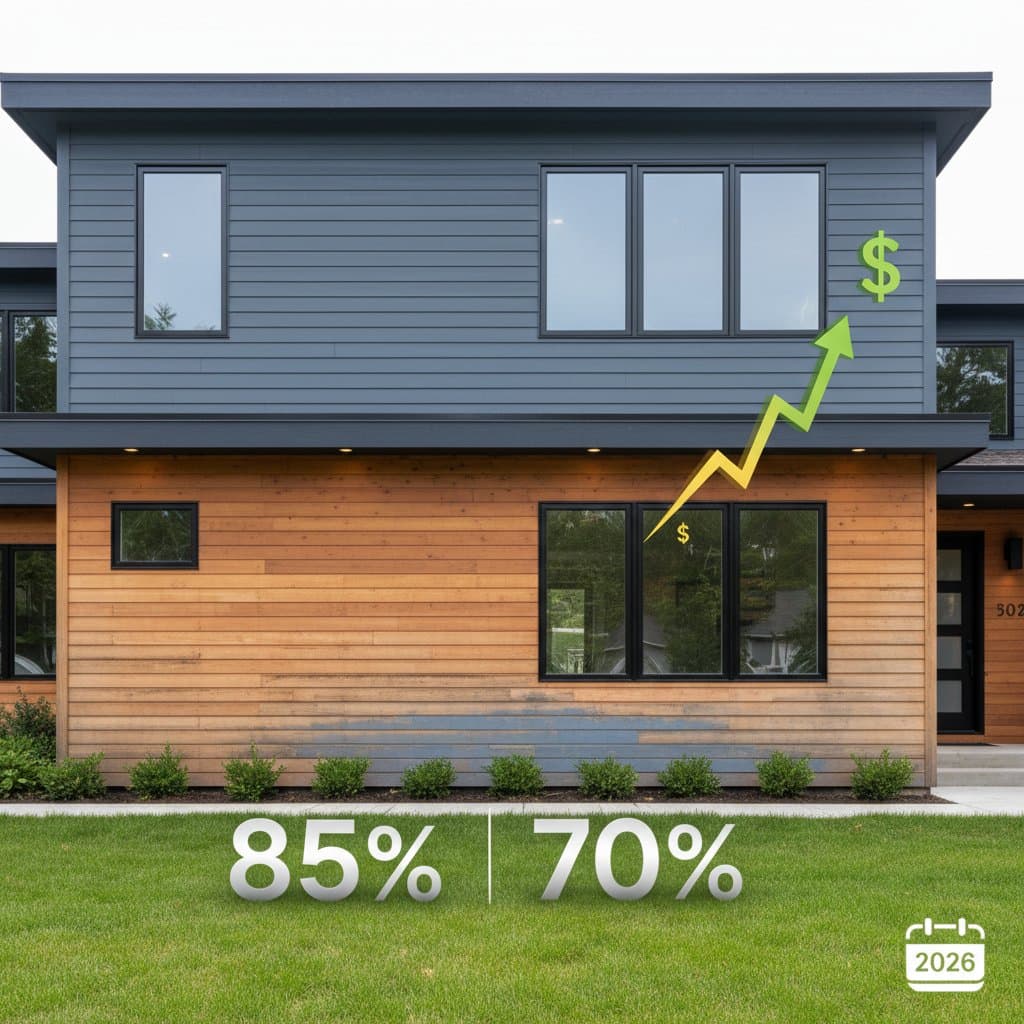
Why Fiber Cement Outperforms Wood for 2026 Home ROI
Homeowners contemplating exterior renovations balance aesthetics with potential resale gains. Siding choices influence both aspects significantly. Although wood has long represented traditional charm and skilled workmanship, fiber cement emerges as the superior option for sustained return on investment. This durable material replicates the appearance of painted wood while demanding less upkeep, offering greater resilience, and achieving higher resale percentages. By examining cost origins and material performance, individuals can make informed decisions that align with future market trends.
Projections for 2026 indicate fiber cement siding retains 85 percent of its installation cost at resale, compared to wood's 70 percent recovery rate. These figures stem from national remodeling reports that factor in durability, maintenance expenses, and buyer preferences for low-effort exteriors. Fiber cement's resistance to environmental stressors contributes to its edge, preserving home value over time without frequent interventions.
Selecting Materials and Profiles
Fiber cement consists of a blend of cement, sand, and cellulose fibers, formed through a process of heat and pressure curing. This composition grants resistance to fire, insects, and rot, ensuring longevity in diverse climates. Wood, particularly cedar or redwood, maintains visual appeal as a natural, renewable option but requires vigilant protection from moisture to prevent degradation.
The following table compares key attributes:
| Material | Pros | Cons | Maintenance Frequency | Fire and Moisture Resistance |
|---|---|---|---|---|
| Fiber Cement | Extended paint durability, dimensional stability, noncombustible properties | Heavier weight demands skilled installation, cutting requires respiratory protection | Repainting every 12 to 15 years | Excellent |
| Cedar or Redwood | Authentic texture, sustainable sourcing | Elevated maintenance, susceptible to decay and pests | Repainting or restaining every 5 to 7 years | Moderate |
To avoid visual chaos when combining textures, integrate horizontal lap siding with restrained accents on elements like gables or entry projections. Maintain uniform trim thicknesses for seamless transitions. Fiber cement options replicate shingle patterns or board-and-batten designs effectively, sidestepping the inconsistencies inherent in natural wood.
Select a primary fiber cement profile complemented by a single accent style. This approach preserves design coherence and curbs expenses associated with varied materials.
Ensuring Proper Installation and Mitigating Risks
Fiber cement siding functions optimally within a moisture-resistant building envelope. Accurate flashing, appropriate spacing, and secure fastening minimize the risk of future repairs.
Essential installation practices include:
- Establishing a 2-inch gap above flat surfaces and a 6-inch separation from ground level
- Employing corrosion-resistant nails or screws, positioned flush without countersinking
- Incorporating a drainage plane or house wrap beneath each siding course
- Applying metal or flexible tape flashing around windows, doors, and horizontal seams
- Treating cut edges with the manufacturer's recommended primer or paint
Frequent errors involve omitting flashing, overdriving fasteners, or relying solely on caulk for joints, which trap moisture behind panels. Additionally, maintain site hygiene during work. Cutting fiber cement generates dust that can spread, so equip crews with dust-extraction tools for saws and enforce daily cleanup to safeguard adjacent properties and vegetation.
Verify that installers adhere to the manufacturer's guidelines and comply with local building codes regarding moisture management and clearance specifications.
Choosing Contractors and Evaluating Bids
Achieving a robust return on investment begins with a well-defined project scope and dependable quotations. Ambiguities in material specifications or trim elements frequently lead to unexpected cost escalations.
Develop a comprehensive scope checklist:
- Procedures for removing and disposing of current siding
- Assessment and repair costs for underlying sheathing
- Specifications for weather barriers and flashing materials
- Details on trim profiles, corner boards, and soffit configurations
- Plans for painting or factory-applied finishes
- Responsibilities for obtaining permits and handling debris
Solicit a minimum of three bids based on identical scopes. Analyze itemized breakdowns rather than aggregate figures. Require contractors to detail labor, materials, and overhead components. Structure payments around project milestones, such as material arrival, completion of wall sections, and final walkthrough.
Prioritize contractors certified by the siding manufacturer. Such credentials ensure warranty coverage and demonstrate expertise in safe handling, cutting techniques, and envelope integration.
Maximizing Long-Term Value Through Maintenance and Upkeep
Once installed, fiber cement siding supports enduring performance with minimal intervention. Regular inspections identify early signs of wear, such as paint fading or minor cracks, allowing timely corrections that extend material life.
Schedule annual reviews of seams, flashing, and drainage paths to prevent water accumulation. Clean surfaces gently with low-pressure washing to remove debris without damaging the finish. When repainting becomes necessary after 12 to 15 years, select high-quality, breathable coatings that enhance adhesion and UV protection.
These practices not only sustain the siding's appearance but also reinforce the home's overall marketability. By investing in proactive care, homeowners secure the full 85 percent resale recovery, transforming an initial upgrade into a lasting asset that appeals to discerning buyers in 2026 and beyond.