
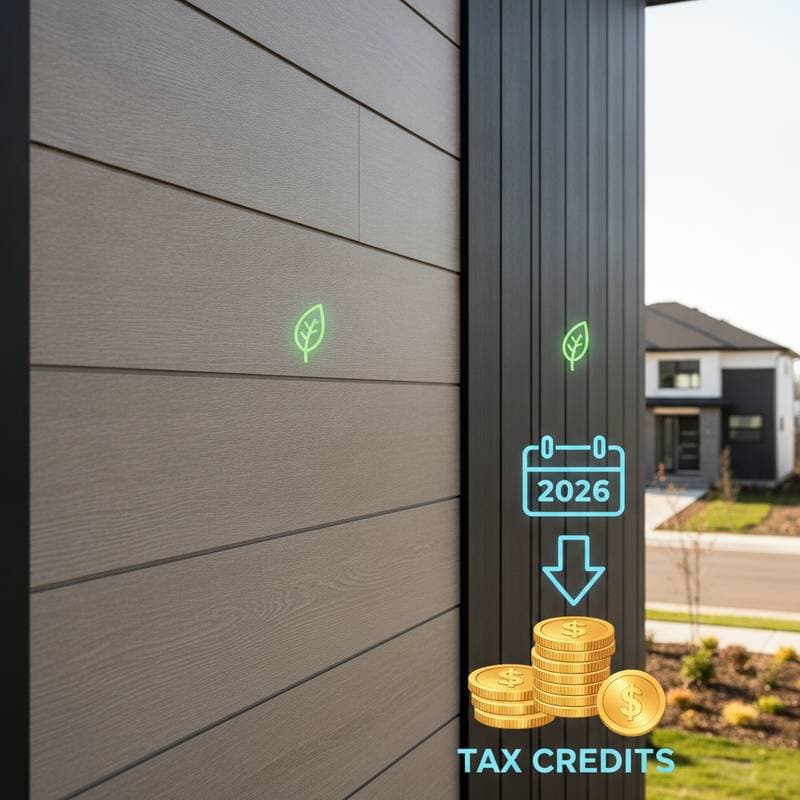
New 2026 Tax Credits for Energy Efficient Siding
Homeowners planning exterior renovations now have a strong financial reason to consider energy efficient siding. The new tax credits for siding upgrades provide direct savings on installation costs. They also improve comfort and lower long-term energy bills. The credit focuses on materials and systems that reduce heat loss, improve moisture control, and extend the lifespan of a home exterior envelope.
This article explains how the new credit works. It covers what qualifies and how to plan a compliant project.
Cost, ROI, and Impact Factors
Energy efficient siding projects vary widely in cost. Several predictable drivers affect both total spend and return on investment.
Cost Ranges and Scale
- Small project: 200 to 400 square feet, such as a garage or accent wall, usually runs 3000 to 8000 dollars installed.
- Mid-size project: 1000 to 1500 square feet, typical for a single-story home, runs 15000 to 28000 dollars.
- Large project: 2000 square feet or more, often two-story homes, runs 30000 to 55000 dollars depending on trim scope and access.
Key Cost Drivers
- Removal and disposal of existing siding adds 1 to 3 dollars per square foot.
- Complexity from multi-story homes and architectural details increases scaffold time and labor.
- Trim and flashing upgrades improve appearance and protection but raise costs.
- Access issues such as tight lot lines or landscaping obstacles slow installation.
- Insulated backing with rigid foam or integrated insulation panels adds upfront cost but qualifies for higher credits.
Value Implications
Energy efficient siding improves both market value and perceived value. Buyers see reduced heating and cooling costs, lower maintenance, and updated curb appeal. Studies show siding replacement recoups 70 to 85 percent of its cost on resale. Energy upgrades can push that closer to full recovery over time.
Document all material specifications and contractor invoices to verify eligibility for the credit. Without proof of certified performance ratings, the tax benefit may be denied.
Design for Curb Appeal
Energy efficiency draws buyers to listings. Curb appeal closes the deal. Siding upgrades offer a chance to modernize proportions and emphasize the home best features.
Massing, Contrast, and Proportion
Keep siding lines consistent across elevations. Align horizontal joints with window heads. Avoid abrupt transitions between floors. Use corner trim and shadow lines to define edges cleanly.
Color Depth and Undertone Basics
Neutral mid-tones blend best with varied roof colors. Warm grays, soft whites, and muted blues photograph well and resist fading. Dark colors can absorb heat, slightly reducing insulation performance, though they often look more modern.
Entry Emphasis and Lighting Balance
Frame the entry with vertical siding or wider trim to draw the eye and improve symmetry. Match exterior lighting color temperature to siding tone for accurate night appearance. Replace faded house numbers and ensure pathways are well lit for both safety and presentation.
View large samples outdoors under different light conditions before choosing colors. Photos taken from the street can help confirm balance and resale appeal.
Maintenance and Longevity
Energy efficient siding reduces long-term upkeep. It still needs regular care to maintain both appearance and insulation value.
Cleaning and Care
Use a soft brush and mild detergent. Pressure washers may void warranties if used too close to the surface. Rinse from top to bottom to prevent water from entering joints.
Inspection and Protective Fixes
Inspect annually for cracks, loose trim, or caulk gaps. Re-seal joints as needed with compatible sealant. Touch up paint or finish within 48 hours of discovery to prevent water damage.
Warranty Responsibilities
Most siding warranties cover manufacturing defects only, not poor installation or neglect. Keep copies of installer certifications and product registration forms. These documents may also be required to claim the tax credit.
Maintenance Checklist
| Task | Frequency | Tools or Materials |
|---|---|---|
| Wash siding | Once a year | Soft brush, mild soap |
| Inspect caulk and joints | Twice a year | Ladder, sealant |
| Check flashing and vents | Once a year | Flashlight, screwdriver |
| Repaint or refinish | As recommended | Paint, brushes |
| Trim vegetation | Ongoing | Pruners or shears |
A clean, well-maintained exterior protects insulation value. It helps sustain the energy performance required for credit compliance.
Ongoing Benefits After Installation
Energy efficient siding upgrades deliver measurable comfort and value. Indoor temperatures stabilize. Exterior noise decreases. Heating or cooling costs drop. The tax credit offsets the initial expense. The real payoff comes from long-term durability and lower maintenance costs.
To maintain value keep records of all materials and certifications. Revisit color and trim choices if repainting to maintain curb appeal. Budget a small annual maintenance fund for cleaning and minor repairs.
When selling include documentation showing reduced energy use and transferable warranties. Buyers respond well to verified savings and visible quality.
Combine siding replacement with air sealing and attic insulation improvements. Bundled upgrades can raise the total credit amount while delivering stronger performance gains.
Troubleshooting Common Issues
What if the siding installer is not certified for energy efficient systems? The project can still be completed. The tax credit may not apply. Use certified contractors to ensure compliance and warranty protection.