
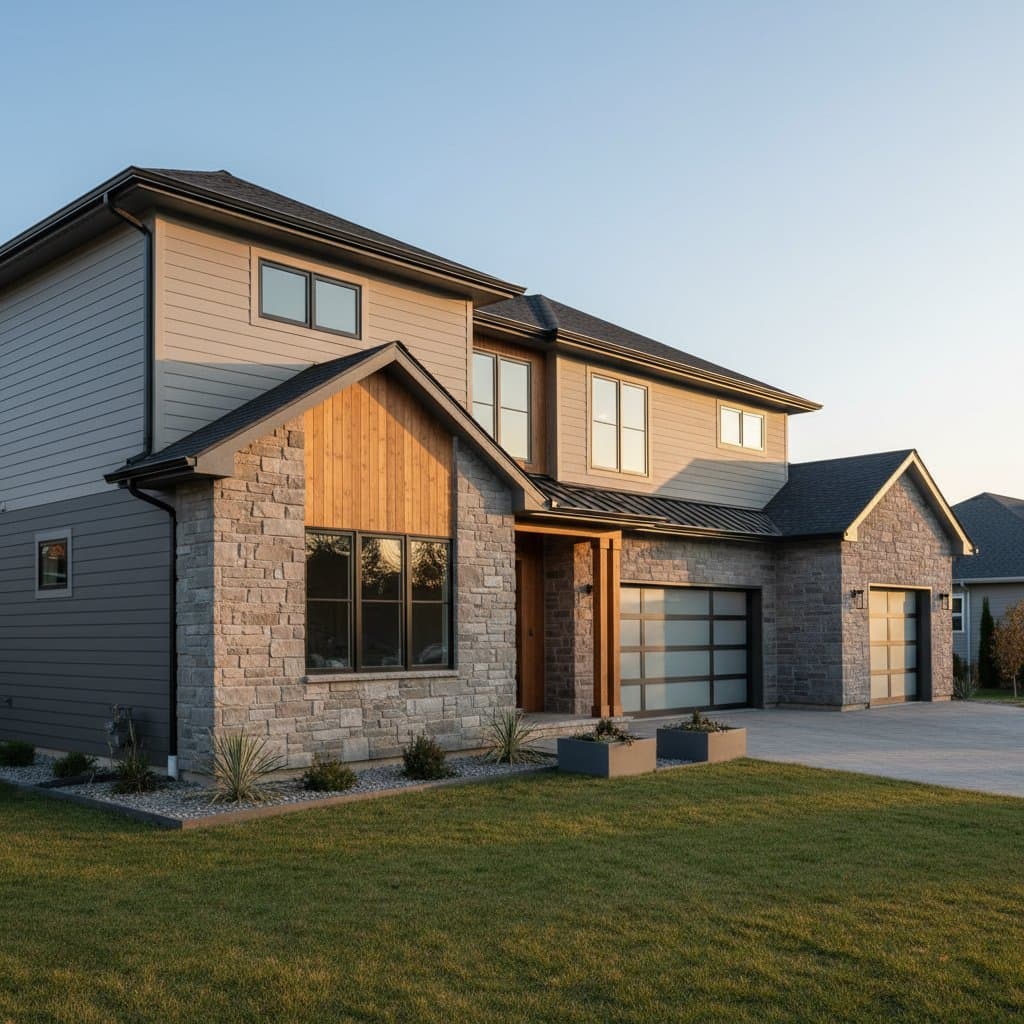
Why Mixed-Material Siding Outperforms Single-Type Systems
Homeowners increasingly select mixed-material siding systems over uniform exteriors. These hybrid designs integrate diverse textures, colors, and finishes to deliver enhanced performance and aesthetic harmony. Proper implementation elevates curb appeal, optimizes energy management, and ensures enduring durability. This guide details the mechanics of mixed-material siding, associated expenses, project planning strategies, and maintenance protocols for sustained protection over decades.
Style and Selection Guide
Essential Profiles and Their Applications
Lap or clapboard siding serves as the primary covering for the majority of home walls, providing a classic horizontal line that suits traditional architectures. Board and batten configurations introduce vertical lines, ideal for accentuating gables, rear elevations, or areas requiring height emphasis. Shingle patterns add dimensional texture, particularly effective on dormers, upper stories, or irregular rooflines. Stone or brick veneer anchors the base of structures, such as foundations, entry columns, or lower walls, creating a solid visual foundation. Metal panels deliver a contemporary edge, contrasting sharply on modern or minimalist designs to highlight clean lines and geometric forms.
Material Choices
The following table outlines key materials, their advantages, and potential drawbacks to inform selection decisions.
| Material | Pros | Cons |
|---|---|---|
| Vinyl | Cost-effective, requires minimal upkeep, offers extensive color options | Prone to cracking in extreme cold or warping in intense heat |
| Fiber Cement | Resists fire, maintains dimensional stability, accepts paint easily | Substantial weight demands robust support; cutting generates dust requiring ventilation |
| Engineered Wood | Mimics natural wood appearance, installs more simply than solid lumber | Necessitates periodic sealing and repainting to prevent weathering |
| Metal | Withstands impacts, fully recyclable, impervious to pests | Involves elevated initial investment |
| Stone Veneer | Exhibits superior impact resistance, provides authentic natural texture | Increases structural load; demands intricate flashing for moisture management |
Guidelines for Harmonious Material Combinations
Designate a primary material to cover approximately 70 percent of the exterior surface area, supplemented by one or two secondary materials for accents. Position transitions at natural architectural divisions, including floor levels, gable edges, or protruding elements like bay windows. Select trim colors that unify the palette, and maintain uniform reveal dimensions across sections to prevent a disjointed appearance.
Strategies for Trim and Accents
Incorporate trim boards to delineate material boundaries precisely and direct water away from joints. Opt for metal or PVC trim channels when joining incompatible materials to ensure seamless integration. Deploy accent materials strategically to emphasize focal points such as front entrances, upper facades, or load-bearing features, fostering cohesion rather than rivalry among elements.
Practical Design Examples
For a Craftsman bungalow, pair fiber cement lap siding on main walls with cedar shingles in gable ends and stone veneer along the foundation, blending rustic warmth with modern resilience. In a modern farmhouse setting, apply vertical board and batten to principal elevations complemented by horizontal lap siding on attached structures like garages, achieving a balanced rural-contemporary vibe. A contemporary urban residence benefits from smooth fiber cement panels integrated with metal accents and subdued trim, underscoring sleek sophistication amid city surroundings.
Comprehensive Project Preparation
Initial Planning Phase
Begin by clarifying objectives, such as enhancing visual allure, minimizing ongoing maintenance, or improving thermal performance. Sketch the project scope on elevation diagrams, specifying material assignments for each wall or section to visualize the overall composition.
Contractor and Budget Evaluation
Identify contractors with proven expertise in installing at least two of the chosen materials, reviewing portfolios for similar hybrid projects. Solicit multiple bids, ensuring uniformity in inclusions like weather-resistant underlayment, proper flashing details, and trim specifications to enable accurate comparisons.
Pre-Installation Verification
Examine physical samples and temporary mockups under natural daylight to assess color harmony and texture interplay prior to committing to full-scale work. Prepare the site by relocating landscaping features, securing outdoor furnishings, and coordinating electrical access for tools and lighting.
Execution and Oversight
Establish clear daily schedules with the installation team, designating staging areas for materials and contingency plans for inclement weather. Conduct thorough quality inspections throughout, focusing on secure flashing around windows and doors, appropriate joint spacing for expansion, and precise caulking applications before any finishing coats of paint or sealant.
Sustaining Your Mixed-Material Exterior
Hybrid siding systems leverage the unique strengths of individual components to navigate seasonal weather variations effectively. This approach generates layered visual interest while permitting focused upkeep on specific areas. Anticipate more frequent resealing or repainting for organic accents compared to engineered synthetics. Maintain clear gutters to prevent water accumulation, and routinely examine transition zones following significant storms to address any emerging vulnerabilities promptly.
Over time, these systems not only preserve structural integrity but also adapt to evolving homeowner preferences through selective updates. Regular assessments ensure the facade remains a resilient, eye-catching asset that enhances property value and comfort year after year.