
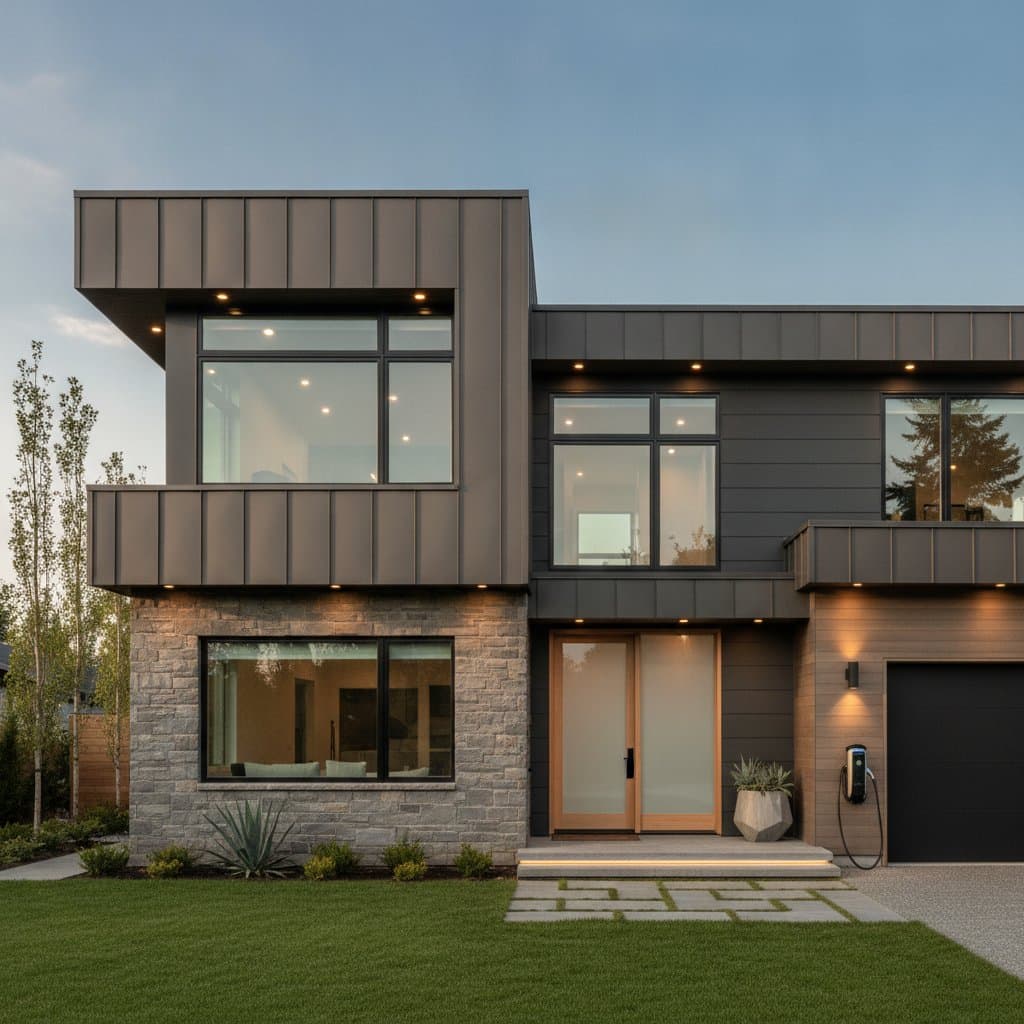
Why Homeowners Blend Siding Materials in 2026
Homeowners select mixed material siding to achieve distinctive exteriors that combine visual interest with practical performance. This method pairs two or more cladding types, such as fiber cement with stone veneer or metal panels with cedar accents. The result defines architectural sections, manages moisture, and improves fire resistance.
Cost and Planning Guide
Mixed material siding requires more upfront planning than single material systems. It delivers targeted performance and greater design options.
Total Range
A complete mixed material project for an average home falls between 18000 and 60000 dollars. Lower costs apply to vinyl paired with engineered wood. Higher costs cover stone veneer or metal combined with fiber cement.
Per Square Foot
Expect costs of 10 to 25 dollars per square foot. The final amount depends on material selection, layout complexity, and trim details.
Cost Drivers
- Material combination. Natural stone, brick, and metal increase expenses while vinyl and fiber cement remain moderate.
- Transition detailing. Precise flashing, sealants, and trim at material junctions require skilled labor.
- Removal and disposal. Existing siding removal, especially with lead paint, adds labor and disposal fees.
- Access requirements. Multi story homes need scaffolding and lift equipment.
- Trim scope. Custom corner boards, belly bands, and window wraps raise both labor and material expenses.
Timeline
- Design and bids require one to two weeks.
- Permitting may involve review when structural or fire rated materials appear.
- Installation takes two to four weeks based on weather and crew size.
- Punch list work finishes in one to two days.
Budget Controls
Include written change order rules in the contract. Request separate line items for each material. Confirm delivery schedules early to prevent staging delays.
Repair versus Replace
Partial replacement succeeds when one cladding type fails. Keep sound fiber cement and add stone at the base. Verify that fasteners, weather barriers, and joints remain compatible before combining new and old sections.
Durability and Safety Brief
Mixed systems must accommodate varying expansion rates, moisture movement, and fire ratings. Transitions between materials require careful attention.
Weather and Moisture
Install a continuous weather resistant barrier behind all claddings. Place metal flashing at every horizontal transition. Ventilate rainscreens behind fiber cement or wood to release trapped moisture.
Fire and Impact Performance
Fiber cement and metal remain non combustible. Vinyl softens under high heat and should stay away from grills or fire features. Prime and seal engineered wood at every cut.
Envelope Details
Integrate housewrap laps with flashing tape. Use stainless steel or hot dip galvanized fasteners. Seal all penetrations around lights, hose bibs, and vents.
Maintenance and Cleaning
Wash fiber cement and vinyl surfaces yearly with mild detergent and water. Inspect sealants every two years. Reseal stone or brick veneers every five to seven years. Avoid high pressure washing that can force water into joints.
Warranty Basics
Each manufacturer covers only its own product. Retain labels and invoices to demonstrate compliance. Avoid contact between dissimilar metals that can void coverage. Follow product literature for spacing and fastener specifications.
Step by Step Project Prep
Define Goals and Scope
List desired outcomes such as reduced maintenance or an updated appearance. Decide whether the project covers all elevations or selected areas only.
Shortlist Contractors and Compare Bids
Select installers experienced with mixed cladding. Request photos of completed transitions. Compare line items for flashing, trim, and disposal.
Samples, Mockups, Approvals
Order full size samples to verify color and texture. Build a small wall mockup to confirm layout and joint alignment.
Site Readiness and Daily Routine
Clear work zones and protect landscaping. Provide power, water, and waste areas for crews. Expect noise and dust during work hours.
Quality Checks at Each Milestone
Inspect the weather barrier, flashing, and first course alignment before full coverage. Review sealants, fastener spacing, and finish details at project completion.
Performance Over Time
Careful planning allows mixed material siding to highlight architectural features while addressing local climate demands. Consistent washing and periodic inspections support decades of service with minimal intervention.