
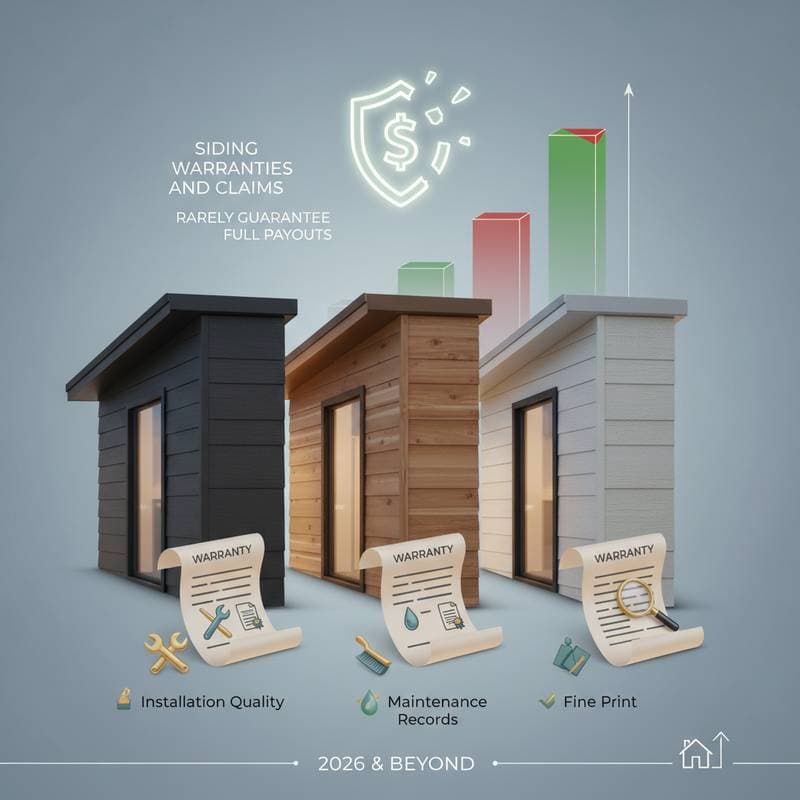
Understanding Siding Warranty Payouts in 2026
Homeowners frequently view extended siding warranties as comprehensive safeguards. Reality reveals that actual reimbursements hinge on precise warranty language, installer qualifications, and claim substantiation. Strength of a warranty emerges from its limitations, so thorough examination of terms prior to purchase or replacement proves essential to avoid substantial future expenses.
This guide details typical coverage elements, realistic claim outcomes, and strategies to safeguard investments via material selection, installation oversight, and ongoing maintenance.
Costs, Return on Investment, and Key Influences
Siding warranties influence home resale values and ownership expenses by bolstering buyer assurance and mitigating extended risks. Prospective buyers prioritize verifiable protections, particularly transferable ones that extend benefits.
Typical Costs and Return on Investment
- Vinyl siding: Installation ranges from 10 to 15 dollars per square foot, yielding 50 to 70 percent return on investment during resale.
- Fiber cement: Installation costs 12 to 20 dollars per square foot, with returns of 60 to 80 percent.
- Engineered wood: Installation falls between 11 and 18 dollars per square foot, offering 55 to 75 percent returns.
- Metal and composite panels: Installation varies from 18 to 30 dollars per square foot, delivering 65 to 85 percent returns.
Warranties seldom boost returns directly, yet they elevate perceived worth and diminish buyer reservations. Select materials aligned with regional climate demands, such as durable fiber cement in humid areas, to optimize long-term value.
Primary Cost Factors
- Removal expenses: Disposing of existing materials like aged wood or asbestos-containing cement incurs additional fees; budget 2 to 5 dollars per square foot for safe handling.
- Installation complexity: Features including dormers, multi-level access, and intricate trim elevate labor demands; anticipate 20 to 40 percent higher costs for such elements.
- Moisture protection layers: Complete renewal of house wrap or flashing materials increases outlay by 1 to 3 dollars per square foot, yet ensures warranty compliance.
- Color and surface treatments: Darker hues accelerate finish degradation through thermal absorption, potentially reducing paint warranties to 10 years versus 25 for lighter options.
- Warranty documentation: Opting for transferable coverage adds a modest 1 to 2 percent premium, significantly enhancing marketability.
Key Insight: Warranties alter initial expenditures by mere percentages, but they profoundly shape repair liabilities and resale reliability over time. Prioritize certified installers to activate full terms.
Enhancing Curb Appeal Through Design Choices
Curb appeal elevates property perception and reinforces buyer faith in maintenance quality. Clear warranty documentation further validates these impressions during inspections.
Massing and Proportional Elements
Maintain uniform horizontal lines and prevent sudden shifts in siding overlap. Broader overlaps expand the visual width of compact homes, whereas slimmer profiles suit expansive walls. Achieve balance by synchronizing window casings and corner posts; measure exposures to ensure consistency within one-half inch across elevations.
Color Selection and Contrast Dynamics
Pigment intensity influences warranty durations. Deep tones capture excess solar heat, curtailing surface protections; lighter or medium shades preserve extended guarantees on fiber cement and engineered wood products. Secure written confirmation of color-specific terms, and test samples under local lighting to predict aging effects.
Entryway and Illumination Integration
Accentuate the primary entrance with modest tonal variations, applying a subtly contrasting siding shade near the doorway. Refresh numerals and fixtures for a polished appearance. Buyers favor uncluttered profiles and evident care, which underscore installation integrity.
Key Insight: Balanced hues and scaling details capture effectively in images, affirming quality workmanship that upholds warranty entitlements and resale premiums. Consult design tools or professionals for site-specific recommendations.
Maintenance Practices for Extended Durability
Warranties supplement, rather than supplant, routine upkeep. Manufacturers mandate evidence of cleaning and assessments to validate claims.
Recommended Cleaning Approaches
Employ a gentle brush or mild-pressure rinse to remove debris. Steer clear of high-pressure washing, as it risks driving moisture into panel gaps. Schedule cleanings one to two times annually in pollen-heavy or polluted zones, using manufacturer-approved solutions to prevent residue buildup.
Scheduled Inspection Routines
- Yearly checks: Examine sealants at seams and penetrations for cracks or separation; reapply as needed with compatible products.
- Every three to five years: Apply fresh coats or treatments if fading appears, following specified intervals.
- Post-storm evaluations: Scan for dents, shifts, or fastener failures; document findings immediately.
Surface Treatment Preservation
Pre-applied coatings feature distinct warranties. Utilize vendor-supplied repair kits for minor blemishes. Non-approved coatings risk nullifying protections; always verify compatibility through product specifications.
Homeowner Obligations Under Warranty
Retain logs of all maintenance activities, including dates, invoices, and photographic evidence. Labor reimbursements often taper progressively, with full support limited to initial years. For transfers, submit notarized forms promptly upon property sale, typically within 30 to 60 days.
Key Insight: Consistent maintenance sustains aesthetics and eligibility. Maintain a straightforward record system, such as a digital folder with timestamps and visuals, to streamline claim processes.
Integrating Warranty Management into Homeownership
After installation and registration, incorporate warranty oversight into routine home care. Store electronic versions of documents, encompassing shade identifiers, coating details, and contractor credentials. Approach any claim submissions with courtesy and precision, supplying comprehensive support.
Essential Strategies for Optimal Outcomes
- Scrutinize limitations upfront. Identify uncovered scenarios, such as environmental damage, to set realistic expectations.
- Complete registration promptly. Submit within 30 to 90 days post-installation to activate protections.
- Capture installation imagery. Record pre-work, in-progress, and completion stages to substantiate quality.
- Monitor emerging issues. Log onset dates and environmental factors; this bolsters claim credibility.
- Adhere to specified materials. Deviations in accessories like trim or adhesives may invalidate terms; source from authorized suppliers.
Securing Lasting Home Value Through Informed Decisions
By selecting robust materials, engaging qualified installers, and committing to maintenance, homeowners transform siding warranties from mere assurances into reliable assets. These steps not only facilitate smoother claims but also preserve structural integrity and market appeal. Invest time in understanding terms today to yield dividends in protection and profitability tomorrow.
Concise FAQ
What elements do siding warranties typically include? Coverage addresses production flaws, early fracturing, and excessive color shifts beyond defined thresholds. Labor provisions apply briefly, often spanning five to fifteen years.
What amounts do warranty claims generally reimburse? Approved claims reimburse replacement materials exclusively in most instances, excluding labor. Comprehensive material and labor settlements arise primarily from extensive, thoroughly evidenced defects.