
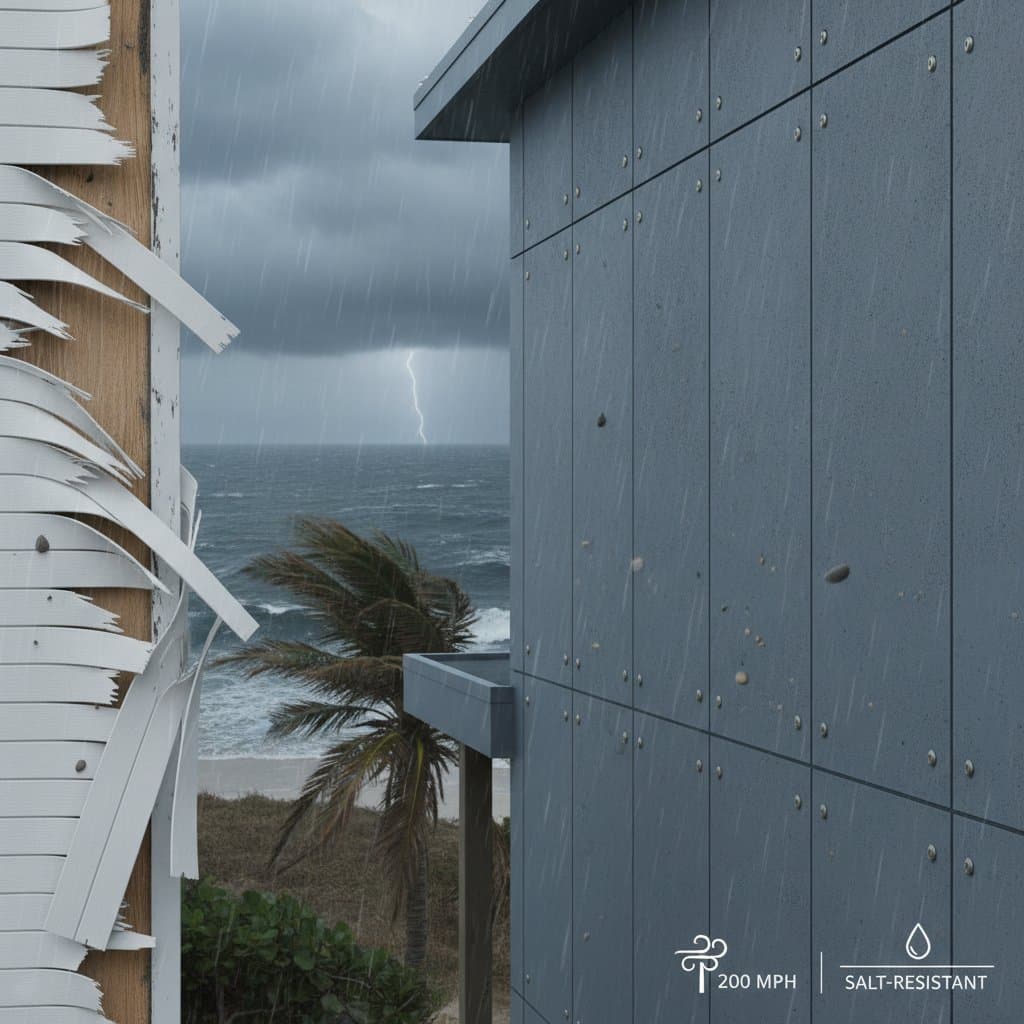
Understanding Siding Choices in Hurricane-Prone Areas
Hurricane zones present unique challenges for homeowners, where strong winds, flying debris, and salt exposure test building materials to their limits. Traditional siding options like vinyl have long been popular for their affordability, but fiber cement emerges as a superior choice for durability and performance. This guide examines the key differences between these materials, focusing on how they withstand extreme weather while maintaining aesthetic appeal and structural integrity.
Quick Project Overview
| Aspect | Details |
|---|---|
| Project Scope | Complete siding replacement, including wall preparation and trim integration |
| Timeline | 7 to 14 working days for a typical single-family home |
| Skill Level | Moderate to advanced; professional installation team essential |
| Cost Range | Fiber cement: $9 to $15 per square foot installed; Vinyl: $5 to $9 per square foot installed |
| Ideal Use | Residences in high-wind coastal regions requiring enhanced impact and wind resistance |
These figures account for standard installations in hurricane areas, where additional reinforcements may increase costs slightly.
Selecting Styles and Profiles for Your Home
Choosing the right siding style involves balancing visual appeal with practical performance in windy conditions. Common profiles include lap siding, board and batten, and shingle or shake designs, each offering distinct advantages for hurricane resilience.
Key Siding Profiles
- Lap Siding: Horizontal planks that provide a timeless look suitable for various architectural styles. This profile excels in wind resistance when secured with appropriate fasteners, allowing for straightforward installation on most home exteriors.
- Board and Batten: Vertical panels with overlapping battens that conceal joints, ideal for contemporary or rustic designs. The vertical orientation can channel water away effectively, though it demands precise alignment to prevent wind infiltration.
- Shingle or Shake: Mimics natural wood textures, popular for coastal bungalows. These require denser fastening patterns, which extend labor time but enhance overall stability against gusts.
Lap profiles generally perform best in high winds due to their horizontal overlap, which sheds water and debris efficiently. For shingle styles, plan for up to 20 percent more fasteners per square foot to ensure secure attachment.
Comparing Material Properties
Vinyl Siding
Vinyl offers accessibility for budget-conscious projects, but its limitations become evident in severe weather.
- Advantages: Lightweight construction reduces installation strain; factory-applied finishes eliminate painting needs; simple setup speeds up the process.
- Drawbacks: Prone to cracking from impacts like hail or branches; susceptible to uplifting in winds exceeding 110 mph without specialized locking systems; offers minimal fire resistance, which poses risks in dry coastal climates.
In tests, standard vinyl may deform under sustained 90-mph winds, leading to gaps that invite moisture intrusion.
Fiber Cement Siding
Engineered from cement, sand, and cellulose fibers, this material delivers robust protection tailored for harsh environments.
- Advantages: High density absorbs impacts without fracturing; inherent fire resistance meets stringent building codes; superior paint adhesion ensures long-lasting color; resists moisture, insects, and rot even in salty air.
- Drawbacks: Greater weight necessitates sturdy framing and equipment; cutting generates silica dust, requiring ventilation and protective gear; elevated labor demands contribute to higher upfront expenses.
Fiber cement consistently rates for winds up to 170 mph when installed with code-compliant methods, making it a reliable barrier against hurricanes.
Blending Materials for Cost-Effective Designs
Homeowners often combine siding types to optimize protection and aesthetics while managing expenses. For instance, apply fiber cement to wind-exposed facades like the front and sides facing prevailing storms, reserving vinyl for leeward areas. Ensure uniform trim materials to maintain seamless transitions at corners and edges.
Avoid mismatches in panel thickness, as they can disrupt alignment and create weak points. Consult local codes to verify compatibility, especially in zones requiring impact-rated assemblies.
Essential Trim and Detailing
Trim elements protect vulnerable joints and enhance curb appeal. Fiber cement trim provides rigidity for high-stress areas, such as around windows and doors, where wind pressure peaks. Vinyl trim, while flexible, requires expansion gaps to accommodate thermal shifts common in coastal temperatures.
Incorporate flashing tape behind all trim to direct water outward. For fiber cement, use corrosion-resistant fasteners to prevent rust in humid conditions.
Tailored Recommendations by Home Style
- Coastal Ranch Home: Opt for reinforced vinyl with 160-mph wind ratings if budget constraints apply, paired with impact-resistant shutters.
- Multi-Story Residence in Hurricane Alley: Prioritize fiber cement on upper levels and gables, where uplift forces intensify, to safeguard against debris strikes.
- Hybrid Stucco Property: Integrate fiber cement panels as accents near ground-level entries, serving dual purposes of decoration and projectile defense.
These scenarios highlight how material selection aligns with specific risk profiles and design preferences.
Preparing for a Successful Installation
A well-planned project minimizes disruptions and maximizes longevity. Start by assessing your home's exposure to ensure the chosen siding meets local wind load requirements, often specified in building codes like those from the International Building Code.
Setting Project Objectives
Clarify priorities, such as prioritizing impact resistance over initial savings or seeking a hybrid approach. Map out prevailing wind directions using site-specific data from weather services. Calculate square footage by measuring exterior walls, deducting for windows and doors, and adding 10 percent for trim and waste.
Evaluating Contractors
Seek professionals experienced in hurricane-zone installations, verified through licenses, bonding, and insurance. Gather at least three bids, scrutinizing inclusions like house wrap, sealants, and starter strips. Beware of unusually low quotes that omit critical weatherproofing, which can result in costly repairs post-storm.
Reviewing Samples and Mockups
Request actual material samples to evaluate texture and weight. Erect a small test panel to verify how profiles align and colors appear under natural light. Finalize selections only after confirming compatibility with your home's existing structure.
On-Site Preparations
Secure the work area by relocating outdoor items and establishing access paths. Arrange utilities like electricity for tools and water for cleanup. Schedule daily progress updates and debris removal to keep the site tidy.
Milestone Inspections
Conduct thorough checks at key stages to uphold quality:
- Substrate Review: Confirm sheathing integrity, free from decay or separation.
- Moisture Barrier Application: Ensure overlaps and seals prevent water penetration.
- Flashing Integration: Verify layers direct runoff away from the structure.
- Secure Attachment: Check that fasteners penetrate framing adequately without excessive force.
- Final Assembly: Inspect for uniform spacing, plumb lines, and caulked seams.
Document each phase with photos. After completion, monitor performance during the first significant weather event to address any issues promptly.
Ongoing Maintenance for Long-Term Performance
Proper care extends the lifespan of your siding investment, particularly in corrosive coastal settings. Schedule annual inspections to detect early signs of wear, such as loose panels or faded finishes.
Routine Upkeep Tasks
- Clean surfaces gently with low-pressure washing to remove salt buildup and mildew, avoiding harsh chemicals that could etch fiber cement.
- Reapply paint or sealant every 7 to 10 years on fiber cement for sustained protection; vinyl typically requires no refinishing.
- Tighten fasteners and replace damaged trim annually, focusing on areas exposed to direct sunlight or wind.
- Trim nearby vegetation to prevent abrasion from branches during storms.
- Test for moisture intrusion around penetrations like vents, using a moisture meter if needed.
For vinyl, address dents or cracks immediately to avoid spreading. Fiber cement demands less frequent intervention but benefits from professional touch-ups to maintain warranties.
Securing Your Home Against Future Storms
Investing in fiber cement siding equips your home with a resilient shield against hurricane forces, reducing repair needs and insurance premiums over time. By selecting materials suited to your locale and following rigorous installation protocols, you achieve not only compliance with safety standards but also peace of mind. Consult with local experts to tailor these strategies to your property, ensuring enduring protection in the face of nature's fiercest challenges.