
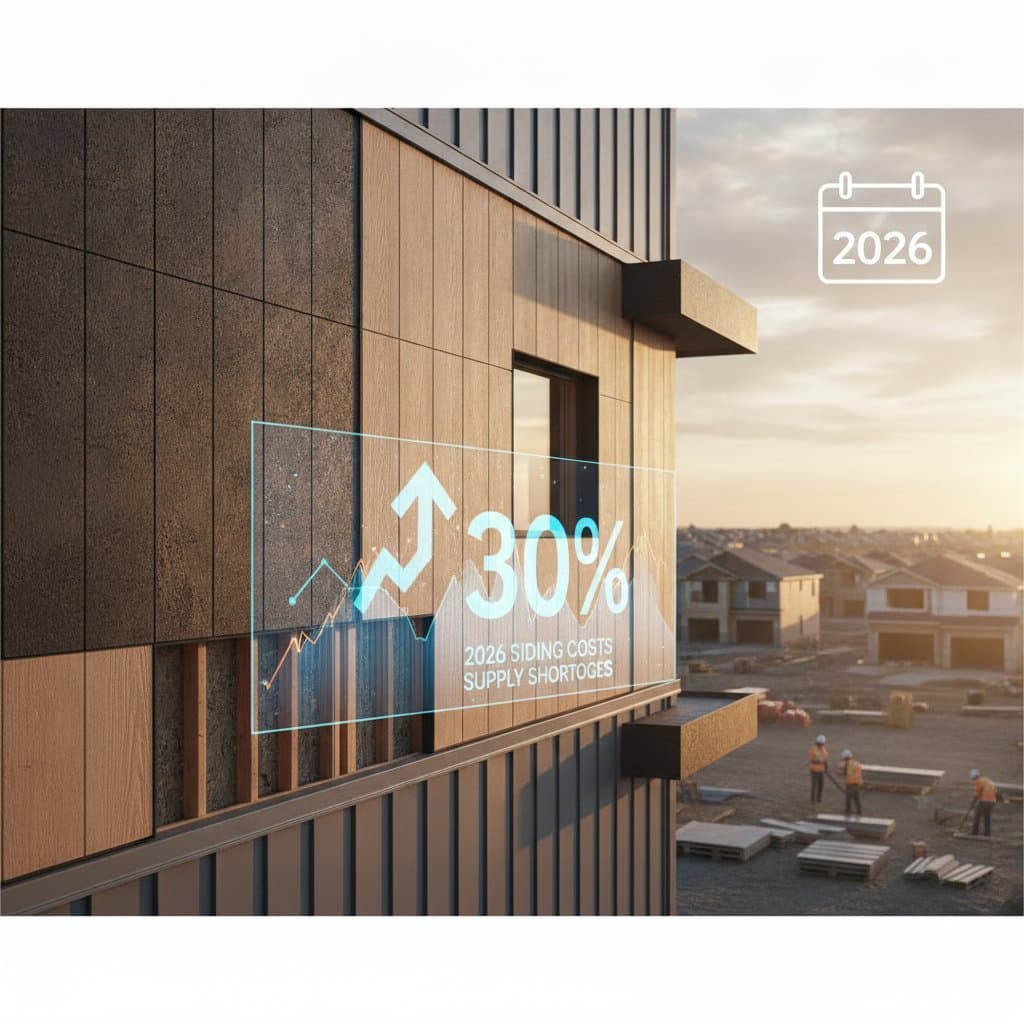
2026 Siding Shortages Expected to Raise Prices 30%
Homeowners planning exterior renovations face a new reality. Supply forecasts show that siding materials could rise by roughly 30 percent due to production slowdowns, transportation limits, and increased raw material costs. This projection affects vinyl, fiber cement, engineered wood, and metal siding alike.
Understanding how supply shortages influence cost, resale value, and project timing helps homeowners plan smarter and avoid unnecessary overruns.
Cost, ROI, and Impact Factors
A full siding replacement typically ranges from $9 to $17 per square foot, including removal, trim, and disposal. A modest single-story home may total $12,000 to $22,000, while larger or multi-story projects can exceed $35,000. A 30 percent cost increase could lift these totals by $3,000 to $10,000 depending on size and finish complexity.
Key cost drivers include tear-off and disposal volume, access difficulty such as steep slopes or dense landscaping, trim detail count and window surrounds, material type and texture, and labor availability in the local market.
Even with higher prices, new siding continues to return 65 to 75 percent of its cost at resale. Buyers value a fresh exterior because it signals low maintenance and solid envelope protection. Early planning reduces the risk of paying peak rates when shortages are most severe.
If your siding is nearing end-of-life, start gathering quotes now. Waiting can increase both material and labor costs.
Material and Profile Choices
Each siding type reacts differently to shortages and pricing swings.
| Material | Durability | Maintenance | Moisture Resistance | Fire Resistance | Typical Lifespan |
|---|---|---|---|---|---|
| Vinyl | Moderate | Low | High | Low | 25-35 years |
| Fiber Cement | High | Moderate | High | High | 35-50 years |
| Engineered Wood | High | Moderate | Medium | Medium | 30-40 years |
| Metal | Very High | Low | High | High | 40-60 years |
Mixing textures such as combining lap and board-and-batten profiles can maintain visual interest without heavy cost increases. Limit accent coverage to 20 percent of wall area to control waste and simplify installation.
Choose materials with long lifespans and stable supply channels. Fiber cement and metal often remain available longer than specialty composites.
Design for Curb Appeal
Curb appeal depends on balance, proportion, and clean transitions. Keep vertical and horizontal lines consistent, and use trim color to frame openings. Mid-tone colors with subtle undertones photograph well and hide dust or pollen buildup. A defined entry, updated house numbers, and layered lighting complete the composition.
Simplicity reads as quality. Avoid ornate patterns that raise installation risk and cost.
Installation Quality and Risk Control
Weather gaps, uneven overlaps, and poor flashing remain the top causes of callbacks. Confirm that installers use breathable wraps, corrosion-resistant fasteners, and properly sealed joints. Manage site debris daily to keep neighbors satisfied and prevent damage to landscaping or driveways.
Quality control during installation protects warranties and prevents moisture intrusion, which can shorten siding life by years.
Maintenance and Longevity
Regular cleaning with mild soap and a soft brush prevents surface staining. Inspect caulk joints and fasteners twice each year for loosening or cracking. Repaint fiber cement around the 15-year mark to maintain weather protection. Follow each manufacturer warranty rules on cleaning frequency and compatible products.
Maintenance checklist:
- Wash surfaces twice yearly
- Caulk joints as needed
- Replace damaged panels immediately
- Keep gutters clear to avoid splash-back
Consistent care keeps siding performing and looking new, even as replacement costs climb.
Contractor Selection and Bidding
Request written scopes that list materials, moisture barriers, trim, disposal, and permit handling. Compare bids line by line to confirm equal coverage. Tie payments to milestones such as delivery, mid-installation, and final inspection.
Plan Early to Secure Value
Plan early, lock pricing when possible, and document every detail. Even with a 30 percent price increase, high-quality siding remains a sound investment when installed and maintained correctly.