
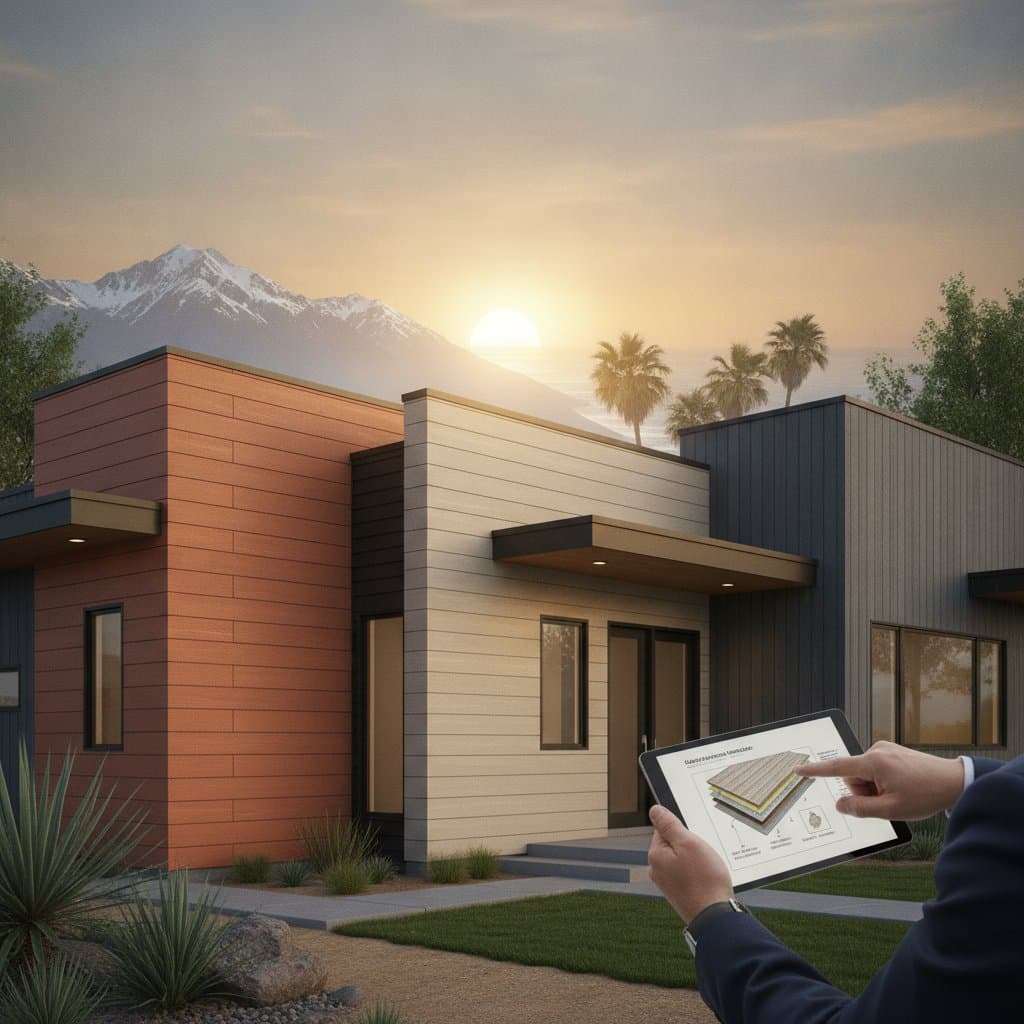
Selecting Siding for Local Climate Conditions
Choosing siding that fits your local climate protects your home and preserves resale value. The right selection depends on how heat, moisture, and freeze cycles interact with each material. A siding that performs well in one region can fail quickly in another.
Evaluating Costs and Return on Investment
Market value gains from siding upgrades come from both energy performance and visual impact. National data shows an average return on investment between 65 and 80 percent depending on region, material, and installation quality. Buyers judge siding by color uniformity, joint alignment, and perceived maintenance burden.
Cost drivers include removal and disposal at 1 to 3 dollars per square foot when replacing old cladding. Complex profiles such as lap, board and batten, or shake patterns raise labor hours. Trim and flashing around corners, windows, and doors often account for 15 to 25 percent of total cost. Multi level homes or tight lot lines require staging or lifts.
Small projects of 1,000 square feet typically range from 10,000 to 15,000 dollars. Mid size projects of 2,000 square feet range from 18,000 to 32,000 dollars. Larger projects of 3,000 square feet and up range from 30,000 to 60,000 dollars.
Request bids that separate material and labor so you can see how complexity affects cost. A clear scope makes it easier to compare offers.
Enhancing Visual Appeal Through Design
Durability affects resale value only when paired with balanced design. Buyers respond to proportion, color contrast, and clean lines more than decorative detail.
Use horizontal lines on wide homes to emphasize stability. Vertical board and batten profiles add height to smaller elevations. Keep trim widths consistent across all windows and doors.
Medium to dark tones hide dirt but fade more quickly under strong sun. Light tones reflect heat and stay cooler. Pair cool grays and blues with crisp white trim for coastal or northern settings. Warm taupes or muted greens suit wooded lots.
Highlight the front door with slightly deeper color or texture rather than ornate trim. Even lighting across the facade improves nighttime appearance and photography.
Choose color and texture combinations that photograph well in natural light. Balanced contrast improves both listing photos and first impressions.
Routine Care for Extended Performance
Regular maintenance preserves both performance and appearance. Even low maintenance materials require inspection and cleaning.
Rinse siding with mild soap and a soft brush every six months while checking for cracks or loose panels. Inspect caulk lines annually and repaint or reseal fiber cement or engineered wood edges. Touch up trim paint every three years and confirm gutters direct water clear of walls. After storms check for impact dents, warping, or moisture behind joints.
Use a garden hose with a soft bristle brush for cleaning. Avoid pressure washers above 1,500 psi. Never use abrasive pads that scratch finishes.
Most manufacturers require documented maintenance. Keep receipts and photos of cleanings or paint touch ups. Skipping routine care can void coverage for moisture or color failure.
Treat maintenance as part of ownership cost. A few hours per year can extend siding life by a decade or more.
Ensuring Year Round Protection
Climate appropriate siding reduces total ownership cost and stabilizes resale value. Homes with consistent color, tight joints, and clean edges photograph better and signal low maintenance to buyers. Whether you select fiber cement for its fire safety, vinyl for affordability, or metal for durability, success depends on proper installation and routine care.
Expect siding to last decades only if it matches your region conditions and you maintain it as the manufacturer directs. A stable exterior keeps moisture out, energy bills predictable, and curb appeal strong through every season.