
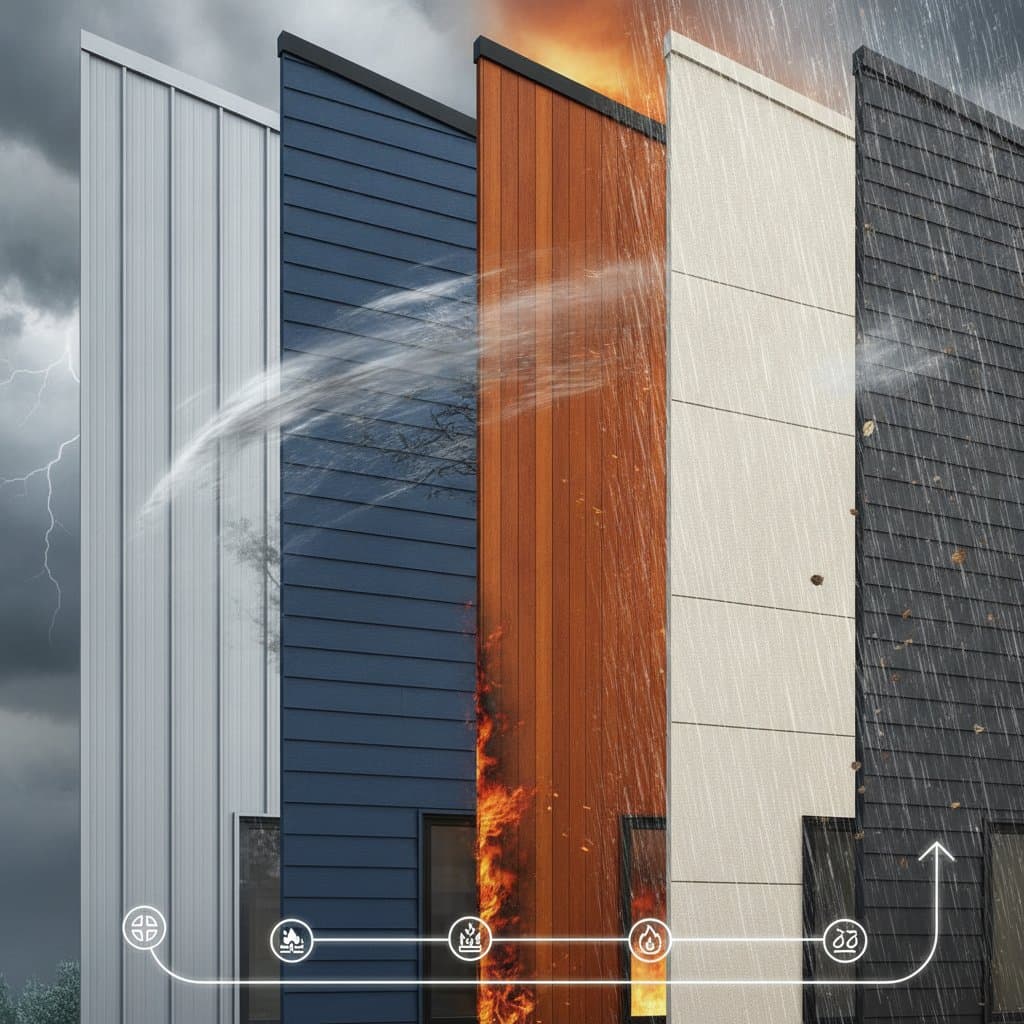
Best Siding for Extreme Weather: Material Comparison
Choosing siding that withstands extreme weather requires focus on protection first. Wind, rain, heat, and impact place continuous stress on a home exterior. The right cladding system blocks moisture, preserves finishes longer, and resists cracking or fading.
This guide compares leading siding materials for demanding climates. It outlines cost ranges and explains factors that influence performance and upkeep.
Core Profiles and Material Options
Core Profiles
- Lap siding: Horizontal boards that overlap. This profile suits most home styles and sheds water effectively.
- Board and batten: Vertical boards with narrow battens over seams. It appears often on farmhouses and rustic designs.
- Shingle or shake: Small staggered pieces that create texture. Installation requires extra fasteners and trim details.
- Panel siding: Large sheets that cover surfaces quickly. Builders use this option on modern or commercial structures.
Material Options
Vinyl consists of plastic with color integrated throughout. It resists rot and moisture yet remains vulnerable to cracking from impact and warping in extreme heat.
Fiber cement blends cement, sand, and cellulose fiber. The material withstands fire, insects, and moisture. Its weight demands solid structural support, and cut edges require immediate sealing.
Engineered wood combines treated wood fiber with resin. It reproduces natural grain patterns and installs with standard tools. Every cut edge must receive sealant to avoid swelling.
Metal siding, typically aluminum or steel, provides strong resistance to fire and impact. Heavy hail can create dents, yet the material maintains performance for decades with little maintenance.
Composite polymer panels mix resins and fillers. They limit fading and expansion. Higher material costs and fewer certified installers represent current limitations.
Mixing Materials and Trim Details
Facades gain visual interest when textures combine. Fiber cement lap siding on primary walls pairs well with stone or shake accents in gables. Transitions belong at corners or trim lines, and flashing must separate dissimilar materials.
Trim protects joints around windows and doors. PVC or fiber cement trim performs best in wet areas. Metal or engineered wood trim maintains integrity in dry or high ultraviolet zones.
Climate Specific Examples
Coastal homes benefit from fiber cement or metal because both resist salt air and wind loads. Dry wildfire regions require fiber cement or noncombustible metal. Cold climates favor engineered wood or insulated vinyl for improved thermal performance. Hail prone plains call for steel panels or impact rated vinyl.
Durability and Safety Considerations
Weather Risks and Performance
Extreme conditions cause repeated expansion, contraction, and impact. Siding must block moisture intrusion, resist ultraviolet degradation, and handle wind uplift. Confirm that the selected system meets local wind speed and exposure requirements.
Fiber cement remains noncombustible and retains fire ratings without additional coatings. Engineered wood receives decay resistant resins yet stays combustible. Vinyl melts under direct flame and deforms from radiant heat. Metal does not burn, although uninsulated sections can transfer heat.
Moisture management depends on integrated flashing and weep paths that promote drainage. Face nailing should be avoided because it can trap water. Hail zones require thicker gauge metal or impact rated vinyl.
Envelope Details and Maintenance
Install a continuous weather barrier behind the siding. Apply proper flashing at windows, doors, and horizontal joints. Use starter strips and vented trim at the base to allow water to exit. Select sealants compatible with the siding finish.
| Interval | Task |
|---|---|
| Every 6 months | Inspect caulking, joints, and paint for cracks. |
| Once a year | Wash surface with mild soap and water using a soft brush. |
| Every 5 to 10 years | Repaint or refinish for continued ultraviolet protection. |
| After storms | Check for impact dents, lifted panels, or missing fasteners. |
Avoid pressure washers that force water behind panels. Follow manufacturer cleaning guidelines to preserve warranty coverage.
Warranties range from twenty years to lifetime coverage. Most exclude excessive color fade and failures from improper installation or neglected maintenance. Retain all receipts and inspection records for warranty support.
Project Preparation Steps
Define project goals and scope. Decide whether insulation upgrades, trim improvements, or rain screen systems belong in the plan. Establish a budget based on cost per square foot multiplied by total wall area.
Obtain bids from at least three licensed contractors who hold manufacturer certification. Compare material thickness, fastener specifications, finish brands, warranties, and schedules rather than price alone.
Review full size samples in natural light. Request a small wall mockup when color or texture accuracy matters. This step prevents mismatched tones or unexpected sheen on the finished surface.
Clear vegetation, relocate outdoor furniture, and mark sprinkler heads before work begins. Confirm daily debris removal and work hours with the crew leader. Keep pets and children away from active zones.
Perform quality checks at each installation milestone to confirm alignment, fastening, and flashing details.
Practical Recommendations
Match material selection to local climate conditions rather than current design trends. A product that succeeds in arid zones may fail under persistent rainfall.
Create a ventilation gap behind the cladding. This air space extends finish life and reduces trapped moisture.
Apply sealant to every field cut immediately. Factory coatings lose effectiveness without proper touch up.
Photograph and record all maintenance activities. Documentation supports future warranty claims.
Inspect siding after major storms. Prompt repairs stop minor damage from expanding.
Selecting siding that matches regional demands delivers lasting structural protection and sustained property value.