
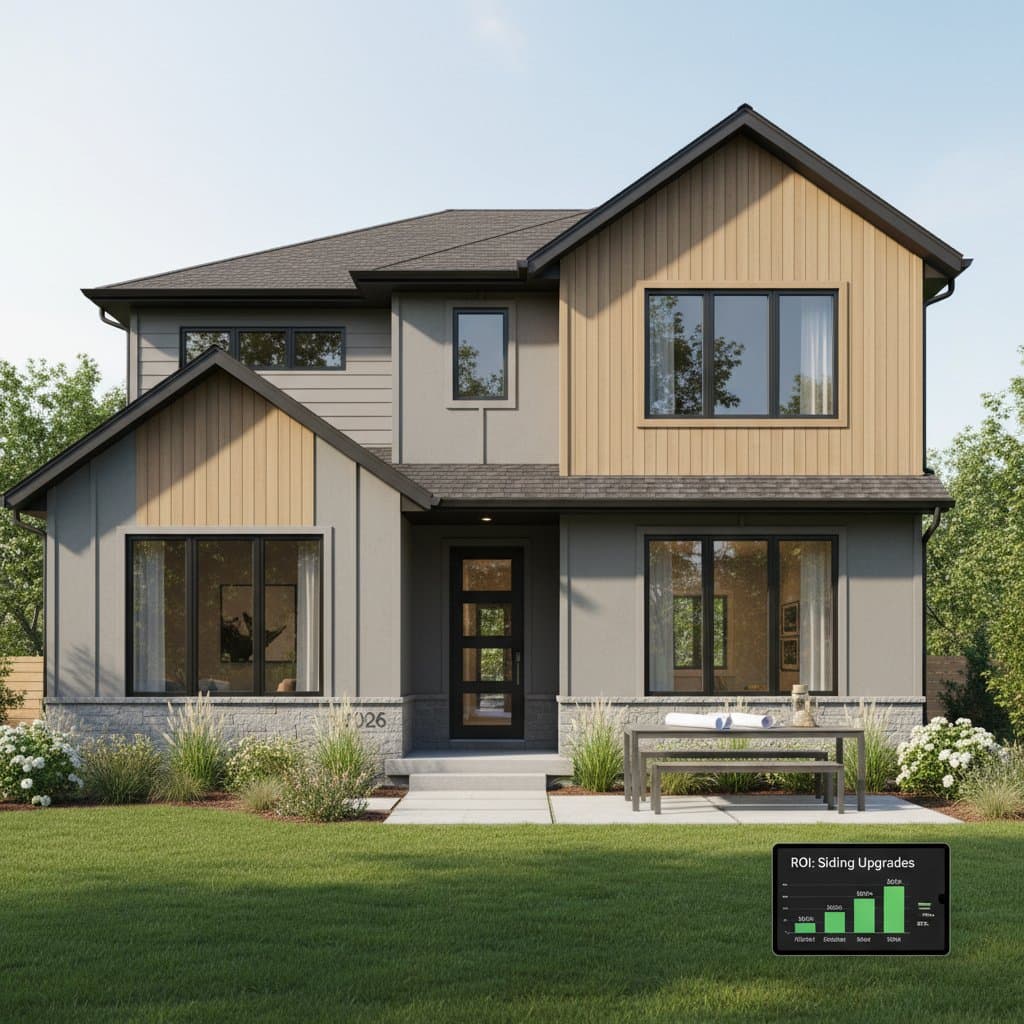
Selecting Siding Upgrades for Maximum ROI in 2026
Replacing or updating siding ranks among the most effective strategies for increasing property value, enhancing weather resistance, and elevating exterior aesthetics. A well-executed project can recoup up to 80% of its investment upon resale, provided selections align with local climate conditions, homeowner preferences, and future maintenance capabilities.
This comprehensive guide assists homeowners in evaluating siding options, budgeting effectively, and navigating the installation process to achieve optimal results.
Understanding Styles and Profiles
Essential Siding Profiles
- Lap Siding: Overlapping horizontal planks that create a seamless, classic appearance, particularly suited to colonial or ranch-style residences.
- Board and Batten: Vertical boards separated by narrow battens that conceal seams, offering versatility for rustic farmhouse aesthetics or sleek contemporary facades.
- Shingles or Shakes: Individually placed, overlapping elements that mimic natural textures, perfect for accentuating gables or evoking coastal cottage charm.
- Panel Systems: Broad, flat sheets that provide a clean, minimalist finish, commonly applied to modern or mid-century homes.
Material Comparisons
| Material | Advantages | Disadvantages | Estimated ROI |
|---|---|---|---|
| Vinyl | Affordable pricing, extensive color variety, low upkeep requirements | Susceptible to cracking in extreme cold, potential for color fading | 75-85% |
| Fiber Cement | Resistant to fire and pests, realistic wood-like finish | Substantial weight, requires repainting approximately every 10 years | 80-90% |
| Engineered Wood | Natural wood aesthetics, simpler fabrication than alternatives | Demands regular sealing to prevent moisture damage | 70-80% |
| Metal (Steel or Aluminum) | Exceptional durability, contemporary styling, environmentally recyclable | Prone to denting, restricted options for recoloring | 60-75% |
| Natural Wood | Authentic grain patterns, sourced renewably | Extensive maintenance needs, vulnerability to decay and insects | 55-70% |
Integrating Multiple Materials
Layering different materials enhances architectural depth at minimal additional expense. Consider pairing fiber cement lap siding on lower levels with shingle accents in upper gables to achieve a dynamic, multi-textured elevation. Limit combinations to two primary materials per facade to maintain visual cohesion.
Trim and Accent Considerations
Trim elements outline features and safeguard seams against moisture infiltration. Opt for cellular PVC or factory-finished fiber cement to minimize ongoing care. Select accent hues that provide subtle contrast to the primary siding color, ensuring definition while preserving overall harmony.
Project Examples by Budget
- Budget-Friendly Refresh: Install insulated vinyl panels on a one-story bungalow, yielding energy cost reductions and a swift payback period through improved insulation.
- Mid-Tier Enhancement: Apply fiber cement lap siding paired with composite trim to a two-story colonial, significantly elevating market value and longevity.
- High-End Transformation: Incorporate engineered wood siding with integrated metal panels for a sophisticated, neighborhood-distinguishing modern exterior.
Preparing for a Successful Siding Installation
1. Establish Objectives and Project Boundaries
Outline specific aims, such as enhanced thermal performance, refreshed palette, or comprehensive barrier against elements. Conduct precise measurements of all exterior walls, document any current deterioration, and determine whether to include soffits, gutters, or trim in the scope.
2. Evaluate and Select Contractors
Solicit bids from a minimum of three certified professionals. Require documentation of liability insurance, client testimonials, and specialized certifications for the intended materials. Assess proposals based on comprehensive coverage, site cleanup protocols, and post-installation warranty terms, beyond mere pricing.
3. Review Material Samples
Obtain physical samples of chosen materials in the desired finishes. Position them against the home's exterior under varying lighting conditions to evaluate color accuracy and surface quality. Arrange for contractors to affix a temporary mockup section, allowing inspection of attachment methods and seam alignments.
4. Prepare the Property Site
Secure a clear perimeter of at least five feet around the structure for equipment access and waste management. Relocate outdoor furnishings, landscaping features, and vegetation. Deactivate nearby electrical sources if conduits approach the siding surface, and coordinate crew logistics including parking and waste container placement.
5. Manage Daily Operations
Anticipate operational sounds from cutting tools and fastening equipment. Keep family members and animals inside during work hours. Perform end-of-day reviews to verify straight lines and proper integration of weather-resistant barriers before concealing critical zones.
6. Perform Final Inspections
- Confirm that siding courses run level and overlaps alternate positions.
- Ensure fasteners secure into framing members or substrates at recommended intervals.
- Validate that water-resistive barriers install with proper shingling from base to peak.
- Check for uniform spacing around trim edges to facilitate effective sealing.
Approve completion only upon resolution of all identified issues and activation of material warranties.
Sustaining Long-Term Value from Your Siding Investment
A strategic siding upgrade delivers enduring benefits in property appreciation, reduced upkeep demands, and fortified defense against environmental stresses. Choose materials attuned to your locale's demands, oversee expenditures with precision, and commit to annual inspections and finishes. This approach ensures your home remains secure, energy-efficient, and visually compelling for generations.