
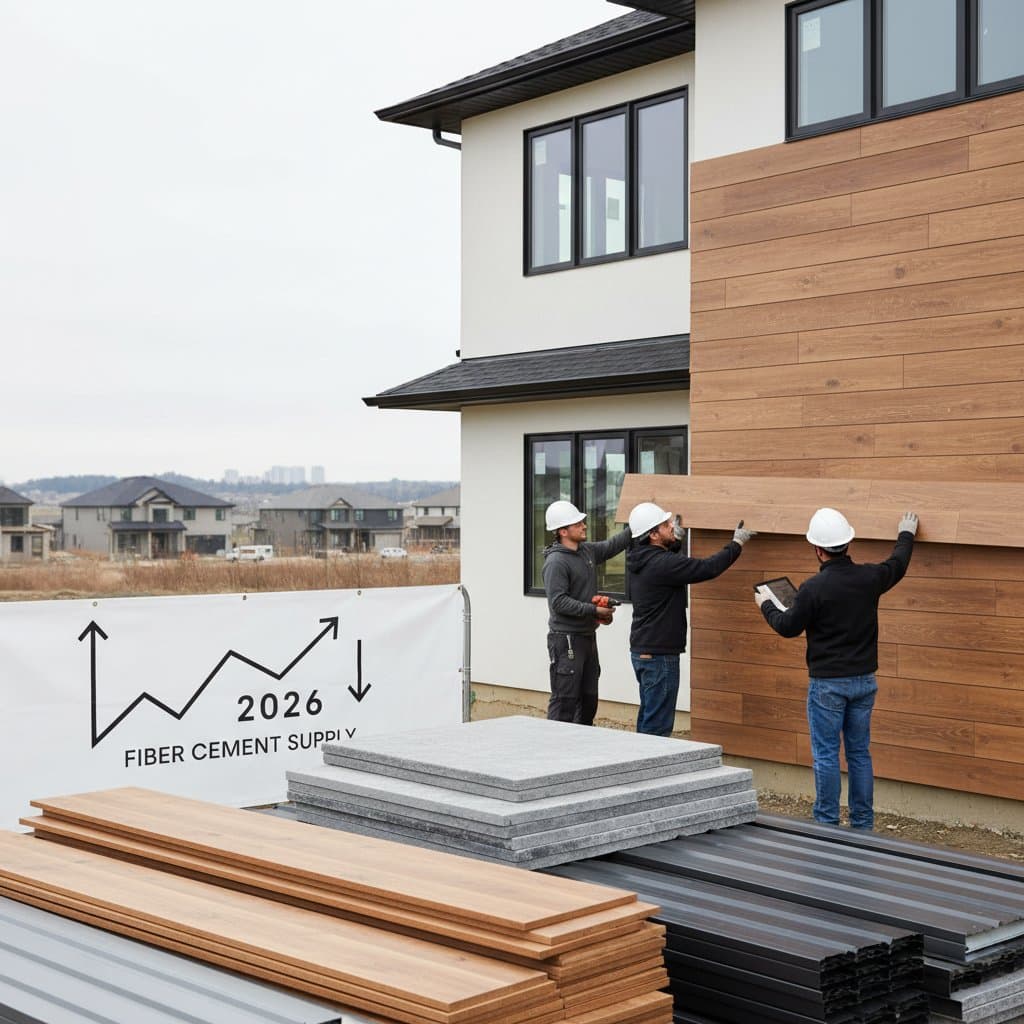
Navigating the 2026 Fiber Cement Shortage: Essential Siding Alternatives
The fiber cement shortage projected for 2026 exerts significant pressure on builders and homeowners who rely on this material for its combination of affordability, strength, and aesthetic appeal. Limited availability leads to extended delivery times and increased expenses, prompting a shift toward alternative siding options that maintain structural integrity and visual charm. Homeowners must now prioritize factors such as initial investment, ongoing upkeep, and potential impact on property resale value.
This comprehensive guide details the budgetary implications of the supply disruption, highlights viable replacement materials, and provides strategies for selecting options that enhance durability and curb appeal over the long term.
Selecting Materials and Profiles for Optimal Performance
In periods of fiber cement scarcity, effective substitutes emphasize resistance to environmental elements, visual versatility, and extended service life. Builders and homeowners benefit from evaluating how each option aligns with regional climate conditions and architectural styles.
The following table compares key alternatives, focusing on practical attributes that influence decision-making:
| Material Type | Pros | Cons | Maintenance Need | Fire/Moisture Resistance |
|---|---|---|---|---|
| Engineered Wood | Offers authentic wood grain textures, weighs less than traditional options, installs with standard tools | Requires periodic repainting or staining every 7-10 years to prevent weathering | Moderate | Moderate fire resistance, strong moisture barriers when sealed properly |
| Vinyl Composite | Features embedded color for fade resistance, demands minimal upkeep, available in wide color ranges | Susceptible to deformation in extreme temperatures above 140 degrees Fahrenheit, offers shallower surface relief | Low | Limited fire rating, effective moisture repulsion with proper venting |
| Steel Siding | Provides superior longevity against impacts, insects, and decay, recyclable at end of life | Involves elevated initial expenses, color matching for repairs requires professional touch-up | Low | High fire resistance, robust moisture protection with galvanized coatings |
| Fiber Cement (Limited Supply) | Delivers exceptional toughness and wood-like aesthetics without organic vulnerabilities | Poses challenges due to weight during handling, necessitates diamond-tipped saws for cuts, faces ongoing supply constraints | Moderate | Superior fire and moisture resistance across varied exposures |
Achieving Cohesive Design Through Texture Integration
To preserve architectural harmony, maintain uniformity in primary siding across all exterior surfaces. Introduce variations such as vertical paneling, shingle patterns, or metallic accents sparingly, limiting them to focal areas like rooflines or door surrounds.
Align trim elements by ensuring consistent dimensions and finishes, which prevents visual discord and simplifies future maintenance. For instance, select matte or semi-gloss sheens that complement the main material's reflectivity.
Key Recommendation: Establish a single primary siding type complemented by no more than one accent material. This approach sustains marketability during resale and stabilizes project expenses by reducing material variety.
Ensuring Superior Installation to Mitigate Risks
Even the finest materials underperform without meticulous installation techniques. Proper integration of protective layers, sealing methods, and attachment protocols safeguards against water damage, thermal expansion, and structural compromise.
Critical Envelope Components
Apply a seamless weather-resistive barrier over the entire sheathing, ensuring overlaps of at least six inches at all joints to direct water away from vulnerable areas. Incorporate metal flashing or self-adhering membranes at horizontal ledges, sill plates, and around openings like doors and windows to channel moisture outward.
Position siding panels no closer than six inches to the ground level, allowing for adequate airflow and preventing capillary action from soil. In high-wind zones, secure panels with corrosion-resistant fasteners spaced according to manufacturer specifications, typically 16 inches on center.
Identifying and Avoiding Installation Pitfalls
- Inaccurate Fastener Penetration: Driving nails or screws too deeply fractures material edges; aim for a depth that embeds the head flush without compressing the substrate.
- Exposed Cut Edges: Seal all field cuts with manufacturer-recommended caulk or primer immediately after sizing to block moisture entry and extend material lifespan by up to 20 years.
- Misaligned Joints: Maintain even spacing of 1/8 inch between panels to accommodate seasonal movement; overly tight fits cause warping, while excessive gaps invite debris accumulation.
Preparing the Site for Smooth Execution
Before commencing work, remove nearby vegetation and cover sensitive features such as landscaping or glass surfaces to minimize incidental damage. Schedule daily debris removal to comply with local ordinances, reduce fire risks, and foster positive relations with neighbors.
Confirm compliance with building codes by obtaining necessary permits early; this step averts costly rework during inspections. Document pre-installation conditions with photographs to support warranty claims if issues arise later.
Key Recommendation: Rigorous installation practices not only enhance performance but also uphold manufacturer warranties. Monitor initial courses of siding placement to verify alignment and adjust techniques before scaling to full coverage.
Strategizing Contractor Selection and Bid Evaluation
Securing a skilled professional represents the primary safeguard against overruns in time and budget. Focus on contractors with proven expertise in alternative materials to ensure quality outcomes.
Comprehensive Scope Definition
Outline project parameters clearly in requests for proposals, including:
- Specific material grades and thicknesses suited to local weather patterns.
- Details on weather barriers, flashing integrations, and ventilation systems.
- Specifications for trim, soffits, and complementary hardware.
- Approaches to surface preparation, finishing applications, and color selections.
- Protocols for waste management, site restoration, and final inspections.
- Assignment of permit procurement and code adherence responsibilities.
Analyzing Competitive Bids
Solicit a minimum of three detailed, itemized quotes based on identical scopes to facilitate apples-to-apples comparisons. Beyond overall pricing, scrutinize:
- Duration and terms of labor warranties, ideally extending 5-10 years.
- Team credentials, including years of experience with the chosen siding type and references from similar projects.
- Defined schedules with contingency plans and liquidated damages for timeline breaches.
Structuring Secure Payment Terms
Link disbursements to verifiable progress points:
- Upon verified arrival and inspection of materials.
- After complete removal of existing siding and substrate preparation.
- At the halfway mark, following a third-party or owner inspection.
- On project completion, after a thorough walkthrough confirms all specifications and cleanup standards.
Key Recommendation: Opt for bids that balance cost with comprehensive coverage rather than the absolute lowest figure. Verify alignment on all elements prior to contract execution to eliminate ambiguities.
Sustaining Value Through Informed Siding Decisions
The 2026 fiber cement constraints compel a reevaluation of priorities, including resilience against elements, project timelines, and aesthetic uniformity. Engineered wood offers approachable warmth with manageable care, while steel provides unyielding protection at a premium. Vinyl composites serve budget-conscious choices emphasizing ease.
Anticipate needs by initiating planning six months in advance, securing material commitments once contractor agreements solidify, and maintaining detailed records of all processes. Thoughtful siding upgrades fortify home protection, elevate exterior allure, and contribute to enduring property appreciation.