
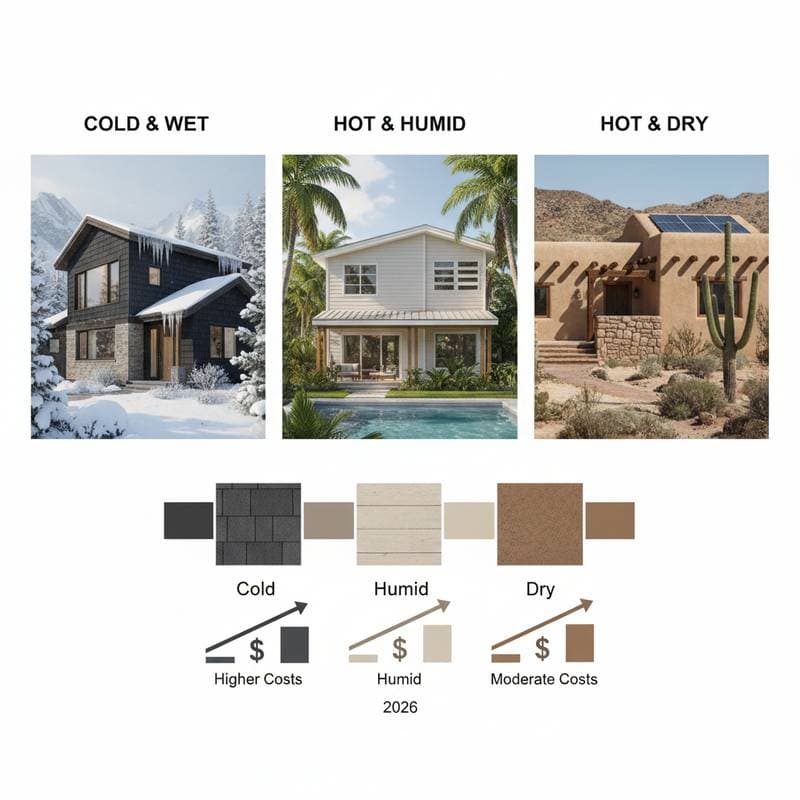
Understanding 2026 Climate Zone Impacts on Siding Replacement Costs
Homeowners preparing for siding replacement discover that local climate zones exert a greater influence on overall expenses than the selected material. Fluctuations in temperature, levels of humidity, and degrees of environmental exposure impact installation labor as well as sustained durability. Grasping the ways regional weather patterns shape pricing and functionality enables precise budgeting and realistic projections.
Key Cost Elements, Returns, and Influencing Variables
Project Overview Box:
- Project Scope: Complete removal of existing siding followed by full replacement
- Timeline: Seven to fourteen working days
- Complexity Level: Moderate to high, varying with building height and site access
- Standard Cost Range: Six to seventeen dollars per square foot for installed materials
Regions with cold and wet conditions push expenses toward the higher end because of added insulation requirements, essential moisture barriers, and extended installation periods due to adverse weather. Areas characterized by dry or temperate climates typically align with the lower cost spectrum, particularly when old siding removal proceeds straightforwardly and site access remains unobstructed.
Primary cost components encompass:
- Demolition and disposal of existing siding and associated trim
- Building height and total number of stories
- Intricacy of corners, eaves, and unique architectural features
- Prevailing local labor rates alongside required permit expenses
- Specifications for underlayment type and thickness
For a modest single-story residence, total project costs range from twelve thousand to eighteen thousand dollars. A medium-sized two-story property may incur expenses between twenty-five thousand and thirty-five thousand dollars. Expansive homes or those featuring premium profiles often surpass fifty thousand dollars. National data on property resale values indicate that returns on investment average sixty-five to eighty percent, provided materials align with regional climate demands and installation adheres to superior standards.
In arid Southwest regions, for instance, lightweight vinyl installations benefit from minimal underlayment needs, keeping costs below ten dollars per square foot. Conversely, in humid Southeast areas, fiber cement options necessitate robust moisture protection, elevating prices to fifteen dollars or more per square foot.
Practical Recommendation: Align the siding system with prevailing local weather conditions prior to evaluating vendor quotes. Materials mismatched to the environment can escalate subsequent maintenance expenses by double.
Selecting Materials and Profiles
The table below outlines common siding materials, highlighting their advantages, drawbacks, expected lifespan, and upkeep needs.
| Material | Advantages | Disadvantages | Expected Durability (Years) | Maintenance Requirements |
|---|---|---|---|---|
| Vinyl | Cost-effective, resistant to fading | Prone to brittleness in severe cold | 25-40 | Annual washing with mild solution |
| Fiber Cement | Resistant to fire and moisture | Substantial weight increases labor | 35-50 | Repainting required every 10-15 years |
| Engineered Wood | Provides warm aesthetic at moderate price | Requires sealing at all cut edges | 30-40 | Recoating necessary every 8-10 years |
| Metal | Proof against insects, non-combustible | Susceptible to dents and scratches | 40-60 | Occasional cleaning suffices |
Combining profiles, such as horizontal lap siding paired with vertical board-and-batten accents, introduces visual interest and dimension to exteriors. Limit color shifts to subtle variations to maintain harmony; excessive contrasts risk diminishing the home's apparent scale and creating a disordered appearance.
In coastal zones with high salt exposure, metal siding excels due to its corrosion-resistant coatings, whereas inland prairies favor engineered wood for its natural insulation properties against wind-driven rain.
Practical Recommendation: Select a primary texture complemented by a single accent region. Opt for finishes certified to withstand the ultraviolet radiation and moisture levels specific to the local climate.
Enhancing Curb Appeal Through Design
Achieving equilibrium in massing and proportions proves more impactful than employing vibrant hues. Lighter siding colors visually broaden the facade, whereas deeper tones anchor elevated structures. Maintain uniform trim dimensions surrounding windows and entryways for cohesive lines. A prominent entry area, illuminated by strategic lighting and featuring clearly visible address numerals, supports strong first impressions and enhances marketability.
Professional staging during resale preparations often reveals that well-proportioned designs increase perceived value by up to fifteen percent, according to industry observations.
Practical Recommendation: Direct design efforts toward the entryway vicinity. Prospective buyers form opinions on property upkeep within moments of approach.
Ensuring Installation Excellence and Mitigating Risks
Effective weatherproofing originates beneath the siding layers. Installers must incorporate proper flashing, secure all penetrations with sealant, and integrate vented rain screens to avert moisture accumulation. Vulnerable areas frequently include juncture points at corners, sills above windows, and intersections between rooflines and walls. Safeguard adjacent landscaping and neighboring properties through organized debris management and protective coverings for vegetation during demolition phases.
Hiring certified professionals reduces the likelihood of callbacks, which can add ten to twenty percent to total costs if water intrusion occurs post-installation.
Practical Recommendation: Require contractors to capture photographic evidence of weatherproofing elements prior to enclosing them with new siding.
Strategies for Maintenance and Extended Service Life
Conduct routine cleaning using a soft-bristled brush and gentle detergent solution to inhibit mildew growth. Evaluate caulk lines biennially for deterioration. Address any fractured sealant promptly to prevent underlying sheathing compromise. Direct irrigation systems away from direct, repeated contact with siding surfaces. Product warranties typically mandate documentation of consistent cleaning and periodic finish refreshes to remain valid.
Maintenance Protocol:
- Perform full washing once per year
- Examine sealant joints every twenty-four months
- Apply touch-up paint or sealants where deterioration appears
- Trim surrounding vegetation to maintain at least six inches of clearance from walls
Diligent adherence to these practices can extend material longevity by one-third beyond baseline estimates, preserving both aesthetic integrity and structural protection.
Practical Recommendation: Consistent maintenance upholds finish durability and warranty eligibility. Oversight accelerates degradation, potentially halving the effective service life.
Choosing Contractors and Evaluating Proposals
Solicit detailed written proposals that delineate the full tear-off process, underlayment specifications, flashing components, trim fabrication, waste disposal methods, and permit acquisition responsibilities. Scrutinize bids item by item to identify inclusions such as scaffolding rental, supplementary insulation, or surface painting. Prefer payment structures linked to verifiable progress points, including material arrival and interim quality assessments.
Verify contractor credentials through local licensing boards and review portfolios of completed projects in similar climate conditions to ensure expertise.
Realizing Lasting Value from Siding Investments
Local climate conditions shape not only initial expenditures but also ongoing enjoyment and performance. Thoughtfully selected siding contributes to energy efficiency, withstands regional challenges, and sustains attractive exteriors over decades. Homeowners who prioritize climate-appropriate choices report higher satisfaction rates and stronger equity growth, transforming routine updates into enduring assets.