
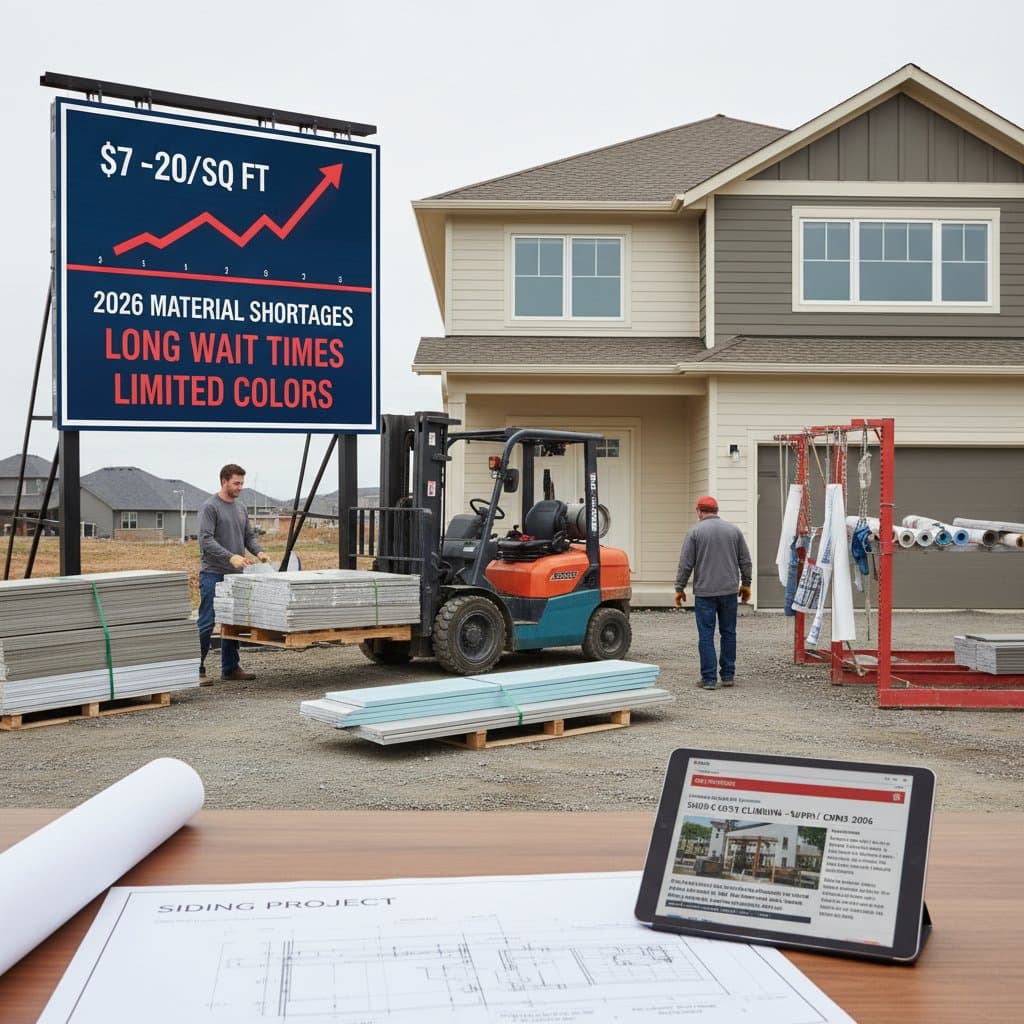
Understanding the 2026 Siding Shortage and Price Surge
Homeowners embarking on exterior renovations encounter a constrained market for siding materials. Supply chain disruptions have intensified, pushing costs higher and extending delivery periods beyond typical expectations. Contractors advise securing commitments early to mitigate these pressures. This overview clarifies the underlying issues, their impact on individual projects, and strategies for effective financial planning during scarcity.
The price range for siding installation now spans $7 to $20 per square foot, influenced by material type, labor rates, and regional factors. Vinyl options start at the lower end, while premium fiber cement or custom metal finishes approach the upper limit. These figures include basic removal and installation but exclude additional features like insulation upgrades or complex trim work.
Selecting Siding Styles and Profiles
Exterior siding choices shape both aesthetic appeal and functional performance. Common profiles include lap, board and batten, and shingle or shake designs, each adapted to specific architectural and environmental needs. Understanding these options helps align selections with home style and local conditions.
Key Siding Profiles
- Lap Siding. This horizontal arrangement features overlapping boards that direct water away from the structure, making it suitable for most wall applications in varied climates.
- Board and Batten. Vertical wide boards paired with narrow battens over seams provide a rustic or contemporary look, ideal for farmhouses or minimalist builds, though they demand robust support to resist wind loads.
- Shingle or Shake. These textured, staggered elements replicate natural wood for accents or gable ends, requiring precise installation to ensure proper drainage and prevent moisture accumulation.
Horizontal profiles excel in rain-prone areas by promoting runoff, while vertical ones benefit from reinforced framing to maintain stability. Shingles demand attention to overlap patterns for optimal weather resistance.
Available Material Choices
Material selection balances durability, maintenance, and current availability. Each type presents unique advantages and installation considerations, especially amid ongoing shortages.
Vinyl Siding. This lightweight option requires minimal upkeep and resists fading, yet limited color inventories persist due to production bottlenecks. Installers must account for thermal expansion by leaving adequate gaps, particularly in cooler temperatures, to prevent buckling.
Fiber Cement Siding. Known for its density and fire resistance, this material withstands harsh weather but poses challenges in cutting and handling due to weight. Shortages primarily impact prefinished variants; opt for primed boards if colors are unavailable, and plan for professional tools to achieve clean edges.
Engineered Wood Siding. Factory-applied sealants protect this lighter alternative to cement, though edges remain vulnerable to shipping damage. Resin shortages affect production, so verify stock levels early; treat any nicks with sealant before installation to preserve integrity.
Metal Siding. Aluminum and steel options maintain steady pricing and excel in high-wind zones or modern designs. Lead times extend because fabrication facilities operate at capacity; specify gauge thickness upfront to ensure structural compliance.
Guidelines for Combining Materials and Trims
Integrating multiple materials can optimize costs and accelerate timelines by leveraging available stock. For instance, apply vinyl lap to bulk areas and reserve fiber cement for high-visibility sections like entryways. Maintain uniform trim depths and finishes across transitions to eliminate visual discrepancies from light and shadow play.
Prioritize pre-coated metal accents for edges and corners, which minimize on-site painting and enhance weatherproofing. Ensure all joints feature proper flashing to direct water outward, preventing infiltration at material changes.
Practical Design Examples
- Suburban Two-Story Home. Employ vinyl lap siding throughout with PVC trim elements to simplify maintenance and blend seamlessly with neighborhood aesthetics.
- Coastal Cottage. Install fiber cement shingles on exposure-facing sides for superior durability against salt air, complemented by vinyl on sheltered walls to control expenses.
- Modern Urban Infill. Combine smooth metal panels for clean lines with fiber cement accents to introduce subtle texture, ensuring all elements align in scale and proportion.
Successful combinations hinge on aligned joint patterns and strategic breaks, such as soffits or downspouts, to demarcate material shifts without compromising the facade's cohesion.
Preparing Your Siding Project Step by Step
Systematic preparation transforms potential obstacles into manageable tasks. Follow these phases to define requirements, secure reliable partners, and oversee execution for a flawless outcome.
1. Establish Project Objectives and Measurements
Determine whether the work involves complete replacement or targeted repairs. Document needs such as enhanced insulation, specific trim hues, and vapor barrier specifications. Calculate precise square footage by measuring walls, deducting openings, and adding 10 percent for waste to inform accurate quoting.
2. Evaluate Contractors and Obtain Detailed Quotes
Solicit bids from no fewer than three licensed professionals experienced in shortage conditions. Require details on material brands, board thicknesses, and surface treatments in each proposal. Verify inclusions for old siding removal, waste disposal, and substrate preparation, alongside proof of insurance and recent project portfolios.
3. Review Samples and Secure Approvals
Examine tangible samples under natural light to validate color and texture expectations. Construct a modest mockup section for multi-material setups to test visual harmony. Finalize designs for flashing placements, trim profiles, and ventilation paths prior to mobilization, retaining approved samples as contractual benchmarks.
4. Prepare the Site and Monitor Progress
Remove obstacles like fixtures and foliage to grant unobstructed access. Anticipate disruptions from noise and debris, providing electrical outlets and stable platforms for equipment. Conduct brief daily inspections with the lead supervisor to track advancements and address any emerging issues promptly.
5. Perform Milestone Quality Assessments
Prior to underlayment, inspect sheathing integrity and confirm flashing alignments. During installation, measure joint intervals and fastener placements against specifications. At completion, evaluate overall levelness, seal all gaps thoroughly, and complete necessary touch-up painting.
Capture photographic evidence at every stage to support warranty claims and resolve potential conflicts efficiently.
Ensuring Lasting Performance and Project Success
As market constraints evolve, elevated costs underscore the value of resilient siding in safeguarding your home's framework, improving insulation, and boosting market appeal. Proactive measures during selection and installation yield enduring benefits.
Upon delivery, scrutinize each bundle for defects and refuse substandard items to sidestep prolonged delays. Position stored materials horizontally on elevated supports, shielded from precipitation, to maintain quality.
Thorough documentation, adherence to manufacturer guidelines, and routine inspections extend service life significantly. Homeowners who invest time in these practices secure reliable protection and substantial returns on their exterior upgrades.