
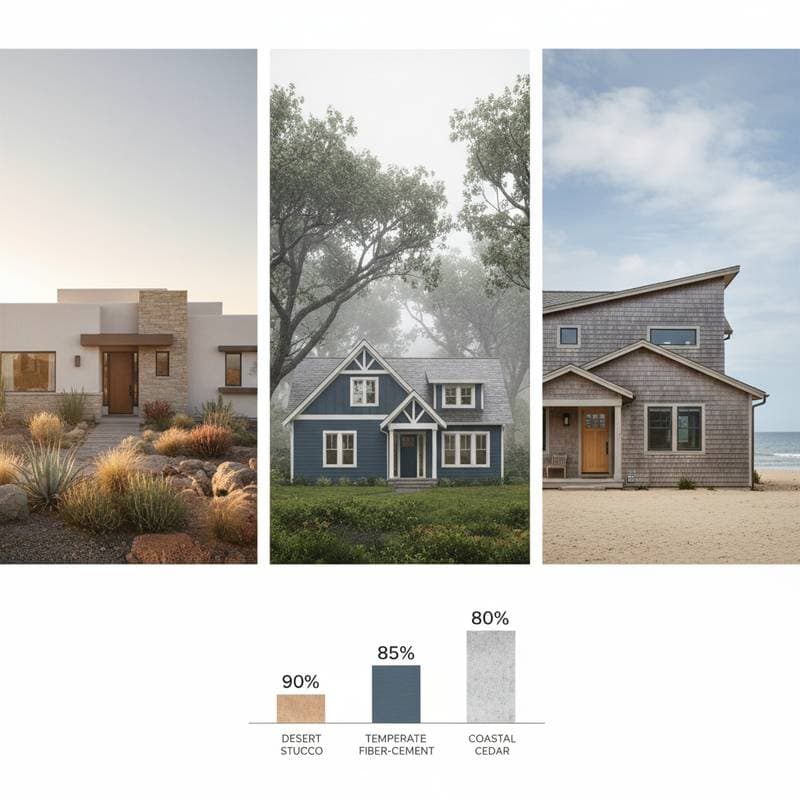
Selecting Siding for Optimal Climate Performance and ROI in 2026
Homeowners face a critical choice when replacing siding. This decision influences not only the exterior appearance but also long-term comfort, maintenance demands, and financial returns upon resale. Materials must align with local climate conditions to ensure longevity and value preservation. By evaluating how weather patterns affect siding performance, individuals can select options that minimize repairs and enhance market appeal.
Climate zones vary widely across regions, from arid deserts to humid coasts and frigid winters. Siding that thrives in one area often underperforms in another due to factors like temperature fluctuations, moisture levels, and UV exposure. For instance, materials prone to warping in high humidity may excel in dry environments. This guide outlines recommendations tailored to major U.S. climate categories, focusing on durability, cost efficiency, and resale impact.
Understanding Costs, ROI, and Key Influences
Exterior siding projects consistently rank high for resale value recovery. According to industry data, well-chosen replacements recoup 80 to 90 percent of costs, depending on material and regional demand. Potential buyers assess curb appeal within seconds, viewing updated siding as an indicator of overall home care and structural integrity.
Material Cost Breakdown
Costs fluctuate based on material type, installation complexity, and location-specific factors. Below are average ranges per square foot for professional installation in 2026:
- Vinyl Siding: $8 to $12, offering affordability and low maintenance in moderate climates.
- Fiber Cement Siding: $10 to $15, prized for fire resistance and strength in varied conditions.
- Engineered Wood Siding: $9 to $16, providing natural aesthetics with enhanced weatherproofing.
- Metal Siding (Steel or Aluminum): $12 to $20, ideal for extreme weather due to superior durability.
- Natural Wood Siding: $10 to $18, delivering premium texture but requiring more upkeep.
Factors Driving Total Expenses
Several elements determine the final project budget. Removal of old siding and proper disposal add 10 to 20 percent to costs. Multi-story homes increase labor due to scaffolding needs. Intricate trim work or repairs to underlying walls elevate prices further. Local labor rates vary; urban areas command premiums, while rural installations prove more economical. Permits and inspections also contribute, typically 5 to 10 percent of the total.
Project Scale Illustrations
To contextualize expenses, consider these examples for standard single-family homes:
- Compact Home (1,200 sq. ft.): Budget $10,000 to $14,000, suitable for vinyl or basic fiber cement.
- Average Residence (2,000 sq. ft.): Expect $16,000 to $24,000, accommodating engineered wood or metal options.
- Spacious Property (3,000+ sq. ft.): Plan for $25,000 to $40,000, where premium materials like natural wood justify the investment.
ROI hinges on climate compatibility. Siding that withstands local challenges maintains its condition longer, avoiding frequent repaints or fixes. In resale scenarios, homes with resilient exteriors attract offers 5 to 10 percent above comparable properties. Select materials that align with environmental demands to halve lifetime costs and build buyer trust.
Regional Siding Recommendations for Maximum Durability
Tailoring siding to climate ensures performance and value retention. The following sections detail top choices for prevalent U.S. regions, emphasizing ROI potential.
Hot and Dry Climates (Southwest, e.g., Arizona, Nevada)
Intense sun and low humidity demand UV-resistant, non-combustible materials. Fiber cement siding leads with up to 90 percent ROI, as it resists fading and cracking without frequent sealing. Metal siding follows closely, reflecting heat to lower cooling bills. Avoid natural wood, which dries and splits rapidly. Installation costs average $12 per square foot, with warranties extending 50 years.
Humid and Subtropical Areas (Southeast, e.g., Florida, Georgia)
High moisture and hurricanes require mold-resistant, impact-tolerant options. Vinyl siding excels here, offering 85 percent ROI through waterproof barriers and minimal warping. Engineered wood provides a balanced alternative, treated for humidity. Steer clear of untreated metal, which corrodes in salt air. Expect $10 to $14 per square foot, with enhanced storm ratings boosting insurance savings.
Cold and Snowy Regions (Northeast, Midwest, e.g., New York, Minnesota)
Freeze-thaw cycles and heavy snow test thermal expansion limits. Insulated vinyl or fiber cement delivers 88 percent ROI by preventing ice damage and energy loss. Metal siding insulates well against wind chill. Natural wood suits if sealed annually, but engineered versions reduce maintenance. Costs range $11 to $16 per square foot, with thermal breaks adding value in appraisals.
Coastal and Windy Zones (Pacific Northwest, Gulf Coast)
Salt spray and gusts erode unprotected surfaces. Aluminum metal siding tops ROI at 90 percent, resisting corrosion and dents. Fiber cement offers robust defense against tidal influences. Vinyl performs adequately with UV coatings. Budget $13 to $18 per square foot, prioritizing galvanized fasteners for longevity.
Temperate and Variable Climates (Mid-Atlantic, e.g., Virginia, Ohio)
Moderate weather allows flexibility, but seasonal shifts demand versatility. Engineered wood achieves 87 percent ROI with its adaptable finish. Vinyl provides economical coverage across changes. All materials benefit from proper ventilation to avoid trapped moisture. Average spend falls at $9 to $15 per square foot.
Enhancing Curb Appeal Through Strategic Design
Design choices amplify siding's impact on first impressions and resale prices. Focus on harmony between material, architecture, and surroundings to create inviting facades.
Profile and Proportion Tips
Opt for wide lap siding on ranch-style homes to emphasize horizontal lines and stability. Narrow profiles or board-and-batten styles suit two-story structures, drawing the eye upward. Vertical orientations work for modern designs, adding perceived height to bungalows. Test samples in natural light to confirm scale before commitment.
Color Selection and Contrast Strategies
Pair neutral siding tones with contrasting trim for visual interest. Medium grays or beiges with white accents promote a clean, timeless look. Incorporate regional influences, such as earth tones in desert areas or soft blues near water. Limit bold colors to accents, ensuring they complement roof and door hues. Professional color consultations prevent mismatches that deter buyers.
Highlighting Architectural Features
Accentuate entryways with wider trim boards, creating a welcoming focal point. Install subtle pathway lighting to showcase siding texture at dusk. Maintain symmetry in window placements and gable details for balanced composition. These elements photograph effectively for listings, often increasing offers by 3 to 5 percent.
Simple, intentional designs outperform ornate ones in today's market. They convey modernity and ease of maintenance, appealing to broad buyer demographics.
Essential Maintenance Practices for Longevity
Routine care safeguards siding investments and sustains high resale values. Neglect accelerates wear, potentially reducing ROI by 20 percent or more.
Annual Inspection and Cleaning Routine
Examine siding each spring for cracks, loose panels, or discoloration. Clean surfaces using a garden hose and mild detergent to remove dirt and pollen buildup. Inspect caulk around windows and doors, reapplying as needed to seal gaps. Document findings with photos to track changes over time.
Periodic Treatments by Material
For wood-based siding, apply sealant every three years to repel water. Fiber cement benefits from repainting every five years to refresh protection. Metal requires checking for dents post-storms, while vinyl rarely needs beyond washing. Use manufacturer-recommended products to maintain warranty validity.
Post-Event Checks and Tools
After severe weather, verify flashing integrity and secure fasteners. Employ low-pressure washers under 1,500 PSI to avoid surface damage. Soft-bristle brushes handle textured areas effectively. Store maintenance logs meticulously, as they support claims and reassure inspectors.
Diligent practices extend siding life by decades, preserving aesthetics and functionality. Buyers appreciate evidence of proactive care, translating to smoother transactions.
Realizing Lasting Benefits from Climate-Smart Siding
Adapting siding to local climate yields tangible advantages beyond initial installation. Resilient materials lower energy use, with insulated options reducing utility bills by 10 to 15 percent annually. They also enhance safety in hazard-prone areas, such as fire-resistant fiber cement in wildfire zones.
Over time, matched selections minimize disruptions from repairs, allowing focus on enjoying the home. At resale, these choices position properties favorably, often exceeding 90 percent ROI in aligned markets. Consult local experts to customize plans, ensuring alignment with personal style and regional nuances. This approach secures not just a durable exterior but a valuable asset for years ahead.