
Project Timeline Overview
- Bidding and Material Selection: Allow 1 to 2 weeks for obtaining and reviewing quotes.
- Lead Time for Materials: Expect 1 to 3 weeks, varying by custom colors or profiles.
- Installation Phase: Plan for 5 to 10 working days on a standard single-family home.
- Finishing Touches: Fiber cement requires 2 to 3 days for caulking and painting; vinyl needs only 1 day.
Delays from inclement weather are common, particularly for fiber cement, which demands dry conditions for optimal sealing and painting.
Navigating Permits, Inspections, and Site Preparation
Building permits are standard for siding replacements in most municipalities. Inspectors verify proper flashing, ventilation clearances, and fastener placement. Clear the work area of landscaping and outdoor items to facilitate ladder access. Arrange for a temporary dumpster and ensure unobstructed delivery paths to the driveway.
Strategies to Manage Budget and Avoid Surprises
Secure a fixed rate for any post-tear-off repairs to sheathing. Document specifications for paint and caulk in the contract. Factory-applied finishes on fiber cement offer extended warranties compared to field painting. Retain 2 percent of the total contract value until all final corrections are addressed.
When to Repair or Replace
Isolated damage to vinyl siding allows for panel patching. Fiber cement permits spot repairs, although achieving exact color matches proves challenging. If damage affects more than 20 percent of the exterior, a full replacement proves more cost-effective. Updated siding frequently boosts energy efficiency and property appeal, justifying the upfront investment.
Durability Across Climates: Performance and Protection
Regional Weather Challenges
In cold regions, fiber cement excels during freeze-thaw cycles, maintaining integrity where vinyl risks brittleness and impact fractures.
Hot environments pose warping risks for vinyl near heat-reflective surfaces like windows. Fiber cement remains stable but can absorb thermal energy, potentially necessitating attic radiant barriers for comfort.
Wet climates demand precise installation for both materials to repel moisture. Fiber cement requires elevated clearances from ground level and roof edges to avoid capillary action.
High-wind areas test fastener strength; vinyl may detach in extreme gusts without reinforcement, while fiber cement's stud-secured nails provide robust uplift resistance.
Resistance to Fire, Moisture, and Impacts
Fiber cement qualifies as non-combustible, satisfying stringent fire codes without additives. Vinyl, when exposed to direct flame, melts and propagates fire.
Impact resistance favors fiber cement, which withstands hail and debris better than vinyl, which dents or cracks but seldom compromises underlying moisture barriers if underlayment remains sound.
Essential Installation Practices for Longevity
- Flashing Integration: Install metal or polymer flashings around windows and doors to divert water.
- Weather-Resistive Barrier: Apply a seamless housewrap to block air and moisture penetration.
- Elevation Standards: Position fiber cement at least six inches above grade; vinyl requires four inches.
- Fastener Selection: Employ corrosion-resistant nails, set flush without overdriving.
- Joint Sealing: Caulk vertical seams on fiber cement; vinyl depends on built-in expansion gaps.
Maintenance Routine and Cleaning Protocols
| Interval | Task | Material-Specific Guidance |
|---|---|---|
| Annually | Rinse with mild detergent using a soft brush | Applies to both; avoids surface damage |
| Every 5-7 years | Examine caulk integrity and repaint if needed | Exclusive to fiber cement for finish preservation |
| Post-Storm | Inspect for panel shifts, fractures, or leaks | Essential for both to catch early issues |
| As Damage Occurs | Swap out affected panels or trim pieces | Prioritize color consistency across batches |
Limit pressure washing on vinyl to under 1,200 psi to prevent gouging. For fiber cement, opt for low-pressure methods and mild cleaners that preserve paint integrity.
Understanding Warranties and Compliance
Vinyl warranties span 20 to 40 years, often excluding excessive fading measured by color shift standards. Fiber cement provides up to 50 years on the core material and 10 to 15 years on finishes.
Retain documentation of paint brands and batches for claim support. Violations such as improper installation or aggressive cleaning nullify protections.
Maximizing Value: Siding Choices for Lasting Results
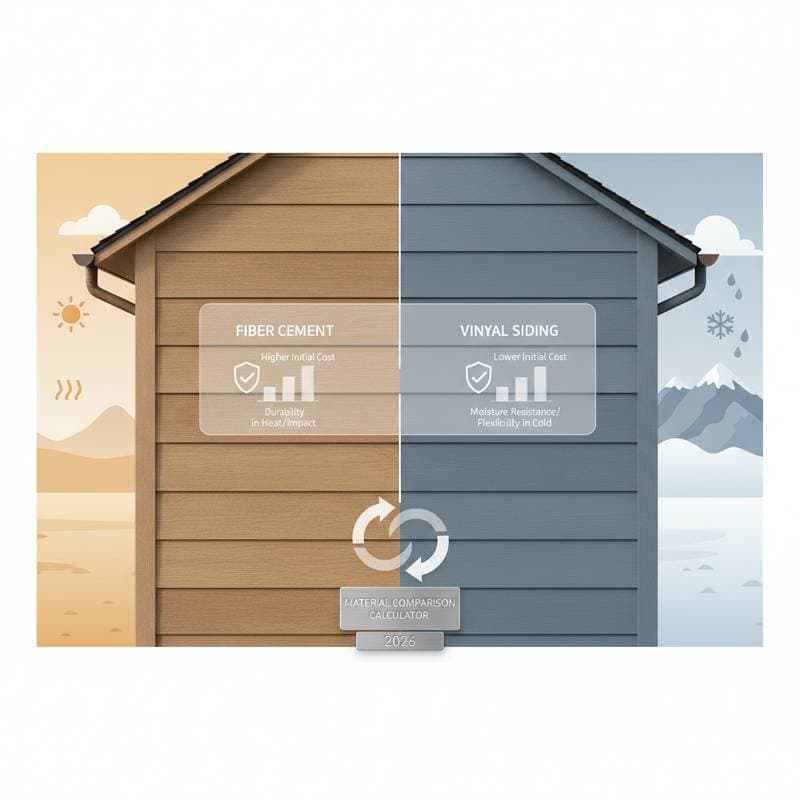
Selecting the appropriate siding ensures decades of reliable performance with few interventions. Fiber cement proves advantageous in cold or fire-risk areas, where its durability offsets painting costs through reduced insurance premiums and repair needs. Vinyl shines in temperate, humid coastal settings, delivering ease of installation and minimal upkeep at a lower initial outlay.
By aligning material strengths with your climate, you secure enhanced protection, curb appeal, and return on investment for your home.