
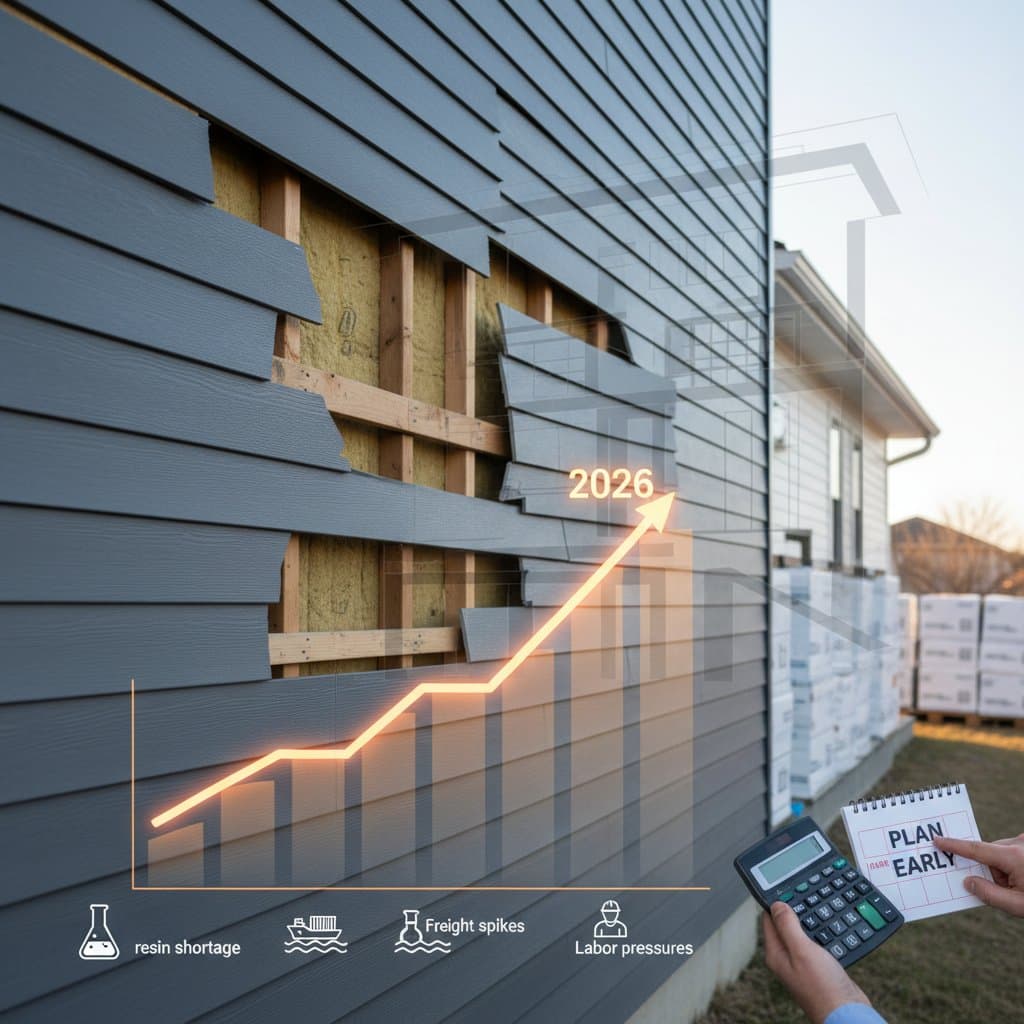
Vinyl Siding Shortage to Drive 2026 Price Increases
Vinyl siding remains a popular choice for residential exteriors due to its balance of affordability and minimal upkeep. Supply constraints now threaten that stability. Resin shortages, increased freight expenses, and labor limitations are reducing stock and elevating contractor bids. Homeowners benefit from anticipating these shifts when scheduling work.
Core Profiles and Applications
Vinyl siding profiles suit different architectural needs. The following options cover common residential uses.
- Clapboard: Provides a straight horizontal appearance suited to traditional homes.
- Dutch Lap: Creates a beveled shadow line that complements colonial designs.
- Board and Batten: Offers vertical emphasis for farmhouse or contemporary structures.
- Shake and Shingle: Mimics natural cedar textures for accents or cottage facades.
Limit combinations to two profiles per elevation. Confirm visual balance with a designer when mixing styles.
Material Comparisons
Several cladding options exist alongside vinyl. The table below outlines installed costs and key attributes.
| Material | Typical Cost (installed) | Pros | Cons |
|---|---|---|---|
| Vinyl | 6 to 12 dollars per sq ft | Low maintenance and broad color selection | Susceptible to impact damage and heat distortion |
| Fiber Cement | 10 to 16 dollars per sq ft | Fire resistance and color stability | Greater weight and periodic repainting required |
| Engineered Wood | 9 to 15 dollars per sq ft | Natural appearance when properly sealed | Requires regular protective coatings |
| Aluminum | 8 to 14 dollars per sq ft | Lightweight and recyclable | Prone to dents with limited surface texture |
Vinyl maintains an edge in cost and upkeep. Price increases may reduce this advantage relative to alternatives.
Design Guidelines for Consistent Results
Apply one primary profile to the main house surfaces. Reserve secondary profiles for gables or entry areas. Select trim colors one or two shades from the field color to reduce seam visibility.
PVC or aluminum trim protects joints at corners and openings. Match textures between siding and trim to preserve visual continuity.
Project Preparation Steps
Clarify Objectives
Define the project as full replacement, targeted repair, or an energy improvement. Specify preferred style, color, and insulation details. Clear goals enable precise contractor estimates.
Obtain and Evaluate Proposals
Collect three written bids that detail trim lengths, opening counts, and material specifications. Compare lead times and warranty terms in addition to price. Verify insurance coverage and request recent references.
Review Samples and Confirm Details
Examine color samples in natural light conditions. Request wall mockups when available to assess interactions with existing elements. Document final selections in writing prior to ordering.
Prepare the Site
Clear access for material delivery and equipment. Confirm power availability for tools. Expect noise during installation and restrict access to the work area.
Installation follows a standard sequence of tear-off, repairs, weather barrier application, and panel placement. Review daily progress with the crew to address alignment or flashing concerns.
Conduct Milestone Inspections
- Inspect sheathing condition after tear-off.
- Verify weather barrier overlaps before panel installation.
- Confirm proper nail placement during application.
- Examine all seams and caulking upon completion.
Photograph each stage to support warranty documentation.
Planning for Elevated Costs
Resin supply constraints affect multiple industries and limit siding production. Allocation restrictions already appear in some regions. Schedule projects ahead of peak demand. Secure written pricing and consider ordering all components together to maintain batch consistency. Flexibility with color or profile selections can further stabilize expenses.