
Introduction
Selecting the right siding for your home involves more than aesthetics. It requires consideration of local weather patterns to ensure durability, energy efficiency, and long-term value. This guide explores how to choose weatherproof siding that withstands your climate, compares key materials, evaluates costs against returns, and provides practical tips for installation, design, and maintenance. Homeowners can achieve enhanced protection, improved curb appeal, and higher resale potential through informed decisions.
Weatherproof siding shields exteriors from rain, wind, sun, and temperature extremes. In humid regions, materials must resist mold and rot. Arid areas demand resistance to fading and cracking. By aligning siding choices with climate zones, owners protect structural integrity while optimizing energy performance.
Understanding Climate Zones and Siding Needs
Climate zones dictate siding performance. Coastal areas face salt spray and high humidity, favoring corrosion-resistant options. Northern regions endure freeze-thaw cycles, requiring materials that expand and contract without damage. Southern climates battle intense UV exposure, necessitating fade-resistant finishes.
Identify your zone using regional maps or local building codes. For example, Pacific Northwest homes benefit from siding that handles constant moisture. Southwest properties need heat-reflective surfaces to reduce cooling costs. Matching siding to these conditions prevents premature wear and extends lifespan.
Key factors include annual rainfall, temperature swings, and wind speeds. In hurricane-prone zones, impact-resistant siding adds essential security. This alignment not only safeguards the home but also qualifies for insurance discounts and energy rebates.
Comparing Siding Materials
Various materials offer distinct advantages for weather resistance. Vinyl siding provides affordability and low maintenance, ideal for moderate climates. It resists insects and moisture but may warp in extreme heat.
Fiber cement combines durability with a natural look, excelling in wet or coastal environments. This material withstands fire, pests, and impacts better than wood, though it weighs more and requires professional installation.
Metal siding, such as aluminum or steel, suits harsh weather with superior strength against wind and hail. It reflects heat in sunny areas, lowering energy bills, but can dent in severe storms.
Wood siding delivers timeless appeal yet demands sealing against moisture in rainy zones. Engineered wood variants improve rot resistance for broader applications.
Each option varies in thickness and finish. Thicker profiles enhance insulation, while textured surfaces hide minor imperfections. Select based on local threats to maximize protection.
Balancing Costs and Return on Investment
Initial costs range from budget-friendly vinyl at $3 to $7 per square foot to premium fiber cement at $8 to $14. Installation adds $4 to $10 per square foot, depending on complexity and labor rates. Factor in regional pricing, as urban areas incur higher fees.
Return on investment appears in energy savings and resale value. Durable siding reduces utility bills by 10 to 20 percent through better insulation. It boosts curb appeal, potentially increasing home value by 5 to 10 percent, according to real estate analyses.
Longevity influences ROI. Vinyl lasts 20 to 40 years, fiber cement up to 50 years with care. Warranties cover fading, cracking, and wind damage, often transferable to new owners. Calculate payback by dividing total cost by annual savings and added equity.
Consider tax incentives for energy-efficient choices. Green-certified materials may qualify for credits, shortening recovery time. Prioritize options that align with budget while delivering measurable benefits.
Design and Aesthetic Considerations
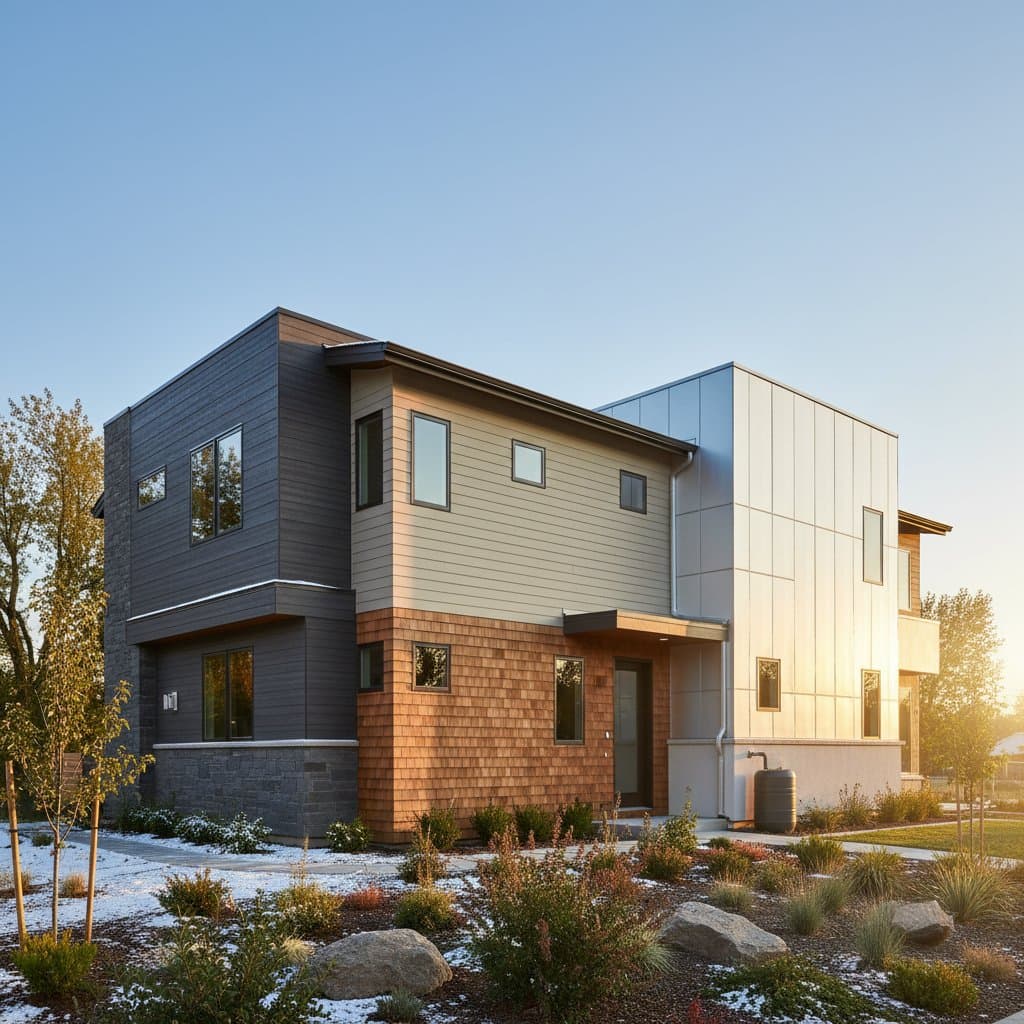
Effective design enhances both function and appearance. Keep siding lines level and consistent across elevations to create a unified look. This approach ensures visual harmony from street view.
Use deeper trim color or texture at corners for definition. Such details accentuate architectural features without overwhelming the facade.
Select mid-tone body colors that photograph well under both sun and shade. These shades maintain vibrancy in varying light, aiding online listings and appraisals.
Highlight entryways with lighter trim, modern house numbers, and concealed lighting. This focal point draws attention and elevates first impressions.
Color depth and undertone matter greatly. Cool grays and blues suit coastal or northern climates where light remains softer. Warm beiges or muted greens complement sun-heavy or desert conditions. Match the roof and window frames rather than chasing trends.
Takeaway: Cohesive color and trim planning adds more visual value than expensive siding patterns. Simple contrast reads cleaner in photos and appraisals.
Installation Best Practices
Quality installation determines siding performance. Hire certified contractors familiar with local codes and climate challenges. They ensure proper flashing around windows and doors to prevent water intrusion.
Prepare the surface by repairing sheathing and applying house wrap for moisture barriers. Secure siding with corrosion-resistant fasteners spaced according to manufacturer guidelines.
In windy areas, use longer screws for added hold. For sloped sites, start from the bottom and work upward to avoid gaps. Test for level at each course to maintain alignment.
Post-installation, seal joints and vents. This step locks out pests and drafts, enhancing energy efficiency. Professional oversight minimizes callbacks and preserves warranties.
Maintenance and Longevity
Regular upkeep keeps siding looking new and preserves warranty coverage. Follow a structured schedule to address wear early.
Maintenance checklist:
- Quarterly: Hose rinse dirt and check for loose edges.
- Annually: Wash with mild soap, check caulk lines, and clear gutters.
- Every 2 to 3 years: Repaint or reseal if finish dulls.
- After storms: Inspect for cracks or punctures, especially near eaves.
Cleaning methods:
Avoid pressure washers on vinyl or wood. Use soft brushes and low-pressure rinsing. Fiber cement and metal tolerate gentle power washing if distance remains safe.
Address issues promptly. Replace damaged sections to prevent spread. Document all work for warranty support.
Takeaway: A consistent cleaning and inspection schedule protects both appearance and structural integrity, reducing repaint cycles and repair costs.
Maximizing Benefits Over Time
Once siding installs, integrate it into home care routines. Protect it with regular washing, gentle inspection, and timely repainting or sealing. Record maintenance dates and keep receipts for warranty claims.
Quality siding matched to local weather conditions reduces noise, stabilizes indoor temperature, and improves resale confidence. It transforms the home into a resilient asset that withstands seasons while enhancing daily comfort. Owners enjoy peace of mind knowing their investment delivers enduring value.