
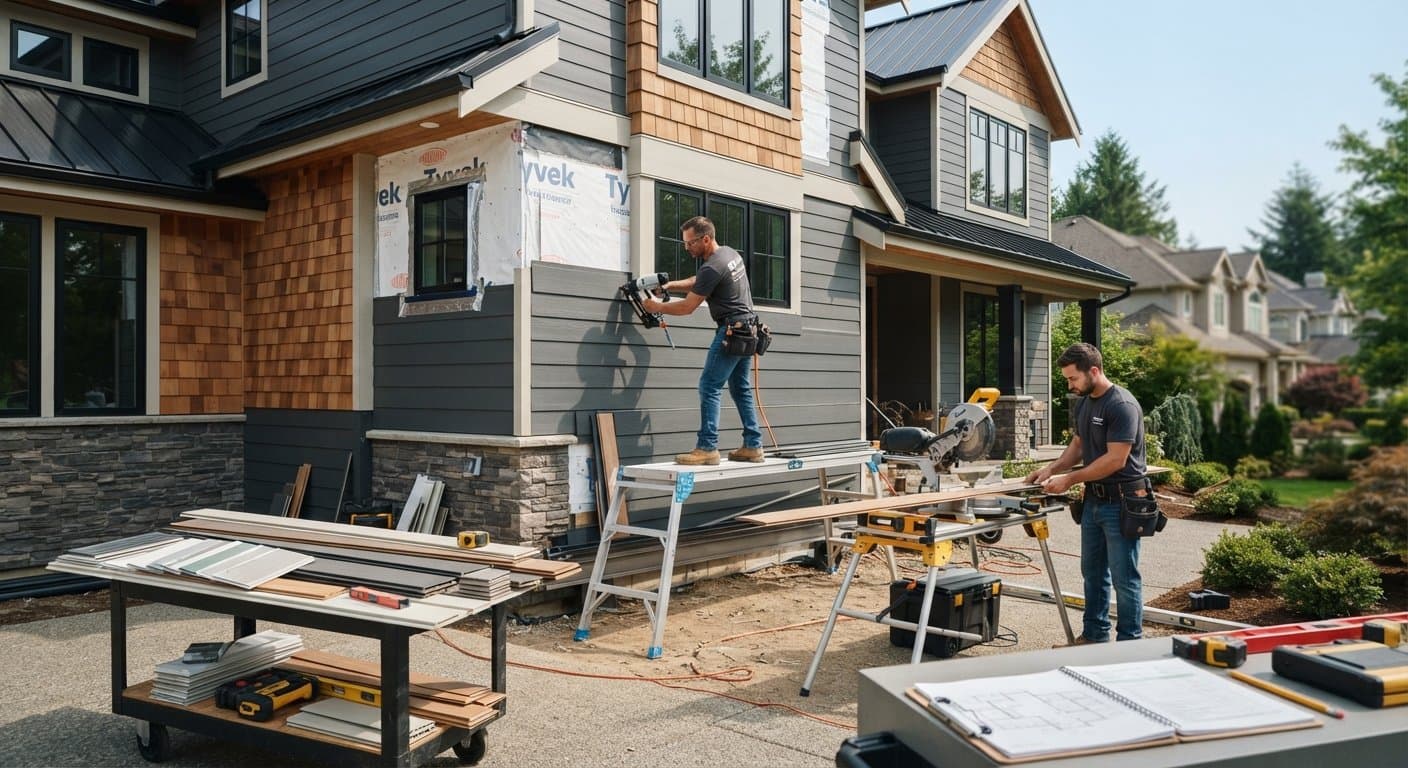
Siding Replacement Cost Per Square Foot
Siding replacement pricing is often quoted by the square foot, but that figure only makes sense when the scope is clear. One bid may cover new cladding over prepared walls. Another may include old siding removal, disposal, weather barrier, trim, and repairs. Compare the work line by line before choosing a contractor.
As a planning estimate, installed siding commonly falls between $5 and $18 per square foot of wall area. Basic vinyl tends to sit near the lower end, while fiber cement, engineered wood, and complex trim packages cost more. Premium materials, difficult access, and extensive wall repairs can push a project above that range.
These are broad estimates, not guaranteed local prices. Labor rates, material availability, home design, and the condition of the wall assembly all affect the final bid.
At a glance
| Item | Typical planning range |
|---|---|
| Scope | Remove existing cladding as specified, prepare walls, install siding and listed trim |
| Installed cost | About $5 to $18 per square foot of wall area |
| Duration | Roughly one to three weeks for many homes, including removal and cleanup |
| Difficulty | Moderate to high, with greater risk around upper stories, openings, and damaged walls |
The range assumes a standard residential project with ordinary access. It may exclude major sheathing replacement, lead or asbestos abatement, painting, permit fees, and extensive carpentry. Ask each bidder to state those exclusions.
How Contractors Measure and Quote Siding
Siding is usually priced from the exterior wall area, not the home's floor area. A contractor measures each wall, subtracts large openings where appropriate, and adds material for cuts and waste. Gables, dormers, and many small windows can make measurement and installation more involved.
A square is a common siding unit equal to 100 square feet of coverage. For example, a wall area of 2,000 square feet equals 20 squares before waste. The contractor may order additional material to account for offcuts, pattern matching, and the product's installation requirements.
Check whether the quote lists:
- Measured wall area and estimated waste.
- Material type, profile, thickness, and finish.
- Removal, hauling, and disposal charges.
- Housewrap or another specified water-resistive barrier.
- Flashing, corner boards, window trim, and starter strips.
- Repairs, painting, permits, and cleanup.
- Labor warranty and product warranty details.
A low per-square-foot figure can hide omitted work. Request a complete written scope before comparing totals.
Typical Installed Prices by Material
The estimates below include standard installation labor and common accessories, but not major structural repairs. Local bids may fall outside these ranges.
| Siding material | Typical installed cost per square foot | Main cost considerations |
|---|---|---|
| Vinyl | $5 to $10 | Profile, thickness, insulation, trim, and removal |
| Engineered wood | $7 to $13 | Panel or lap style, coatings, corner details, and painting |
| Fiber cement | $8 to $16 | Weight, cutting controls, fastening, finish, and crew experience |
| Natural wood | $9 to $18 or more | Species, grade, installation pattern, finishing, and upkeep |
Vinyl resists routine moisture exposure and does not need paint, but it can crack from impact and may deform under high heat. It is not a structural waterproofing layer. Proper flashing and drainage remain necessary.
Engineered wood can provide a wood appearance with factory-applied coatings. Follow the product instructions for clearances, cut-edge sealing, and repainting. Poor detailing or persistent moisture can cause deterioration.
Fiber cement resists rot and insects, and many products have tested fire performance. It can still absorb water at unprotected edges or joints if installed incorrectly. Cutting can create hazardous silica dust, so installers must use the manufacturer's approved dust controls and safety methods.
Natural wood offers repair options and distinctive texture, but it needs regular coating and careful moisture management. Wood can be vulnerable to insects, decay, and fire unless the assembly and treatment provide suitable protection.
Cost Drivers That Change the Total
Removal and disposal
Removing one layer of siding often costs less than stripping multiple layers. Disposal fees, tight work areas, and difficult access add labor. If old material may contain lead or asbestos, stop before disturbing it and use qualified professionals for testing and any required abatement.
Wall repairs and water management
Damaged sheathing, framing, or window flashing can increase the bill. Once the old cladding comes off, concealed deterioration may become visible. Ask how the contractor will document hidden damage and price repairs before covering the wall again.
A water-resistive barrier helps manage water that passes behind the siding. It does not replace flashing at windows, doors, roof intersections, or penetrations. Correct laps and drainage paths matter more than simply adding another layer.
Home shape and access
A two-story wall usually costs more to work on than an easy-to-reach wall. Scaffolding, steep ground, landscaping, narrow side yards, and nearby overhead hazards can slow the job. Gables, bay windows, and many trim returns also require more cutting and fitting.
Trim and finish scope
Wide corner boards, detailed window casings, soffit work, and custom color combinations raise material and labor costs. A bid that says "trim included" should define which trim pieces, sizes, and finishes it covers.
Timeline, Permits, and Installation Checks
For many homes, installation takes about one to three weeks after materials arrive. The schedule can extend when the house is large, access is restricted, repairs are extensive, or weather prevents safe work. Contractor availability and material lead times can add time before installation begins.
Permit rules depend on local requirements and the scope of work. Ask the contractor who will apply for permits and arrange inspections. A permit does not replace your own review of the contract or the completed work.
Check progress at these points:
- Before removal: Confirm protection for plants, walkways, windows, and outdoor equipment.
- After removal: Review exposed sheathing and agree in writing on any extra repairs.
- Before siding covers the wall: Check the water barrier, flashing, and drainage details.
- During installation: Confirm product clearances, fastening, and joint locations against manufacturer instructions.
- At cleanup: Walk the property, check for damage and debris, and collect warranties and closeout documents.
Planning the Budget and Comparing Bids
Ask for at least three bids based on the same material, measured area, and scope. Compare total project price as well as the per-square-foot rate. A detailed estimate should identify allowances, which are budget placeholders for items not yet selected or verified.
Control costs by choosing a simpler profile, limiting decorative trim, and keeping sound existing features where the installation instructions permit. Do not cut costs by skipping flashing, omitting a water barrier where required, or covering damaged sheathing.
Watch for these change order risks:
- A vague allowance for wall repairs.
- No stated price for extra sheathing or trim.
- Unclear disposal or permit charges.
- A deposit schedule that requires large payments before materials arrive.
- Verbal promises that do not appear in the contract.
Set aside a contingency for concealed repairs. The right amount depends on the home's age and visible condition. Have the contractor explain what conditions trigger added work and require approval before costs change.
Repair or Replace?
Localized repair can make sense when damage is limited, the siding is available, and the wall behind it is dry and sound. A full replacement may be more practical when large areas are damaged, the product is failing across several elevations, or the existing installation lacks reliable drainage details.
Before deciding, inspect for soft sheathing, recurring leaks, loose panels, rot, and openings with poor flashing. A new layer of siding will not fix a roof leak or a failed window seal. Identify the water source and repair it first.
Maintenance Checklist
Follow the siding manufacturer's instructions and keep records of repairs and cleaning.
- Every year: Look for loose panels, open joints, damaged caulking, blocked drainage paths, and contact with soil or plants.
- After severe weather: Check for impact damage, lifted edges, and debris against walls.
- As needed: Clean with a soft brush and mild soap, then rinse gently. Test a small area first.
- Before using equipment: Confirm that a pressure washer, cleaner, or coating is approved for the product. High pressure can drive water behind siding or damage the finish.
- When repainting or repairing: Use compatible products and follow required preparation and clearance instructions. Unapproved coatings or cleaning methods may affect warranty coverage.
Common Questions
Does the per-square-foot price include old siding removal?
Not always. Some estimates include removal and disposal, while others price them separately. Require the bid to state how many existing layers are included and how disposal will be handled.
Why is my quote higher than the material price suggests?
The installed price covers labor, accessories, access equipment, removal, and preparation, not just siding panels. Detailed trim, multiple stories, and wall repairs can raise the total. Compare the complete scope before judging the number.
Can siding be installed over existing siding?
Some products and wall conditions may allow it, but the installation must meet manufacturer instructions and local requirements. Covering damaged material can conceal moisture problems and complicate future repairs.
What should the workmanship warranty cover?
Get the warranty in writing and check its term, covered defects, exclusions, and claim process. Product warranties often have separate limits for color, finish, and material performance.
Long-Term Value Starts Behind the Panels
Good siding installation depends on a sound wall assembly, clear drainage, and careful detailing around openings. Choose a material that fits the climate, maintenance capacity, and budget, then compare contractors by scope and installation method.