
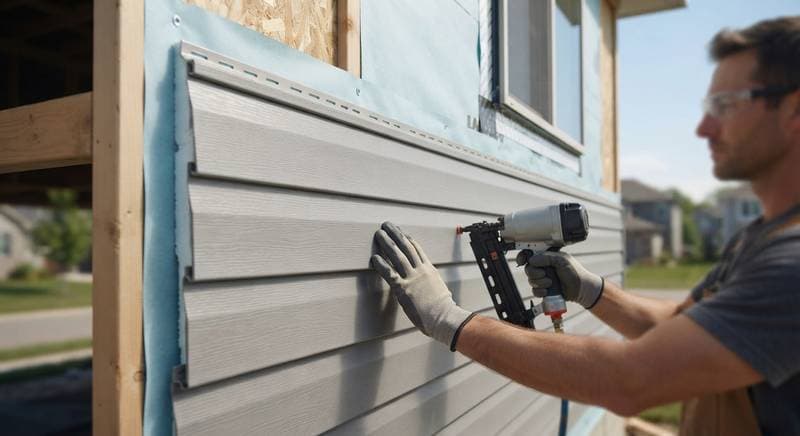
How Insulated Vinyl Siding Affects Home Comfort and Energy Use
Insulated vinyl siding incorporates a layer of rigid foam attached behind each panel. This addition creates a modest thermal break that reduces air movement through walls and makes interior surfaces feel warmer during cold months. The improvement in comfort often exceeds the measurable reduction in utility costs.
The siding itself does not replace attic insulation or comprehensive air sealing. Homes with existing wall cavities filled with fiberglass or cellulose already limit heat transfer effectively. In these situations, the foam backing provides only marginal additional benefit.
Project Scope and Timeline
A typical installation covers the exterior walls of a single-family home and requires one to two weeks to complete. Crew size, weather conditions, and the complexity of architectural details influence the actual duration. Professional installation remains the recommended approach because proper attachment, flashing integration, and drainage details determine long-term performance.
Installed costs generally range from eight to fifteen dollars per square foot. A two-thousand-square-foot wall area therefore falls between sixteen thousand and thirty thousand dollars. Smaller projects near one thousand square feet start around eight thousand dollars, while larger three-thousand-square-foot jobs can reach forty-five thousand dollars when removal of existing siding and repairs to damaged sheathing are required.
Cost Comparison and Value Considerations
Insulated panels add two to five dollars per square foot compared with standard vinyl. The foam layer contributes roughly R-2 to R-4 of insulation value, though the effective rating of the complete wall assembly remains lower because of thermal bridging through framing members and gaps around windows.
Energy savings vary widely. Properties with poorly insulated walls may experience noticeable reductions in heating and cooling loads. Homes already equipped with continuous exterior insulation or dense-packed wall cavities show smaller differences. The added cost of insulated panels rarely pays for itself through utility savings alone.
Market appeal often provides greater return. Updated exteriors influence buyer perception and can support higher listing prices when workmanship and color choices align with neighborhood standards.
Material Options and Performance Characteristics
Standard vinyl offers the lowest initial cost and requires minimal routine maintenance. Its thin profile transmits more temperature variation to the interior surface. Insulated vinyl adds firmness and reduces visible waviness, yet the foam edges must fit precisely to avoid moisture accumulation behind the panels.
Fiber cement provides a noncombustible alternative with greater dimensional stability. The material requires periodic repainting and weighs more than vinyl, increasing labor expenses. Vinyl remains combustible and can soften or melt when exposed to direct flame or extreme heat; the foam backing does not alter this classification.
Both vinyl and foam resist ordinary rainfall when installed over a properly detailed weather barrier. Neither material serves as the primary waterproofing layer. Continuous flashing at window heads, sealed penetrations, and clear drainage paths behind the siding prevent water intrusion.
Profile Selection and Visual Consistency
Limit profile changes to maintain a calm facade. One primary style across main elevations creates visual unity. A secondary texture may highlight an entry or gable, provided the transition remains subtle. Excessive variety fragments the appearance and reduces curb appeal.
Color selection affects perceived scale. Darker or more saturated hues increase visual weight on large wall areas. Undertones should coordinate with roof and trim colors. Warm beige can clash with cool gray roofing, while neutral grays often complement both warm and cool roof tones. View samples outdoors under varying light conditions before final selection.
Installation Details That Prevent Future Problems
Request a continuous weather barrier behind the siding, properly lapped flashing at all openings, and unobstructed drainage planes. Common installation errors include unsealed pipe penetrations, missing head flashing above windows, and panels fastened too tightly to allow thermal movement. Each of these conditions can lead to water intrusion, buckling, or premature deterioration.
Verify that siding is not applied over wet or damaged sheathing. Moisture trapped behind new panels accelerates decay of structural components and reduces the effectiveness of the insulation layer.
Comparing Upgrade Priorities
Before selecting insulated siding, obtain quotes for attic insulation upgrades and whole-house air sealing. These measures frequently deliver larger energy reductions per dollar spent. Wall insulation improvements become relevant when existing cavities are empty or when the home exhibits persistent comfort complaints despite adequate attic insulation.
Maintenance Expectations
Vinyl siding requires periodic cleaning to remove mildew and atmospheric staining. Inspect caulked joints annually and reapply sealant where gaps appear. Foam-backed panels need the same attention at edges and transitions. Prompt repair of impact damage prevents water entry at cracked corners or punctures.
Final Considerations
Insulated vinyl siding improves wall surface temperatures and reduces drafts when installed correctly. The upgrade delivers the greatest value when existing walls lack insulation or when exterior appearance needs simultaneous renewal. Utility savings alone seldom justify the premium cost. Homeowners achieve better returns by sequencing improvements according to measured heat loss rather than by assuming any single product will solve multiple performance issues.