
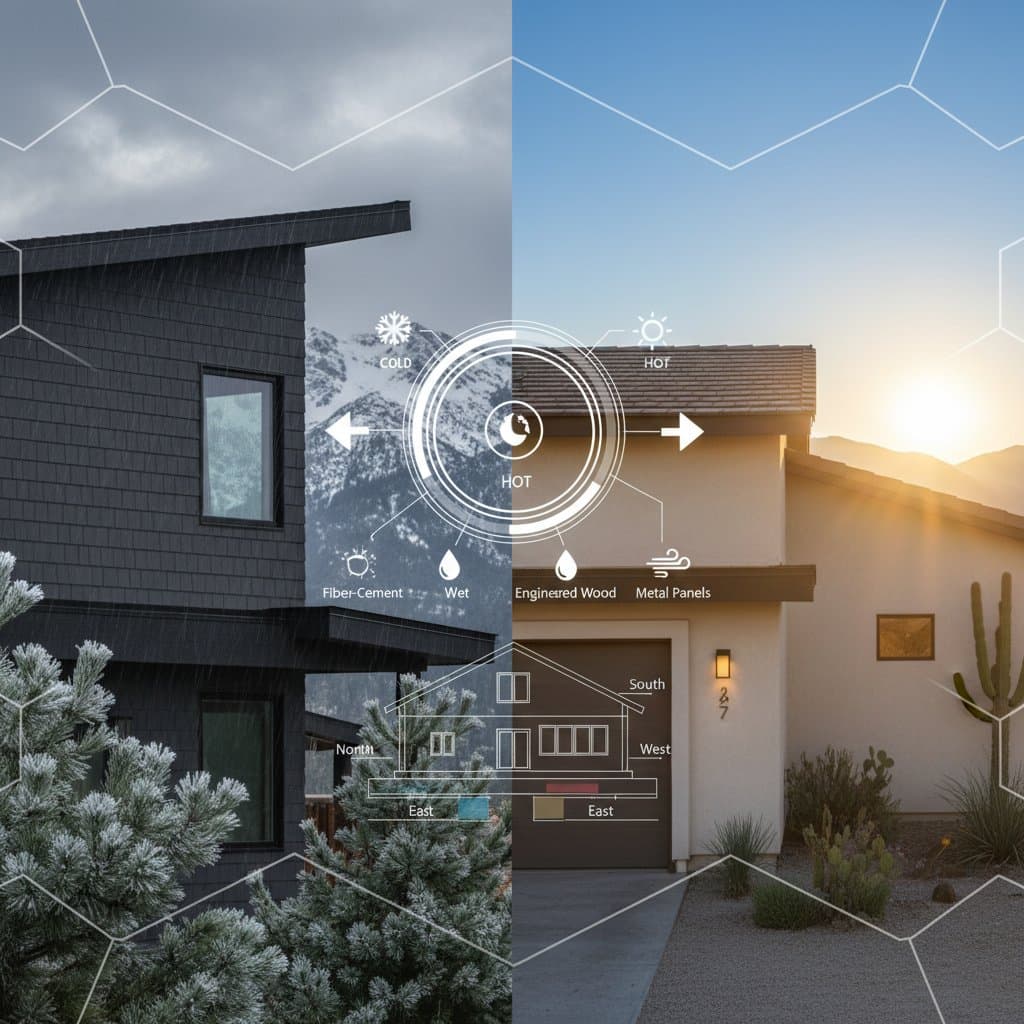
Optimal Siding Choices for Climate Zones in 2025
Selecting siding that corresponds to your local weather patterns represents a strategic choice for homeowners. Appropriate materials shield the home's framework, regulate moisture levels, and minimize ongoing expenses. In contrast, mismatched options may deteriorate through peeling, warping, or decay well ahead of their expected lifespan. This guide delineates top-performing siding varieties across climate zones, associated costs, and protocols for achieving a robust installation.
Understanding Styles and Material Selection
Prevalent Siding Profiles
Homeowners encounter several standard profiles when planning exterior updates. Each design influences water runoff, visual appeal, and installation complexity.
- Lap siding: Horizontal boards that overlap to direct water away from the structure effectively.
- Board and batten: Vertical arrangements popular in farmhouse and contemporary architectures, providing a rustic yet clean appearance.
- Shingles: Compact, consistent panels ideal for accentuating specific areas like gables or dormers.
- Panel systems: Expansive sheets that suit modern or commercial aesthetics, offering broad coverage with minimal seams.
Many projects incorporate multiple profiles for variety, such as lap siding on primary elevations paired with shingles in upper sections. Achieving harmony involves selecting complementary textures, while trim elements ensure seamless junctions between surfaces.
Key Material Comparisons
Evaluating materials involves weighing advantages against limitations, alongside suitability for specific environments. The following table summarizes essential attributes.
| Material | Pros | Cons | Best Applications |
|---|---|---|---|
| Vinyl | Affordable initial outlay, requires no painting, offers extensive color selections | Prone to brittleness in severe cold, susceptible to deformation in intense heat | Temperate regions with minimal fire hazards |
| Fiber cement | Resists fire effectively, maintains dimensional stability, mimics wood grain authentically | Substantial weight demands reinforced support, periodic repainting necessary | Areas with high humidity, heat, or wildfire threats |
| Engineered wood | Lightweight for simplified handling, pre-finished at the factory, straightforward assembly | Susceptible to expansion if cut edges remain unprotected | Regions experiencing cold snaps or repeated freeze-thaw conditions |
| Metal (steel or aluminum) | Incombustible properties, fully recyclable, demands little upkeep | Vulnerable to dents from impacts, color corrections appear prominent | Locations prone to hailstorms or strong winds |
| Stucco / EIFS | Provides uninterrupted insulation, delivers a smooth, uniform surface | Prone to cracking without adequate expansion joints | Arid or temperate zones featuring steady soil conditions |
| Natural wood | Delivers timeless elegance, sourced renewably | Necessitates regular sealing applications, at risk from pest infestations | Sunny, dry interiors or coastal settings with elevated UV exposure |
Strategies for Combining Materials
Professionals recommend designating one primary material for load-bearing walls to ensure uniformity in performance. Reserve secondary options for decorative accents, such as trim or soffits. Align the thickness of adjoining elements to prevent uneven transitions. Steer clear of pairing substances with divergent thermal expansion, like metal adjacent to fiber cement, without installing flexible joints to accommodate movement.
Tailored Examples for Architectural Styles
Adapting combinations to home designs enhances both functionality and curb appeal. Consider these pairings based on common styles and site conditions.
- Craftsman bungalow: Employ lap siding across main walls, accented by shingles in gable ends for a balanced, traditional profile.
- Modern farmhouse: Opt for board and batten on vertical surfaces, complemented by understated metal trim for durability and simplicity.
- Coastal cottage: Utilize fiber cement shingles with corrosion-resistant PVC trim to withstand salt air and moisture.
- Contemporary home: Integrate sleek metal panels on facades, paired with fiber cement for soffits to achieve a minimalist, resilient exterior.
Selections should account for the property's environmental exposures, including sun, wind, and precipitation, as well as the owner's willingness to perform upkeep.
Comprehensive Preparation for Your Siding Project
Thorough planning transforms a siding replacement from a disruptive endeavor into a streamlined process. Follow these steps to align expectations with outcomes.
1. Establish Objectives and Project Boundaries
Identify primary aims, such as prioritizing visual enhancement, longevity, or ease of maintenance. Catalog all components involved, including walls, trim details, and ancillary features like vents or soffits. Assess whether underlying issues, such as insulation gaps or sheathing damage, require simultaneous attention to avoid future complications.
2. Evaluate and Select Contractors
Solicit proposals from no fewer than three certified contractors who demonstrate experience with comparable installations. Request verification of liability insurance and examine portfolios featuring recent projects. Scrutinize specifics like proposed material suppliers, fastening methods, and integration of weather-resistant barriers, extending beyond mere price comparisons to gauge overall quality.
3. Review Samples and Conduct Mockups
Insist on substantial samples to evaluate hues under natural lighting conditions. For intricate patterns, arrange an on-site mockup panel to test proportions and integration of flashing elements. Secure final approval on these prototypes prior to committing to large-scale fabrication or procurement.
4. Prepare the Site and Monitor Progress
Relocate vegetation and obstacles to maintain a clear perimeter of at least two feet around work areas. Safeguard delicate fixtures and furnishings from dust or debris. Direct workers to store materials on protective tarps rather than directly on soil. Enforce routines for end-of-day tidying, culminating in a thorough inspection to verify secure attachments, sealant applications, and finish uniformity.
5. Perform Rigorous Quality Inspections
Examine flashing installations around windows and doors prior to enclosing them. Confirm that fasteners adhere to specified intervals and penetration depths. Ensure all exposed cuts on engineered wood or fiber cement receive protective sealants. Conduct reviews of each building facade immediately after scaffold removal to address any discrepancies promptly.
Sustaining Your Siding Investment
A thoughtfully selected siding installation endures for decades through consistent vigilance. Maintain a detailed record of activities, including routine cleanings, recoating schedules, and minor fixes. Following severe weather events, inspect seams, edges, and fasteners for signs of displacement. Promptly renew deteriorated caulking to uphold the barrier against water infiltration.
When preparing for property sales, emphasize low-maintenance attributes and warranty documentation, which appeal to prospective buyers. Organize records for easy access during viewings to underscore the investment's value.
Climate-matched siding extends beyond mere aesthetics. It fortifies the home against elemental stresses, stabilizes internal temperatures, and curtails expenses related to unforeseen repairs.