
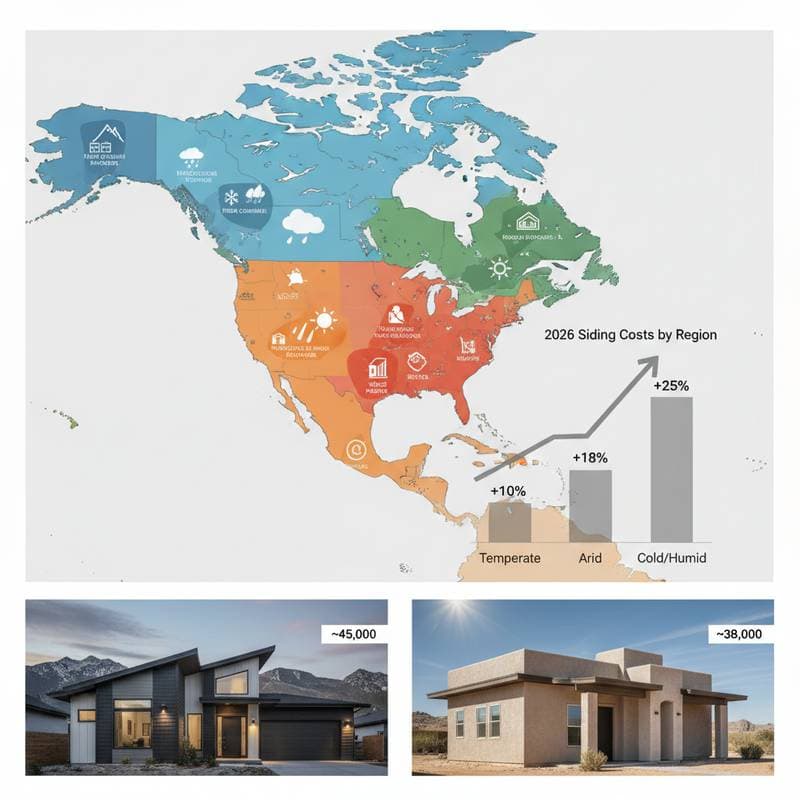
Climate Zones Drive 2026 Siding Cost Variations
Homeowners frequently inquire why siding quotes differ significantly across regions. Climate conditions explain these variations. Local temperature fluctuations, moisture levels, wind exposure, and freeze-thaw cycles dictate optimal materials and installation methods. These factors also influence warranty terms, maintenance schedules, and insurance considerations. Knowledge of regional influences enables precise budget planning and prevents early material failures.
Selecting Siding Styles and Materials
Common Profiles
Popular siding profiles encompass lap, shingle, board and batten, and panel designs. Lap siding complements traditional or ranch-style homes. Board and batten styles enhance farmhouses or modern structures. Shingle patterns suit coastal or cottage aesthetics. Panel systems, paired with trim battens, accommodate large walls or contemporary exteriors.
Material Choices
Evaluate materials based on durability, cost, and climate compatibility. The table below outlines key options.
| Material | Advantages | Disadvantages | Installed Cost Range (per sq. ft.) |
|---|---|---|---|
| Vinyl | Affordable, low maintenance | Prone to cracking in cold, fades in intense sun | $6 - $10 |
| Fiber Cement | Fire-resistant, dimensionally stable | Heavy, requires specialized tools | $9 - $14 |
| Engineered Wood | Natural appearance, pre-finished | Demands precise flashing details | $9 - $15 |
| Natural Wood | Timeless look, sustainable source | Requires regular upkeep, vulnerable to pests | $10 - $18 |
| Steel or Aluminum | Durable against impacts, recyclable | Susceptible to dents, color options limited | $11 - $18 |
Combining Materials
Integrate materials strategically to manage expenses and accentuate architectural elements. Professionals often apply fiber cement or vinyl to primary walls and incorporate cedar or composite for gable highlights. Restrict combinations to two primary materials and one trim shade for visual harmony. Standardize reveal dimensions and joint intervals throughout.
Trim and Accent Considerations
Trim fulfills decorative and functional purposes. Opt for metal or PVC variants in moisture-prone areas to inhibit decay. Broader trim outlines windows and doors effectively. Slimmer profiles accentuate vertical elements. Align trim finish longevity with siding warranties to synchronize upkeep routines.
Climate-Specific Examples
Tailor selections to environmental demands.
- Cold Northern Regions: Pair fiber cement with rigid foam insulation to combat freeze-thaw damage and enhance thermal performance.
- Humid Coastal Areas: Choose vinyl or metal options equipped with stainless steel fasteners to withstand salt corrosion and humidity.
- High-Heat Zones: Select engineered wood featuring reflective finishes to minimize thermal expansion and color degradation under UV exposure.
- Wind-Prone Zones: Install heavier-gauge steel or code-compliant fiber cement panels with reinforced anchoring to satisfy wind load requirements.
Preparing for Your Siding Project
1. Establish Objectives and Parameters
Determine if the project involves complete replacement, targeted repairs, or insulation enhancements. Define visual preferences such as color palettes, textures, and trim configurations upfront. Establish a preliminary budget ceiling to facilitate equitable bid evaluations.
2. Vet Contractors and Analyze Proposals
Identify licensed, insured professionals experienced in local climate challenges. Request references from nearby projects and review photographic portfolios. Obtain a minimum of three detailed bids specifying material grades, thicknesses, fastening patterns, and weatherproofing products. Assess proposals for both pricing and comprehensive scope coverage.
3. Review Samples and Secure Approvals
Examine full-scale samples under daylight conditions. Construct a modest mockup section to validate color tones and joint arrangements. Exterior lighting often alters perceived hues. Document final selections in a written agreement prior to procurement.
4. Prepare the Site and Manage Workflow
Ensure unobstructed access routes, relocate patio items, and safeguard vegetation. Provide reliable electricity and designated waste areas for crews. Anticipate routine noise and minor disruptions. Negotiate explicit cleanup protocols, including ferrous metal recovery and old material removal.
5. Conduct Milestone Inspections
Verify critical elements prior to progress payments.
- Weather Barriers and Flashing: Ensure all seams receive proper taping and seamless integration around openings.
- Fastening Details: Confirm secure penetration into framing members with flush-set fasteners.
- Joint Specifications: Adhere to manufacturer-recommended expansion allowances.
- Trim Installation: Check for plumb corners, even caulking, and full finishing applications.
Maintain a concise list of minor corrections as completion approaches. Withhold final payment until resolutions and site restoration occur.
Regional Cost Overview
Climate zones elevate siding expenses by 10 to 25 percent through specialized materials and labor. The following table summarizes typical scenarios for 2026 installations, assuming full removal and standard accessibility. Urban constraints or bespoke detailing may increase totals by an additional 10 to 20 percent.
| Climate Zone | Preferred Materials | Key Cost Drivers | Installed Cost Range (per sq. ft.) |
|---|---|---|---|
| Cold Northern | Fiber cement, engineered wood | Insulated underlayment, cold-weather sealants | $9 - $16 |
| Humid Coastal | Vinyl, metal | Anti-corrosion hardware, moisture shields | $8 - $15 |
| Dry Hot | Engineered wood, stucco panels | UV-protective finishes, heat-reflective additives | $7 - $14 |
| Storm and Wind | Heavy fiber cement, steel | Reinforced fixings, structural supports | $10 - $18 |
| Mixed Temperate | Vinyl, fiber cement | Conventional products, balanced labor | $6 - $12 |
Sustaining Siding Performance
Regular upkeep preserves appearance and structural integrity. Perform these tasks to maximize longevity and uphold warranty validity.
- Examine surfaces biannually for fissures, fungal growth, or pest indications.
- Wash gently using soapy water and soft tools, avoiding harsh abrasives.
- Refresh paints or sealants according to product guidelines.
- Maintain functional gutters to divert water away from foundations.
- Prune plants to maintain a six-inch clearance from exterior walls.
- Promptly substitute compromised sections to shield underlying structures.
Diligent maintenance not only extends material lifespan but also safeguards your investment against environmental wear.