
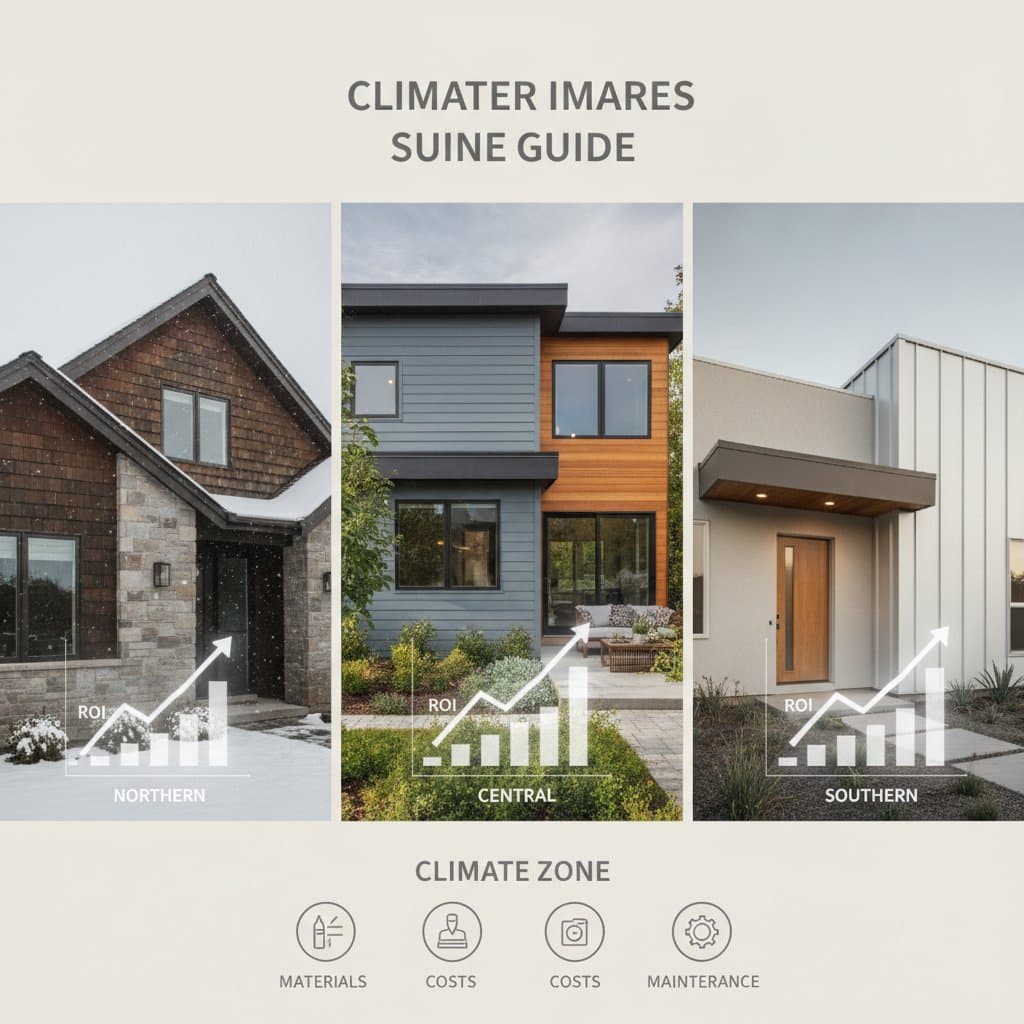
Maximize Siding ROI with Climate Specific 2026 Picks
Home siding protects the structure, manages moisture, and controls energy loss. The right choice depends on local climate conditions as much as on style or cost. When siding matches site conditions, return on investment improves through lower maintenance, longer lifespan, and stronger resale appeal.
This guide explains how to plan, select, and maintain siding for the best results in any climate zone.
Core Profiles and Where They Fit
Lap siding consists of horizontal boards that overlap. It works well on most home styles and sheds water efficiently. Board and batten uses vertical panels with narrow battens covering seams. This profile suits rustic or modern looks. Shingles provide texture and visual depth. They fit coastal or cottage settings. Panel systems employ large sheets of engineered or fiber cement material for a contemporary appearance.
Material Options, Pros and Cons
| Material | Pros | Cons |
|---|---|---|
| Vinyl | Low cost, color through surface, easy to clean | Can crack in cold climates, fades in sun |
| Fiber Cement | Fire resistant, stable in heat and moisture | Heavy, needs precise cutting tools |
| Engineered Wood | Real wood look, lighter weight, factory finish | Requires repainting over time |
| Metal (Steel or Aluminum) | High impact resistance, recyclable | Can dent or scratch, higher upfront cost |
| Natural Wood | Classic appearance, renewable | Needs frequent sealing, vulnerable to insects |
Mix Rules for Balanced Facades
Combining materials can raise return on investment when applied carefully. Use durable materials such as fiber cement or metal on high exposure walls. Apply less expensive options on protected elevations. Keep trim color consistent to tie the overall look together.
Trim and Accent Logic
Trim defines edges and transitions. Wider trim around windows adds depth. Metal flashing at sills and corners keeps water out. Use contrasting colors to highlight architecture without overstating detail.
Example Scenarios by Home Type
Coastal cottages benefit from fiber cement shingles on windward walls paired with vinyl clapboard on leeward sides. Mountain cabins work well with engineered wood lap siding and metal panels near grade for snow and impact resistance. Urban townhouses gain from smooth fiber cement panels with metal accents for fire compliance and modern lines.
Step by Step Project Prep
1. Define Goals and Scope
List primary goals such as energy savings, resale value, or maintenance reduction. Determine whether insulation upgrades or sheathing repairs form part of the project. Clarify trim and accent expectations.
2. Shortlist Contractors and Compare Bids
Seek at least three licensed installers familiar with local climate conditions. Compare bids based on scope alignment rather than lowest price. Verify insurance and references for previous siding jobs.
3. Samples, Mockups, and Approvals
Request physical samples for color and texture confirmation. A small wall mockup helps confirm joint spacing and fastener visibility. Approve selections before full installation begins.
4. Site Readiness and Daily Routine
Clear landscaping within three feet of walls. Confirm power access and disposal area for debris. Expect daily noise, dust, and ladder traffic. Keep pets and children clear of the work zone.
5. Quality Checks at Each Milestone
After tear off, inspect sheathing and framing for rot. During mid installation, verify fastener type and spacing match manufacturer specifications. Before final payment, check alignment, caulking, and paint touch ups. Document issues with photos to support warranty claims.
How to Estimate Siding ROI for Your Region
Compare total installed cost against expected service life and resale value. Homes with climate appropriate siding often recover 70 to 90 percent of cost at resale, depending on condition and local demand.
Is Insulated Siding Worth the Upgrade
Insulated vinyl or foam backed panels help reduce thermal bridging in colder zones. The added cost pays back over time through reduced energy loss.
What Climate Zone Benefits Most from Metal Siding
High wind or hail regions gain the most. Metal resists impact and meets ignition resistance codes in wildfire prone areas.
Planning Your Next Steps
Review local climate data and match it to material performance. Obtain multiple bids from qualified contractors. Schedule installation during favorable weather windows to protect the investment.