
Selecting the Right Siding for Your Climate Zone in 2025
Homeowners often focus on the visual appeal of siding, such as color and texture. However, climate plays a crucial role in determining material performance. The ideal choice provides strong insulation, manages moisture effectively, and withstands local weather impacts. Proper selection maintains stable energy costs, safeguards structural elements from damage, and preserves appearance over time. Poor choices lead to issues like swelling, cracking, or rapid fading. This guide helps you choose siding that aligns with your region's conditions, financial constraints, and upkeep preferences.
Understanding Costs and Project Planning
A complete siding installation involves removing old materials, inspecting wall sheathing, applying weather barriers, installing flashing, adding new panels or boards, fitting trim, applying sealants, and finishing with paint where needed. Proper integration around vents and windows prevents water intrusion.
Installed Cost Ranges and Warranties
Costs vary by material, with figures reflecting average installation per square foot. Warranties provide assurance of longevity.
| Material Type | Approximate Installed Cost (per sq. ft.) | Typical Warranty |
|---|---|---|
| Vinyl | $6 - $9 | 20 years to lifetime limited |
| Fiber Cement | $9 - $13 | 30 to 50 years limited |
| Engineered Wood | $8 - $12 | 25 to 50 years limited |
| Metal (Steel or Aluminum) | $10 - $16 | 40 to 50 years limited |
| Natural Wood | $10 - $18 | 10 to 30 years limited |
| Brick or Stone Veneer | $16 - $25 | 50 years or more |
These estimates apply to standard one-story homes with easy access. Multi-story structures require additional labor for scaffolding or lifts. Factors like intricate trim, uneven walls, or varied finishes increase overall expenses.
Key Factors Influencing Total Costs
- Removal and Disposal: Older, heavier materials or those containing hazards like asbestos elevate disposal charges.
- Added Insulation: Incorporating rigid foam or furring strips enhances efficiency but adds $1 to $3 per square foot.
- Custom Trim Work: Detailed corners and window treatments can represent 15 to 20 percent of the project budget.
- Site Access Challenges: Narrow lots, sloped terrain, or restricted work areas prolong setup and labor.
- Finishing Options: Factory-applied finishes involve higher initial costs yet minimize later painting needs.
Project Timeline Overview
Projects follow a structured sequence to ensure efficiency.
- Initial Assessment and Quote: Inspect the site and prepare a detailed estimate within 2 to 4 days.
- Material Choices and Ordering: Review samples and secure approvals over 1 week.
- On-Site Installation: Complete the work in 5 to 10 days, subject to favorable weather.
- Final Review and Adjustments: Address any issues and clean up in 1 to 2 days.
Navigating Permits and Inspections
Local regulations often mandate permits for projects altering sheathing or flashing. Officials verify barrier overlaps, fastener suitability, and fire compliance. Review applicable building codes prior to starting.
Strategies to Manage Your Budget
Obtain a breakdown of costs covering removal, repairs, and trim to avoid surprises. Establish fixed rates for potential issues like rot or frame damage to control change orders.
Deciding Between Repairs and Full Replacement
Opt for repairs if damage affects under 25 percent of the area and matching colors remains feasible. For greater damage, inconsistencies in color and weakened seams typically warrant a complete overhaul.
Evaluating Durability and Safety Features
Regional weather patterns dictate material resilience.
Common Climate Challenges and Suitable Materials
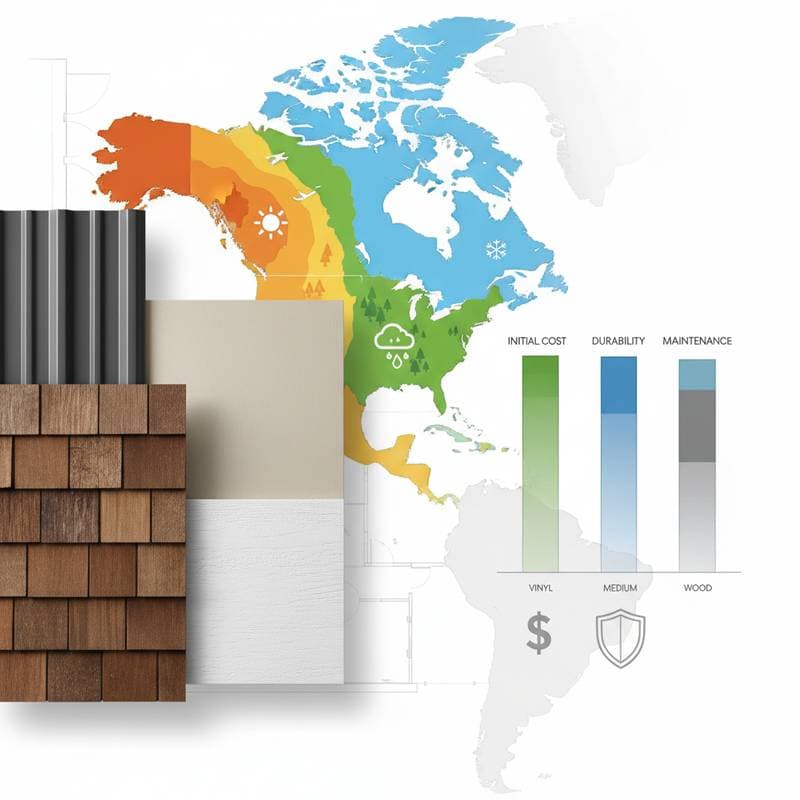
| Climate Zone | Primary Threats | Ideal Material Choices |
|---|---|---|
| Cold and Snowy | Freeze-thaw cycles, ice buildup | Fiber cement, engineered wood |
| Hot and Arid | Intense UV rays, heat expansion | Metal, fiber cement |
| Humid and Rainy | Mold growth, material rot | Vinyl, fiber cement |
| Coastal and Windy | Salt corrosion, high winds | PVC vinyl, aluminum, treated wood |
| Tornado or Hail-Prone | Impacts, uplift forces | Steel, fiber cement |
Performance Against Fire, Moisture, and Impacts
Fiber cement and metal materials resist combustion effectively. Engineered wood and vinyl offer flame-spread resistance without full fireproofing. Effective flashing and breathable barriers manage moisture buildup; maintain required gaps from ground and rooflines. Steel and fiber cement provide superior defense against hail compared to vinyl or wood.
Essential Installation Practices for Longevity
- Apply weather-resistive barriers with at least six-inch overlaps.
- Secure flashing around all openings, windows, and doors using self-adhering tape or metal.
- Ensure air circulation behind the siding to allow drying of any moisture.
- Select fasteners resistant to corrosion and matched to the material.
- Seal cut edges on wood or composite items prior to mounting.
Maintenance Routine and Cleaning Guidelines
Regular upkeep extends siding life.
| Maintenance Task | Frequency | Recommended Approach |
|---|---|---|
| Surface Washing | Annually | Use mild soap with a soft brush |
| Caulk and Joint Inspection | Biannually | Replace any cracked or loose areas |
| Repainting or Restaining | Every 5-10 years | Adhere to manufacturer's guidelines |
| Fastener and Trim Check | Annually | Tighten or replace as needed |
| Vegetation Control | Continuous | Keep at least six inches from walls |
Avoid pressure washing on fiber cement or wood surfaces. Steer clear of abrasive chemicals that damage finishes or invalidate warranties.
Understanding Warranty Coverage
Product warranties address defects but exclude installation faults. Secure a separate 1- to 5-year guarantee on workmanship from your contractor. Retain records of maintenance activities to sustain warranty validity.
Preparing for Your Siding Project Step by Step
1. Establish Project Objectives
Identify priorities like enhancing insulation, updating aesthetics, or addressing damage. Calculate wall square footage, note openings, and record moisture problems. A defined plan enables precise contractor estimates.
2. Vet Contractors and Review Proposals
Solicit bids from at least three licensed professionals. Confirm their insurance, past work references, and product certifications. Evaluate itemized details rather than bottom-line figures; inquire about included barriers and flashing.
3. Review Samples and Test Installations
Examine actual samples or install a small test area. Assess colors under different lighting conditions. Approve joint patterns and trim dimensions before committing to full-scale work.
4. Prepare the Site and Manage Daily Operations
Remove nearby obstacles including furniture, plants, and vehicles. Supply electricity and water for operations. Plan for routine debris clearance and noise; restrict access for pets and children near work zones.
5. Conduct Milestone Quality Inspections
Examine the underlying structure for rot, mold, or voids before new siding attaches. During progress, verify proper nailing techniques and intervals. Upon finishing, check seals, alignments, and coatings; document with timestamped images for records.
Maintaining Your Siding for Lasting Performance
Quality siding endures for decades under routine care. In cooler or damper areas, ensure gutters function well and direct water away from foundations. Sunny climates demand vigilance against coating degradation; refresh paints before chalking develops. For metal installations, inspect and repair seals at cut edges to prevent corrosion. These practices secure both protection and curb appeal year after year.