
Best Siding Picks for Your State's Tough Weather
Every home encounters unique weather challenges. Materials that endure in arid deserts often succumb quickly to coastal humidity. Selecting the optimal siding requires evaluating local climate, site exposure, and desired maintenance levels. This guide matches siding options to regional conditions, providing reliable details on costs, durability, and upkeep.
Siding Materials Overview
Various siding types offer distinct advantages based on performance in specific environments. Understanding these helps homeowners choose wisely.
Vinyl Siding
Vinyl provides an affordable, low-maintenance option ideal for moderate climates. It resists insects and rot but may warp in extreme heat. Installation proves straightforward, with panels locking into place for quick coverage.
Fiber Cement Siding
Fiber cement combines durability with a natural appearance, excelling in humid or high-wind areas. This material withstands moisture and fire better than wood alternatives. Professionals cut and fasten it securely, though it demands more labor than lighter options.
Metal Siding
Metal siding, often aluminum or steel, delivers superior strength against impacts like hail. It suits exposed sites with strong winds or salt exposure. Factory finishes protect against corrosion, and panels snap together efficiently.
Engineered Wood Siding
Engineered wood mimics traditional lumber while offering enhanced resistance to decay. Sealed versions perform well in freeze-thaw cycles. It requires periodic painting to maintain integrity in sunny regions.
Brick and Stone Veneer
These premium choices provide timeless appeal and excellent longevity in diverse conditions. They absorb impacts and resist fire effectively. Installation involves mortar and precise alignment, extending project timelines.
Cost and Planning Guide
Scope of Work
A comprehensive siding project encompasses removing old cladding, repairing underlying surfaces, applying weather barriers, attaching new siding, adding trim, and applying sealants. Each phase influences both expenses and duration. For a modest single-story residence, completion occurs within one week. Larger two-story homes with intricate details may require three weeks or longer.
Total Range and Typical Figures
Nationwide, installed costs range from $6 to $18 per square foot. Vinyl positions at the lower spectrum, fiber cement and engineered wood occupy the middle, while brick or stone veneer reaches the upper limit. Regional labor variations apply; coastal and northern areas incur higher fees due to specialized features like reinforced flashing or wind-resistant bracing.
Cost Drivers
- Material type: Vinyl installs rapidly owing to its lightweight nature. Fiber cement involves additional cutting and handling efforts.
- Removal: Disposing of outdated siding containing lead paint or embedded nails increases expenses.
- Access: Challenging terrains, narrow property lines, or elevated structures necessitate scaffolding.
- Climate detailing: High-wind areas demand robust clips and fasteners. Humid regions require rainscreen systems or expanded flashing.
- Trim scope: Elements such as corner boards, soffits, and window surrounds can elevate costs by 15 to 25 percent.
Timeline
Anticipate three to six weeks from contract signing to project completion. This period accounts for bidding, permitting, material procurement, and potential weather interruptions. On-site installation spans fewer days, varying with crew capacity and available daylight.
Permits, Inspections, and Access
Local authorities typically mandate permits for siding modifications. Officials inspect moisture barriers and flashing prior to enclosure. Ensure clear pathways for material deliveries and waste removal vehicles.
Budget Controls and Change Orders
Request itemized quotes separating materials, labor, and disposal fees. Insist on documented authorization for modifications. Frequent surprises include concealed rot repairs or additional framing for updated windows.
Repair vs. Replace Guidance
Opt for full replacement if over 25 percent of panels show damage like loosening, cracking, or distortion. Targeted fixes suit minor issues such as isolated hail marks or fading on a single elevation.
Durability and Safety Brief
Weather Risks by Region
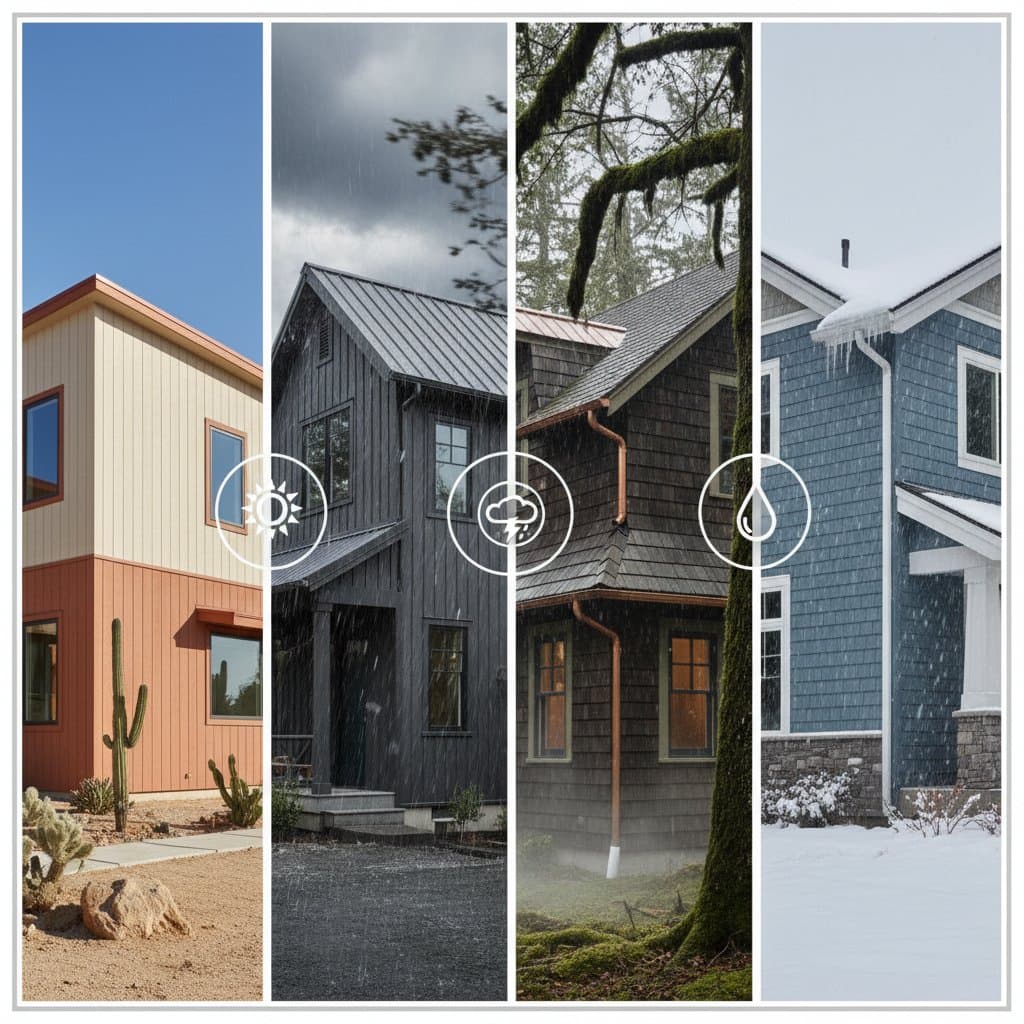
- Coastal zones: Salt-laden air and intense rains erode fasteners and coatings. Fiber cement and metal options excel here.
- Northern freeze zones: Cycles of freezing and thawing fracture absorbent materials. Vinyl and sealed engineered wood prevent cracks.
- Southern heat: Intense ultraviolet rays bleach dark surfaces and degrade sealants. Opt for pale hues and designs promoting airflow.
- Plains and hail regions: Robust steel or dense fiber cement reduces the need for frequent dent corrections.
- Wet forests: Fungi and algae proliferate rapidly. Select sleek surfaces with generous overhangs to channel water away.
Fire, Moisture, and Impact Performance
- Fire: Fiber cement and metal resist ignition completely. Engineered wood and vinyl adhere to prescribed flame-spread standards.
- Moisture: Install a seamless water-resistive layer beneath all siding. Apply flashing tape at penetrations like windows and doors.
- Impact: Heavy-gauge metal and thick fiber cement panels outperform slender vinyl against hailstones.
Envelope Details that Prevent Failures
- Establish a 3/8-inch drainage plane behind siding in moisture-prone areas.
- Position kickout flashing at roof-wall junctions.
- Coat all field cuts with recommended primers or paints.
- Maintain clearance from ground level to avert soil splash damage.
Care Schedule and Safe Cleaning Methods
| Interval | Task | Method |
|---|---|---|
| Every spring | Wash dirt and mildew | Mild detergent, soft brush, garden hose |
| Mid-summer | Inspect caulk and joints | Replace cracked or loose sealant |
| Fall | Check fasteners | Tighten or replace corroded screws |
| Every two to five years | Repaint or touch up | Follow manufacturer paint system |
Avoid pressure washers exceeding 1500 psi or abrasive chemicals, as these compromise protective finishes and warranties.
Warranty Basics and Owner Responsibilities
Siding warranties typically address defects for 25 to 50 years, contingent on correct installation and routine care. Retain documentation including invoices, product codes, and installation photographs. Neglecting scheduled maintenance may reduce coverage duration.
Maintaining Long-Term Performance
Properly selected siding endures for decades when aligned with local conditions and maintained diligently. In sun-drenched regions, emphasize fade-resistant coatings. For damp or frigid locales, prioritize effective drainage and robust seals. Fire-prone areas benefit from nonflammable selections paired with metallic accents.
Record all maintenance activities. Promptly repair minor fissures or flaking to halt moisture intrusion. Clear gutters regularly, redirect irrigation from exteriors, and prune plants to maintain a six-inch buffer from walls.