
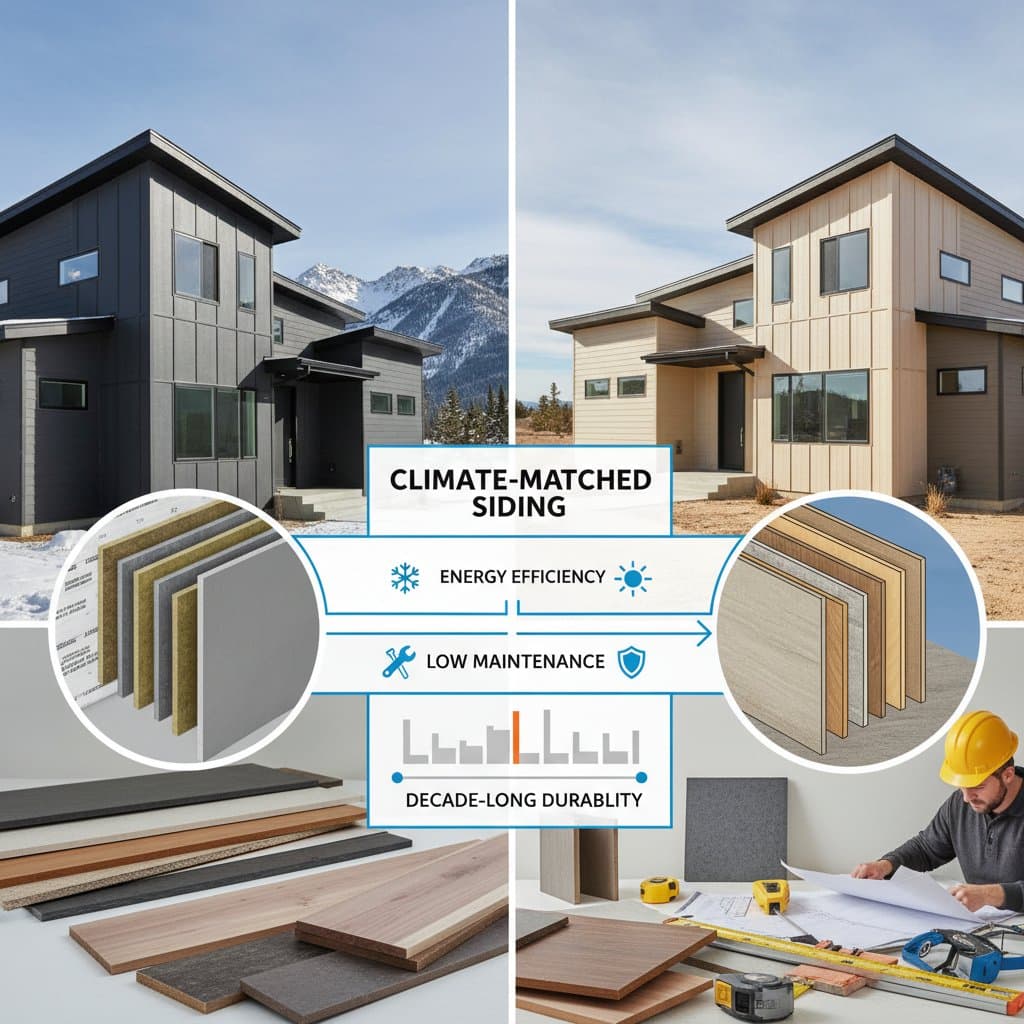
Optimal Siding Choices for Your Climate Zone in 2025
Selecting siding that aligns with your regional climate represents a critical decision in exterior construction projects. The appropriate material safeguards the building envelope, minimizes upkeep requirements, and stabilizes expenses related to heating and cooling. An ill-suited option risks moisture accumulation, premature discoloration, or structural compromise from wind, freeze-thaw cycles, or intense solar exposure. Each climate zone presents distinct challenges involving temperature fluctuations, precipitation levels, humidity, and ultraviolet radiation. By aligning material characteristics with these environmental factors, homeowners achieve a resilient and secure residence that withstands decades of weather demands.
Guidance on Styles and Material Selection
Primary Siding Profiles
Siding materials typically adopt one of three fundamental configurations:
- Lap or horizontal boards, which overlap to facilitate effective water runoff.
- Vertical panels, commonly applied to farmhouse or contemporary architectural designs.
- Shingle or shake patterns, which introduce dimensional texture suitable for coastal or rustic aesthetics.
Combining profiles can accentuate architectural features such as gables or entryways, provided transitions incorporate proper flashing and trim separations to avert water infiltration.
Available Material Types
| Material | Advantages | Disadvantages | Ideal Climate Suitability |
|---|---|---|---|
| Vinyl | Cost-effective, minimal maintenance, insect-resistant | Prone to cracking in severe cold, vulnerable to melting in extreme heat | Temperate or arid regions |
| Fiber Cement | Fire-retardant, dimensionally stable, accepts paint effectively | Substantial weight, requires specialized cutting equipment | Broad applicability, particularly in warm or moist environments |
| Engineered Wood | Authentic appearance, reduced weight compared to fiber cement | Demands periodic sealing, moderate fire performance | Temperate or arid conditions |
| Metal (Steel or Aluminum) | Resistant to wind and fire, environmentally recyclable | Susceptible to denting, thermal conductivity issues | Maritime or high-velocity wind zones |
| Stucco or EIFS | Seamless insulation, superior energy performance | Requires arid settings, susceptible to cracking from structural shifts | Dry or temperate areas |
| Brick or Stone Veneer | Exceptional longevity, negligible maintenance | Elevated initial expense, demands robust foundational support | Consistent or moderate climates |
Principles for Combining Materials
To achieve harmonious exteriors, designate one primary texture complemented by a secondary accent. Restrict vertical or shingle elements to 20 to 30 percent of the overall wall surface. Such restraint preserves visual coherence while limiting potential leak pathways at flashing interfaces.
Strategies for Trim and Accents
Trim elements delineate boundaries and shield vulnerable joints. In precipitation-heavy regions, opt for broader drip caps paired with robust backer flashing. For areas with prolonged sunlight, aluminum or PVC trim in painted finishes outperforms wood in fade resistance. Coordinate trim hues with window casings to foster a cohesive, integrated appearance.
Application Examples by Residence Style
- Single-level ranch in an arid environment: Horizontal vinyl lap siding with reduced seam lines supports straightforward maintenance.
- Multistory seaside residence: Fiber cement or metal panels endure saline corrosion and gale forces.
- Cabin-style home in a temperate woodland setting: Engineered wood, treated with appropriate sealants, conveys organic warmth and tactile interest.
- Contemporary urban addition in a subtropical locale: Stucco or metallic cladding deflects thermal gain and diminishes recoating frequency.
Comprehensive Preparation for Your Siding Project
1. Establish Objectives and Project Boundaries
Outline the primary motivations for the initiative. Address concerns such as existing deterioration, enhanced thermal performance, or aesthetic refreshment. Determine inclusions like trim work, soffit replacements, or gutter integrations. Review local building codes and insurance stipulations concerning fire ratings or wind load capacities.
2. Evaluate Contractors and Obtain Detailed Quotes
Solicit a minimum of three formal proposals from certified professionals. Verify credentials including liability coverage and testimonials from comparable regional undertakings. Scrutinize breakdowns covering demolition, water-resistive barrier application, flashing integration, trim fabrication, and waste management. Beware of bids that skimp on preparatory measures, as these omissions frequently lead to future complications.
3. Review Samples, Conduct Mockups, and Secure Approvals
Insist on tangible material swatches or a limited test installation prior to comprehensive commencement. Evaluate color rendition across natural lighting conditions, from direct sun to shadowed areas. Validate specifics for corner assemblies and attachment methods against project specifications. Document approvals in writing to authorize bulk procurement.
4. Prepare the Site and Manage Daily Operations
Evacuate a perimeter zone extending three to five feet to accommodate equipment and supply staging. Safeguard vegetation and dismantle delicate appurtenances. Anticipate disruptions from auditory and particulate emissions. Direct workers to protect underlying housewrap at day's end, mitigating risks from unexpected precipitation.
5. Perform Inspections at Key Project Phases
Conduct thorough examinations during these intervals:
- Post-demolition: Assess sheathing integrity and rectify any flashing deficiencies.
- Amid water-resistive barrier placement: Confirm proper shingle-style overlaps and secure tape bonds.
- Following initial course installation: Gauge alignment and adherence to fastening intervals.
- Upon project finale: Examine caulking applications, surface finishes, and site restoration.
Maintain a documented issue log augmented by photographic evidence. Withhold final remuneration until all identified remedies receive completion.
Essential Terminology Reference
- WRB (Water-Resistive Barrier): A protective layer positioned behind siding that repels bulk water ingress while permitting internal moisture vapor diffusion.
- Rainscreen: An air space interposed between cladding and substrate to accelerate evaporative drying.
- Lap Joint: The overlapped configuration of horizontal siding edges designed to channel water away from the structure.
- Fastener Schedule: Prescribed intervals for nails or screws as dictated by manufacturers to uphold wind uplift resistance.
- Flashing: Slender metallic or synthetic sheeting employed to redirect moisture from penetrations and junctions.
Achieving Lasting Home Performance Through Climate-Smart Siding
A siding assembly calibrated to local climate dynamics yields substantial financial savings, structural integrity, and aesthetic endurance. Align material attributes with prevailing weather regimes, adhere rigorously to installation protocols, and implement routine preservation measures. Homeowners thereby secure a serene, moisture-free interior environment coupled with operational efficiency that endures across seasonal variations.