
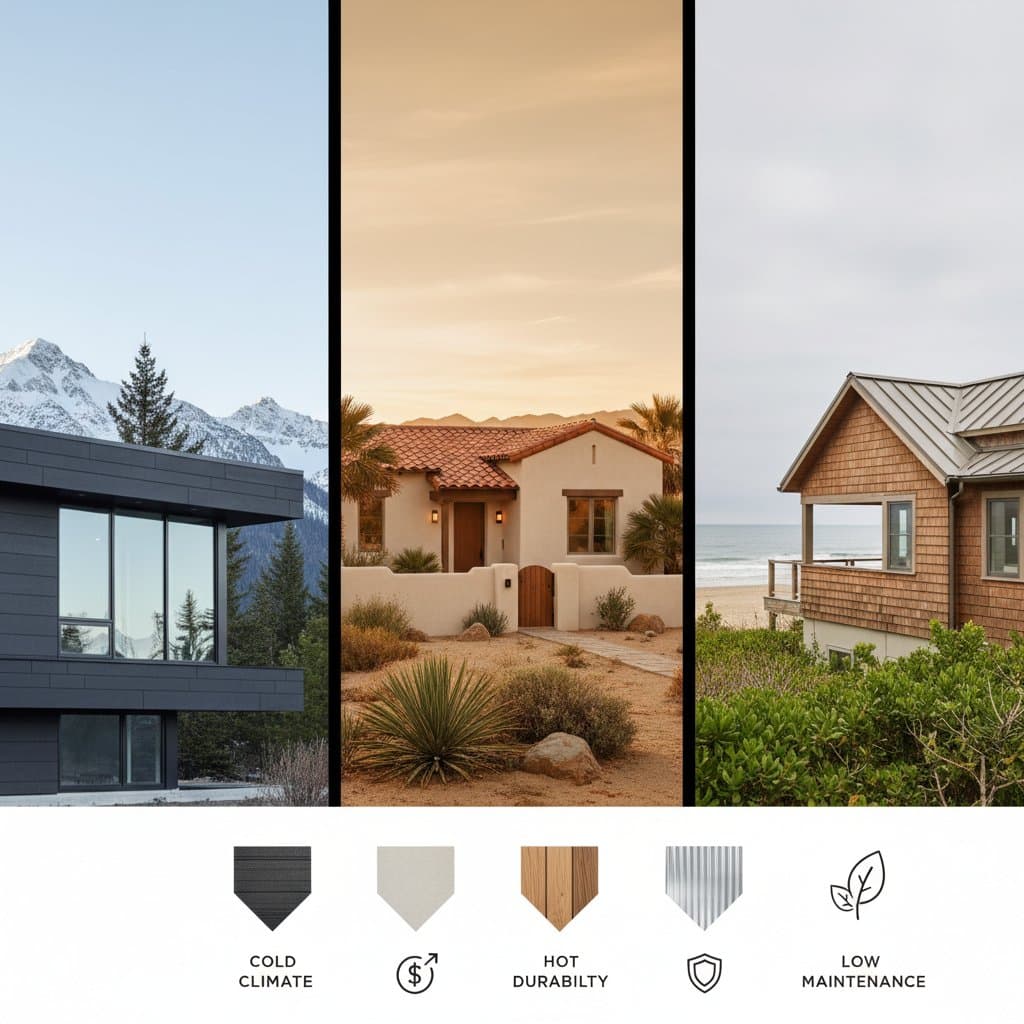
Best Siding Materials for Every Climate Zone in 2026
Choosing the right siding involves more than appearance. Local weather patterns determine how each material holds up, how often it requires attention, and how effectively it limits energy use. A careful choice safeguards the building, manages expenses over time, and preserves exterior appeal for many years. The sections below identify materials that suit each major climate zone, outline typical costs, and describe the steps needed for a dependable installation.
Matching Profiles to Conditions
Climate sets the priorities for both performance and appearance. The goal is to align regional demands with materials that have demonstrated reliability.
Available Profiles
- Lap siding produces horizontal lines and directs water away from the wall.
- Board and batten works well for vertical farmhouse or modern designs.
- Shingle siding supplies texture suited to coastal or cottage styles.
- Panel systems create clean surfaces appropriate for contemporary buildings.
Material Comparison
| Material | Strengths | Limitations | Preferred Climate |
|---|---|---|---|
| Vinyl | Low initial cost, stable color, little upkeep | Becomes brittle in freezing temperatures, softens in extreme heat | Moderate or humid zones |
| Fiber Cement | Fire resistant, dimensionally stable, accepts paint | Heavy, requires periodic repainting | Coastal, wet, or fire-prone areas |
| Engineered Wood | Natural appearance, lighter than solid lumber | Demands sealed edges and regular refinishing | Cool or dry regions |
| Metal | Long service life, resistant to insects, fully recyclable | Susceptible to dents, may show fading | Windy or hail-prone zones |
| Stucco and EIFS | Continuous surface, added insulation value | Prone to cracking from movement, requires proper drainage | Dry or mild climates |
| Natural Wood | Traditional look, straightforward repairs | Frequent maintenance, susceptible to insects | Cool, dry, or shaded locations |
Trim Selection
Install durable trim at openings and corners regardless of the primary material. In harsh climates, metal or fiber cement trim resists swelling and decay better than wood.
Installation Examples
- Coastal residence: Fiber cement lap siding fastened with stainless steel holds up against salt and moisture.
- Mountain cabin: Engineered wood board and batten matches the setting while accommodating movement.
- Urban infill: Metal panels with factory finishes deliver a modern appearance and simple cleaning.
Project Preparation Steps
- Clarify objectives. Write a brief statement that lists the chosen material, trim details, and finish expectations.
- Identify qualified contractors. Request proof of manufacturer certification and compare bids that itemize tear-off, disposal, and finishing work.
- Review samples. Obtain full-size pieces or a test panel and examine them under varying light conditions.
- Prepare the site. Remove vegetation within five feet of the walls and arrange access to power and water.
- Monitor daily work. Confirm that weather barriers and flashings are installed correctly and that fasteners follow manufacturer spacing.
- Conduct final inspections. Check corners, joints, and transitions before releasing final payment.
Maintenance Schedule
| Material | Inspection Frequency | Cleaning Method | Refinishing Interval |
|---|---|---|---|
| Vinyl | Twice yearly | Mild soap and water | None required |
| Fiber Cement | Twice yearly | Low-pressure rinse | Paint every 10 to 15 years |
| Engineered Wood | Twice yearly | Gentle brush wash | Paint or stain every 5 to 10 years |
| Metal | Once yearly | Mild detergent | Touch up scratches promptly |
| Stucco | Once yearly | Hose rinse | Recoat finish every 10 to 15 years |
| Natural Wood | Twice yearly | Hand wash | Stain or seal every 3 to 5 years |
Common Questions
How should siding be matched to a specific climate zone? Begin by noting temperature range, rainfall totals, and wind exposure. Select materials that address the most severe local condition while satisfying building codes.
What benefit does insulated siding provide? It can lower heat loss in cold regions and reduce sound transmission. Actual performance depends on wall thickness, sheathing type, and the quality of air sealing.
Ongoing Care Practices
After installation, siding forms part of the home weather protection and visual character. Seasonal attention preserves both functions. Clear gutters regularly, prune nearby plants, and rinse surfaces after pollen or salt accumulation. Maintain a simple record of inspection dates and repairs. This documentation supports warranty claims and informs later decisions.