
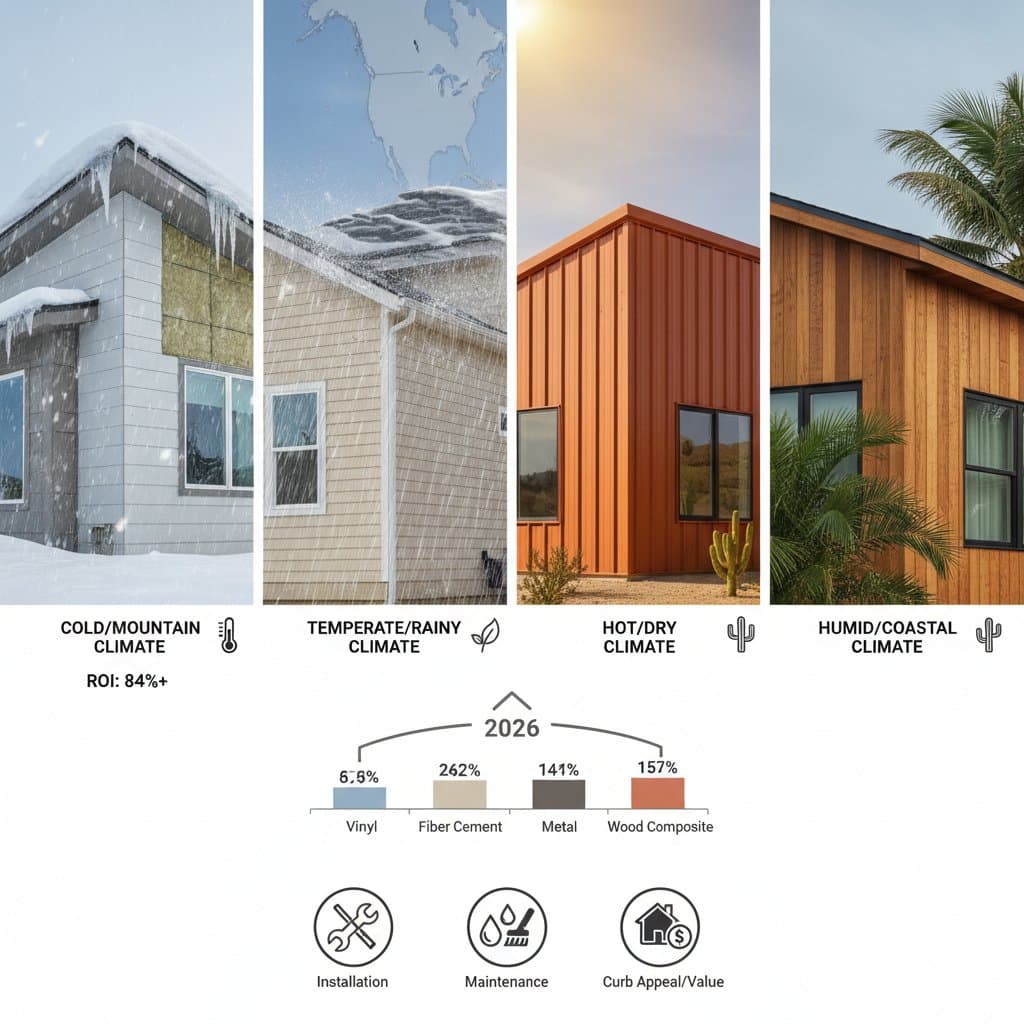
Best Siding Materials for Every Climate Zone in 2026
Choosing siding ranks among the most visible and expensive decisions a homeowner faces. The right material protects the house envelope, shapes curb appeal, and influences resale value. The wrong choice can increase maintenance costs, shorten repaint cycles, and reduce buyer confidence. This guide shows how to select siding that matches local climate conditions while delivering clear data on costs, returns, and performance.
Cost, ROI, and Impact Factors
Siding replacement delivers strong resale returns. National studies place average returns between 68 and 84 percent of project cost, with results varying by material, regional pricing, and overall curb appeal. Buyers evaluate maintenance needs and energy efficiency through the condition of exterior surfaces.
Cost Ranges by Project Scale
- Small project covering 1,000 square feet on a single story: 8,000 to 14,000 dollars.
- Mid-size project covering 2,000 square feet on two stories: 16,000 to 36,000 dollars.
- Large project covering 3,000 square feet or more on multiple levels: 28,000 to 75,000 dollars.
Primary Cost Drivers
- Removal and disposal of old asbestos or heavy wood siding adds 2 to 4 dollars per square foot.
- Wall complexity from gables, dormers, and trim increases labor hours.
- Limited access on tight lots or multiple stories requires scaffolding or lifts.
- Heavier materials raise transport and handling expenses.
- Factory finishes extend service life yet increase initial price.
Impact on Value
Updated siding can increase appraised value by 3 to 5 percent. Clean lines and consistent texture build buyer confidence. Durable, low-maintenance products reduce repaint and repair cycles, often saving 1,000 to 2,500 dollars every five years.
Plan budgets according to total wall area and trim complexity rather than simple per-square-foot averages. A precise scope protects both budget and long-term value.
Design for Curb Appeal
Siding shapes the visual composition of a house. Buyers notice proportion, contrast, and detail before reaching the entrance. Thoughtful design can increase perceived value without added square footage.
Massing and Proportion
Match siding profiles to roof pitch and window scale. Wide horizontal boards suit low, long facades. Narrow lap or vertical panels work better on taller elevations. Maintain continuous horizontal lines around corners to prevent visual breaks.
Color and Contrast
Mid-tones conceal dirt and weathering more effectively than bright or dark extremes. Warm grays and taupes complement natural wood or stone. Cool grays pair well with metal or white trim. Use lighter trim to frame openings and darker body colors to add depth.
Entry Emphasis and Lighting
A clear entry sequence strengthens first impressions. Align lighting with door height, select fixtures that match finish color, and size house numbers for visibility from the street. Clean, consistent lines photograph well and support listing appeal.
Choose siding color and profile that preserve balanced contrast and photograph predictably. Avoid trends that age quickly or demand frequent repainting.
Maintenance and Longevity
Proper care extends siding life and preserves warranty coverage. Most materials require only seasonal cleaning and periodic inspection.
Cleaning and Care
Wash vinyl and metal with mild detergent and soft brushes once or twice each year. Inspect caulk joints around windows and vertical seams. Repaint fiber cement or engineered wood when color fade reaches 20 percent of the original tone. Keep vegetation trimmed at least 12 inches from siding to limit moisture buildup.
Inspection Intervals
| Task | Frequency | Purpose |
|---|---|---|
| Visual check for cracks or loose panels | Twice yearly | Identify early moisture entry |
| Recaulking seams and joints | Every 3 to 5 years | Maintain water barrier |
| Repainting or restaining | 8 to 15 years depending on product | Renew UV protection |
| Cleaning gutters and downspouts | Every season | Prevent splash damage |
Warranty Responsibilities
Manufacturers typically require documented maintenance for coverage. Retain dated photos and receipts of cleaning or repainting work. Failure to maintain finish layers can void warranties even when the core material remains sound.
Consistent maintenance protects appearance and resale value. Documented upkeep supports warranty claims and future buyer confidence.
Living With Your Choice
Once installed, siding becomes part of routine home care. Successful projects balance durability, cost, and appearance under local weather conditions.
Regional Recommendations
Dry desert climates favor metal or fiber cement in light colors to reflect heat. Avoid dark vinyl that can warp. Humid coastal climates benefit from vinyl or engineered wood with sealed joints and corrosion-resistant fasteners. Cold northern climates require insulated vinyl or fiber cement with proper air gaps to manage freeze cycles. Mixed or temperate zones suit engineered wood for a natural appearance with moderate upkeep.
Typical Long-Term Costs
Over a 30-year period, vinyl and fiber cement usually produce the lowest total ownership cost because they need limited repainting and few repairs. Wood siding, though attractive, can double maintenance spending when neglected.
Weigh both upfront and lifetime costs. A modestly higher initial investment often returns value through fewer repairs and stronger resale performance.
Evaluating Replacement Needs
Widespread swelling, soft spots, or repeated paint failure across multiple walls indicate replacement rather than repair. Spot repairs lose value when underlying sheathing is compromised. When repair costs exceed 30 percent of replacement value, full replacement becomes the practical option.
Selecting Siding for Your Home
Match material performance to climate demands, budget constraints, and maintenance capacity. This approach delivers lasting protection, sustained curb appeal, and stronger resale results.