
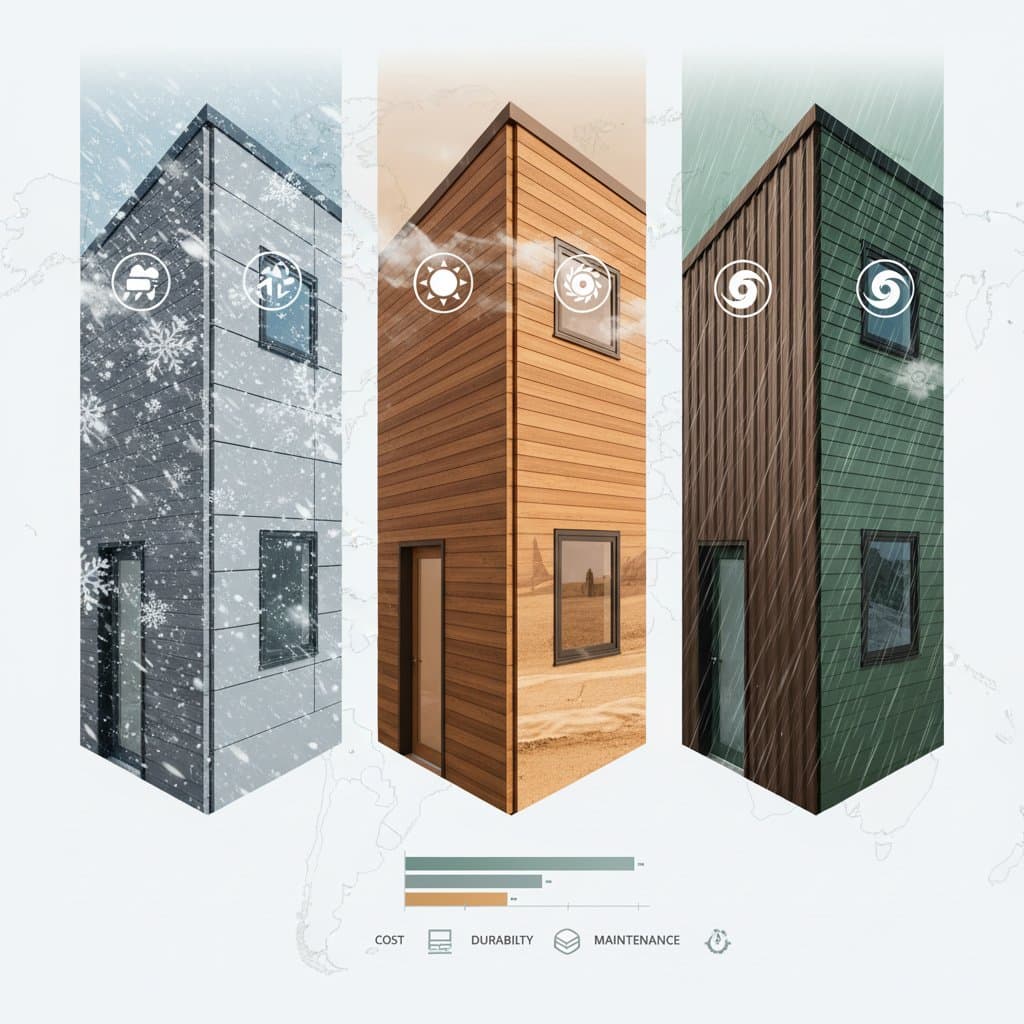
Understanding Climate-Proof Siding for 2025 Weather Zones
Selecting the appropriate siding material goes beyond aesthetics; it serves as a critical barrier against environmental stresses. Materials that align with local weather conditions resist moisture buildup, withstand extreme temperatures, and endure impacts from wind or debris. This approach minimizes repair costs and extends the lifespan of your home's exterior. Begin by identifying your region's dominant weather patterns, such as heavy rainfall, intense sunlight, or freezing winters, to guide material choices.
Common weather zones include cold continental areas with freeze-thaw cycles, hot arid regions prone to UV degradation, humid subtropical zones with persistent moisture, and coastal environments exposed to salt and high winds. Each zone demands specific attributes from siding, like thermal stability or corrosion resistance. By matching these factors, homeowners achieve both protection and visual appeal without frequent replacements.
Exploring Siding Styles and Profiles
Siding styles influence not only the home's appearance but also its performance in varying climates. Horizontal profiles promote water shedding, while vertical options enhance rigidity against wind loads. Consider the architectural context of your property when choosing profiles to ensure seamless integration.
Key Siding Profiles
-
Lap Siding: These horizontal planks overlap for efficient water runoff. They adapt well to most climates and pair with traditional or contemporary home designs. In moderate zones, lap siding maintains shape without warping.
-
Board and Batten: Vertical boards covered by narrow strips at seams provide a rustic or modern aesthetic. This profile excels in areas with moderate winds, as the vertical orientation distributes pressure evenly. It suits rural settings or homes seeking vertical emphasis.
-
Shingles or Shakes: Individual textured pieces create depth and shadow play on walls. They perform reliably in coastal or forested regions where humidity varies. Installation requires precise spacing to prevent moisture trapping.
-
Panels: Large flat sheets with trim accents streamline installation on modern or commercial structures. Panels resist expansion in stable climates but demand secure fastening in windy areas. They offer a clean, minimalist look.
Evaluating Material Options by Performance
Material selection hinges on balancing durability, cost, and maintenance against zone-specific challenges. Vinyl offers affordability but falters in extremes, while fiber cement provides robustness at a higher initial investment. Review the table below for a comparative overview, then delve into detailed pros and application tips.
| Material | Pros | Cons | Best Weather Zones |
|---|---|---|---|
| Vinyl | Affordable, low maintenance, diverse colors | Becomes brittle in subzero temperatures, warps in intense heat | Mild temperate, low humidity |
| Fiber Cement | Fire-resistant, dimensionally stable, accepts paint easily | Heavier weight requires sturdy framing, demands specialized cutting | Hot and dry, coastal with salt exposure |
| Engineered Wood | Mimics natural wood grain, pre-finished for convenience | Requires sealing at edges to prevent water ingress | Temperate with seasonal changes |
| Metal (Steel or Aluminum) | Highly durable against fire and wind, recyclable | Prone to denting from hail, fewer texture options | High-wind coastal, wildfire-prone |
| Natural Wood | Authentic warmth and texture, eco-friendly sourcing | Demands regular sealing and treatment against rot | Arid inland or shaded, low-moisture |
Detailed Material Insights
Vinyl siding remains popular for its budget-friendly nature and resistance to pests. In mild zones, it lasts 20 to 40 years with minimal care, but add insulated backers in cooler areas to combat contraction. Costs range from $3 to $7 per square foot installed.
Fiber cement stands out for its engineered composition of cement, sand, and cellulose fibers. It endures temperatures up to 1,500 degrees Fahrenheit without igniting, making it ideal for fire-risk zones. Expect installation costs of $8 to $14 per square foot, offset by low upkeep.
Engineered wood combines wood strands with resins for stability superior to solid lumber. It resists cracking in fluctuating humidity but needs a robust moisture barrier in rainy climates. Budget $6 to $10 per square foot, including factory-applied finishes that reduce painting needs.
Metal siding, often galvanized steel or aluminum, excels in corrosive environments with proper coatings. It withstands winds over 150 mph when fastened correctly. Prices fall between $5 and $12 per square foot, with aluminum lighter for easier handling in coastal installs.
Natural wood, like cedar or redwood, delivers timeless appeal but requires diligent protection. Apply penetrating sealants every three to five years in dry zones to prevent splitting. Installation averages $7 to $15 per square foot, varying by wood grade.
Strategies for Mixing Materials and Adding Trim
Blending materials optimizes cost and performance; for instance, install fiber cement on lower walls exposed to splash-back and engineered wood accents higher up for visual interest. Ensure compatible expansion rates to avoid gaps that invite water. This hybrid approach can reduce overall expenses by 15 to 20 percent.
Trim elements safeguard vulnerable areas like corners and openings. Opt for PVC or metal in humid zones for rot resistance, matching the siding's color palette for cohesion. Align trim joints precisely to direct water away, incorporating drip caps over windows in rainy regions.
Practical Application Examples
In cold zones with heavy snow, pair vinyl lap siding with foam insulation boards to minimize thermal bridging. For hot, dry areas, select light-colored fiber cement panels to reflect solar heat and lower cooling costs. Coastal homes benefit from aluminum siding with corrosion-resistant screws and vapor-permeable housewrap to manage salt-laden air.
Preparing for a Successful Siding Installation
Thorough preparation ensures a smooth project and lasting results. Start by assessing your home's current siding for underlying issues like rot, which could necessitate full removal.
-
Set Clear Objectives: Prioritize factors such as energy efficiency, minimal upkeep, or aesthetic upgrades to narrow options.
-
Vet Contractors: Seek professionals experienced in your climate; verify licenses, insurance, and past projects via references.
-
Solicit Detailed Quotes: Ensure bids cover demolition, waste removal, weather-resistant barriers, trim work, and finishing applications.
-
Examine Physical Samples: Test full-scale pieces for color accuracy and texture under your home's lighting conditions.
-
Prepare the Site: Trim back foliage, relocate furnishings, and secure utilities like electricity for tools.
-
Manage Daily Operations: Account for dust and noise; restrict access to the area for safety.
-
Conduct Inspections: Verify secure flashing, even seams, and proper nail spacing prior to sign-off.
Maintaining Your Siding for Long-Term Durability
Routine care preserves siding integrity and averts minor issues from escalating. Trim plants at least 18 inches from walls to facilitate drying and deter pest harborage. In coastal areas, hose down salt residue quarterly; in dusty regions, rinse annually with a gentle detergent solution.
Track maintenance activities in a log, noting caulk reapplications every five years or touch-up paints as needed. Address dents in metal promptly to prevent rust, and reseal wood edges after storms. These habits extend siding life by 10 to 15 years, safeguarding your investment.
Choosing siding attuned to your weather zone fortifies your home against elemental forces while enhancing curb appeal. This strategic decision yields enduring protection, reduced energy bills, and peace of mind for years ahead.