
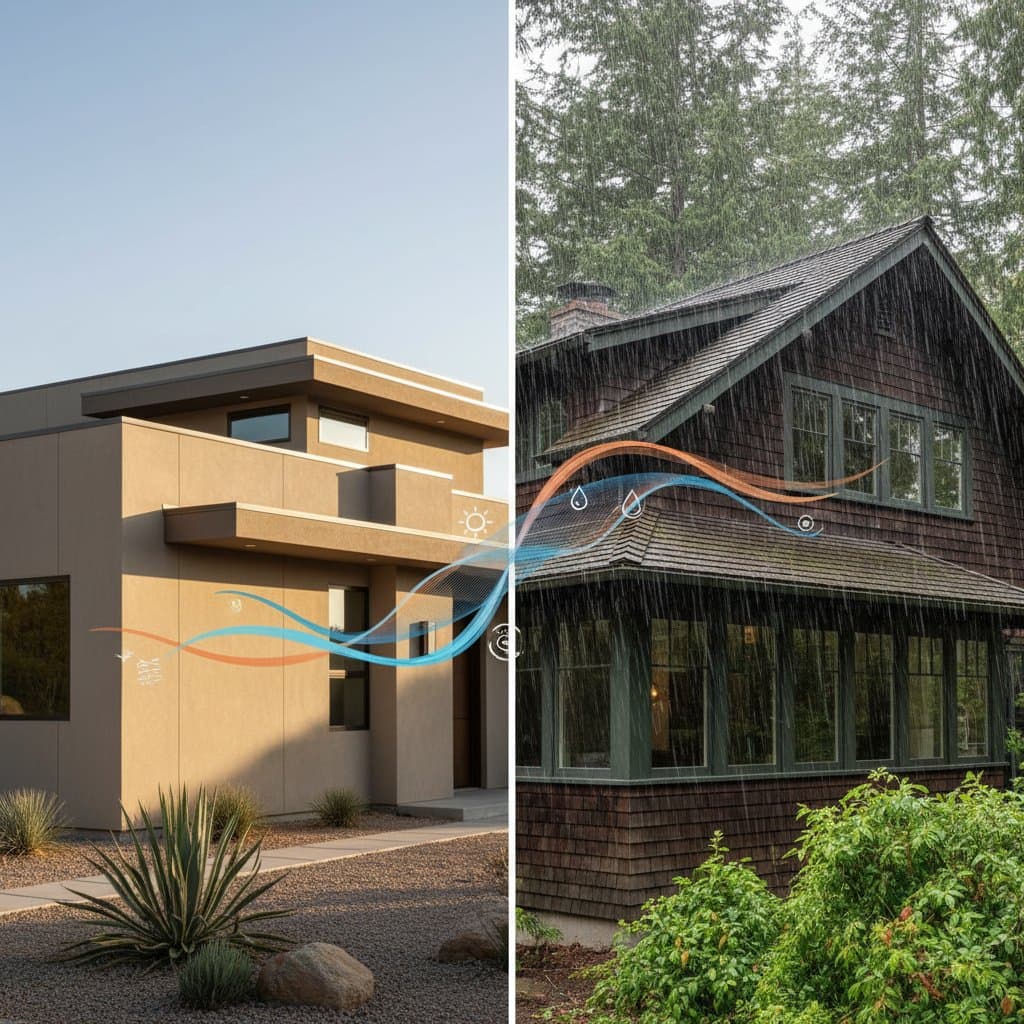
Why Climate Influences Your Siding Selection
Selecting siding for your home extends beyond aesthetic preferences. Local weather patterns, including temperature fluctuations, humidity levels, and wind speeds, directly impact material performance. Materials that endure expansion from heat or resist rot from moisture ensure structural integrity and reduce energy expenses over time.
This guide outlines a systematic approach to choosing siding that aligns with your climate zone. It details material properties, installation considerations, and maintenance strategies to help you achieve long-lasting protection and cost efficiency.
Understanding Siding Profiles and Materials
Key Siding Profiles
Siding profiles determine how effectively a material handles environmental stresses. Horizontal designs promote water runoff, while vertical options facilitate snow shedding in colder regions.
- Lap or Clapboard Siding: These overlapping horizontal planks direct rainwater away from the wall surface. Seal joints with high-quality caulk to prevent leaks in rainy climates.
- Board and Batten Siding: Vertical boards paired with covering battens create a rustic appearance. This profile excels in snowy areas, as it allows heavy accumulations to slide off without pooling.
- Shingle or Shake Siding: Individual or bundled pieces mimic natural wood textures. Incorporate expansion gaps between pieces to allow for drying in humid coastal environments.
- Panel Siding Systems: Large, seamless sheets offer a contemporary look. Pair them with rainscreen gaps in high-moisture zones to enhance ventilation and prevent mold growth.
Material Characteristics and Climate Suitability
Each material responds uniquely to weather elements. Consider factors like thermal expansion, UV resistance, and moisture absorption when evaluating options.
| Material | Key Strengths | Potential Drawbacks | Ideal Climate Zones |
|---|---|---|---|
| Vinyl | Affordable initial cost; minimal upkeep | Becomes brittle below freezing; discolors in intense sunlight | Temperate regions with mild winters and moderate sun exposure |
| Fiber Cement | Resists fire and dimensional changes; durable against impacts | Requires periodic repainting; heavier weight demands sturdy framing | Humid subtropical areas or wildfire-prone landscapes |
| Natural Wood | Warm, authentic aesthetic; straightforward repairs with matching pieces | Susceptible to rot, pests, and warping without treatment | Arid interiors or cool, dry highlands with low insect activity |
| Engineered Wood | Balances weight and strength; pre-finished for immediate use | Prone to swelling if water penetrates seams | Versatile for transitional climates with occasional rain |
| Metal | Withstands high winds; fully recyclable and non-flammable | Surface scratches visible; conducts heat or cold without insulation | Coastal zones with salt exposure or fire-risk forests |
| Stucco or EIFS | Provides seamless insulation; customizable textures | Susceptible to cracking from ground shifts; needs proper drainage layers | Dry, desert environments avoiding frequent freeze-thaw |
Integrating Multiple Materials
Blending materials optimizes performance across a home's elevations. For instance, apply fiber cement to south-facing walls exposed to sun and wind, then transition to engineered wood on shaded sides. Align material changes at natural breaks, such as rooflines or foundation edges, to minimize water infiltration risks.
Use compatible fasteners and sealants at junctions to maintain weatherproofing. This strategy not only controls costs but also enhances overall resilience.
Selecting Trim and Accents
Trim elements frame openings and edges, influencing water management and visual harmony. In precipitation-heavy areas, opt for broader trim boards with integrated metal flashing to divert runoff from vulnerable seams.
In arid settings, slimmer profiles preserve a minimalist design while reducing material needs. Choose trim finishes in reflective tones to deflect solar heat, particularly on west- or south-oriented surfaces.
Practical Application Examples
Tailor selections to specific regional challenges for optimal results.
- Coastal Residence: Install fiber cement lap siding secured with corrosion-resistant stainless steel nails. Add a rainscreen system with 1/4-inch ventilation gaps to combat salt air and humidity.
- Mountain Retreat: Employ board and batten engineered wood under extended roof overhangs. These features encourage snow melt without ice dams forming on walls.
- Urban Multi-Family Building: Combine metal panels on upper levels for wind resistance with fiber cement bases to absorb ground-level impacts from traffic or debris.
- Desert Property: Apply stucco over rigid foam insulation for thermal regulation. Textured finishes reflect sunlight, keeping interior temperatures stable.
Preparing for Your Siding Installation
A structured preparation process ensures smooth execution and superior outcomes. Address each phase methodically to align with your climate's demands.
1. Establish Project Objectives
Identify primary needs, such as enhanced energy efficiency or reduced maintenance frequency. Draft a one-page outline specifying desired insulation ratings, color schemes, and budget limits. This document guides contractor discussions and bid evaluations.
2. Evaluate and Select Installers
Seek professionals with certifications from material manufacturers, especially for complex options like fiber cement or stucco. Obtain detailed bids from at least three sources, including breakdowns of labor, materials, and any climate-specific adaptations like enhanced flashing.
Compare warranties, timelines, and references from similar projects in your zone.
3. Review Samples and Conduct Tests
Request material swatches to assess texture and color in natural lighting conditions. Install small mockup sections on a test wall to evaluate joint alignment and weathering potential. Secure final approvals on all elements prior to mobilization.
4. Prepare the Site
Remove vegetation within a two-foot perimeter to allow for proper airflow and access. Arrange secure staging areas for materials and designate spots for waste collection. Schedule complementary tasks, like exterior lighting updates, to minimize disruptions.
Anticipate 4-6 weeks for a standard single-story home, adjusting for weather delays in extreme climates.
5. Monitor Progress Through Inspections
Examine underlying sheathing for damage before siding application begins. Verify that weather-resistive barriers and flashings cover all penetrations adequately. During installation, check fastener placement every 16 inches horizontally and include expansion joints every 12 feet to accommodate thermal movement.
Conclude with a walkthrough to confirm even caulking, straight lines, and consistent finishing.
Maintaining Siding for Long-Term Performance
Climate-appropriate siding demands routine care to preserve its protective qualities. Annual inspections reveal early signs of wear, such as loose seams or discoloration, allowing for prompt interventions.
Document upkeep activities in a dedicated log, noting products applied and repair dates. This record supports warranty enforcement and elevates property appeal during sales. Ultimately, informed choices and diligent maintenance yield a home that withstands environmental pressures while optimizing comfort and savings.