
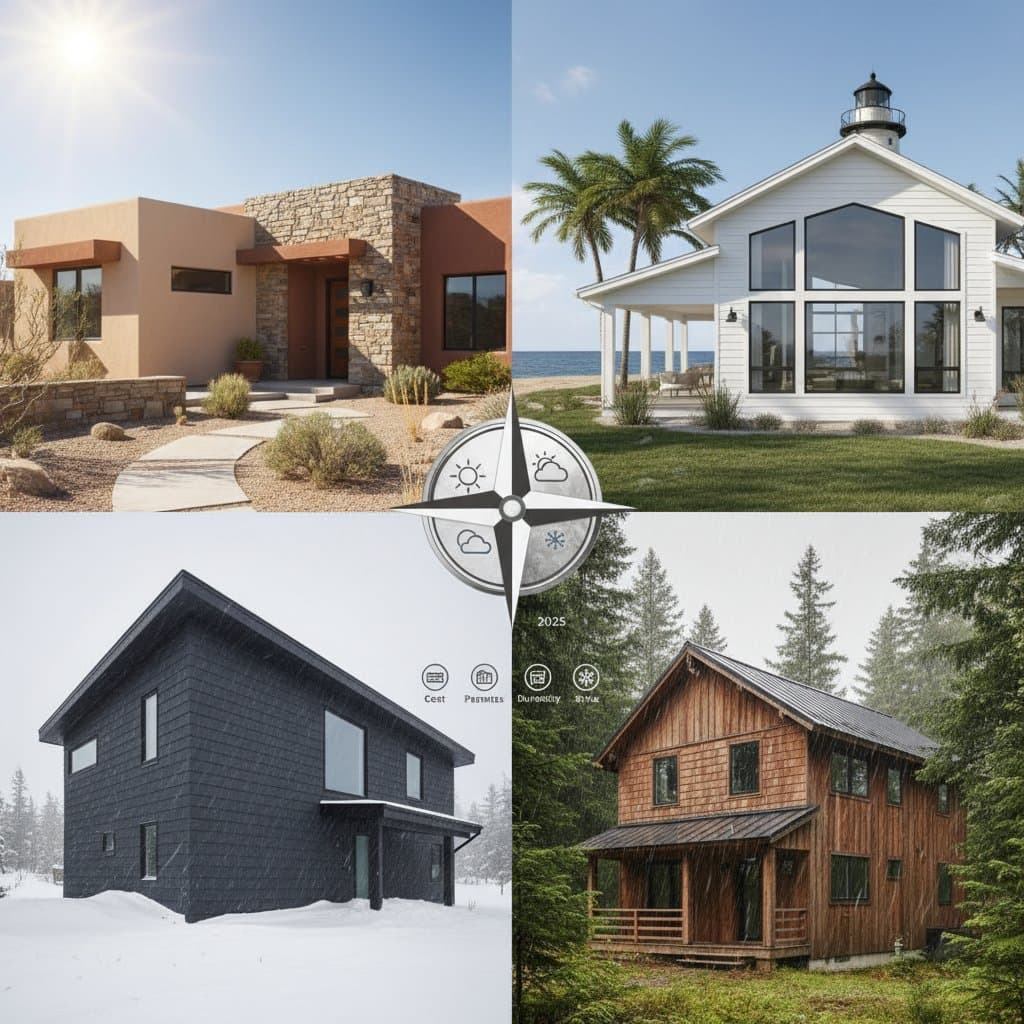
Why Climate Shapes Your Siding Choices in 2025
Your local climate dictates the performance, longevity, and maintenance needs of exterior siding. Materials that endure in arid regions often succumb to coastal humidity or freezing temperatures elsewhere. Selecting siding requires prioritizing environmental resilience over aesthetics alone, ensuring it withstands seasonal extremes like intense heat, heavy rain, high winds, and fire risks.
Focus on your specific climate zone to avoid costly repairs. This approach aligns material properties with local weather patterns, extending the lifespan of your home's protective layer.
Style and Material Selection Guide
Profile Recommendations by Architecture
- Lap Siding. Ideal for classic homes, this horizontal style sheds water efficiently and complements varied rooflines.
- Board and Batten. Vertical lines enhance farmhouse or modern elevations, providing visual height on larger surfaces.
- Shingle Siding. Adds organic texture to beach houses or bungalows, mimicking natural elements.
Material Comparison
| Material | Advantages | Drawbacks | Optimal Climate |
|---|---|---|---|
| Vinyl | Affordable, simple maintenance | Prone to cracking in freezes or buckling in extreme heat | Temperate zones |
| Fiber Cement | Resists fire and decay | Heavier weight requires sturdy installation | Humid or wildfire areas |
| Engineered Wood | Authentic appearance, reduced weight | Periodic painting necessary | Varied conditions |
| Metal | Durable against impacts, insect-resistant | Susceptible to dents, fewer design options | High-wind or fire zones |
| Natural Wood | Aesthetic warmth, customization flexibility | Demands frequent sealing and treatment | Arid or mild environments |
Combining Materials Effectively
Select a primary material for broad coverage and a secondary for accents to create depth without overwhelming the facade. Position water-sensitive elements higher on walls and use robust trims at vulnerable edges. Restrict color palettes to two on compact homes to maintain balanced visuals.
Durability and Safety Considerations
Common Weather Threats
- Freezing Regions. Expansion-contraction from ice cycles damages porous materials; select low-absorption options to minimize cracking.
- High-Humidity Areas. Fungi and decay thrive here; incorporate air gaps via rainscreen systems and airtight seals.
- Windy Locales. Secure with specialized clips and overlapping designs to prevent uplift during gusts.
- Fire-Prone Zones. Prioritize Class A-rated, non-ignitable surfaces like cement-based or metallic products.
Building Envelope Best Practices
Install a seamless weather-resistive barrier directly against sheathing to block moisture penetration. Apply metal flashing around windows, doors, and roof junctions, and ensure siding clears the ground by at least 6 inches. In saline environments, stainless steel fasteners avoid corrosion stains.
Maintenance Routine
| Activity | Frequency | Guidelines |
|---|---|---|
| Exterior Cleaning | Annually | Use gentle soap and a soft brush to remove buildup |
| Sealant Inspection | Biannually | Reapply to any gaps or separations |
| Surface Renewal | Every 7 to 10 years | Adhere to product-specific refinishing protocols |
| Hardware Check | Post-Storm | Secure or substitute any loosened attachments |
Understanding Warranties
Review coverage for manufacturing defects, installation errors, and environmental fading. Most extend 25 to 50 years for premium materials, but labor protections last only 5 to 10 years. Confirm exclusions for improper maintenance or extreme events.
Preparing for Your Siding Project
- Set Clear Objectives. Determine if the focus lies on improving insulation, enhancing resilience, or updating curb appeal.
- Vet Potential Installers. Choose professionals with proven expertise in your climate and request verifiable local projects.
- Evaluate Samples On-Site. Assess hues and grains under natural light to match your current features.
- Prepare the Property. Remove nearby plants, relocate outdoor items, and ensure unobstructed pathways for equipment.
- Monitor Key Phases. Oversee the moisture barrier, flashing details, and edge treatments before releasing final funds.
Maintaining Your Siding Investment
Proper care transforms siding from a mere covering into a reliable barrier. Regularly clear downspouts to prevent pooling, redirect irrigation from foundations, and prune overhanging branches to reduce dampness. Tailor routines to regional conditions: combat dust accumulation in deserts or scrub salt deposits and growths in marine settings. Consistent attention preserves appearance and structural integrity for decades.