
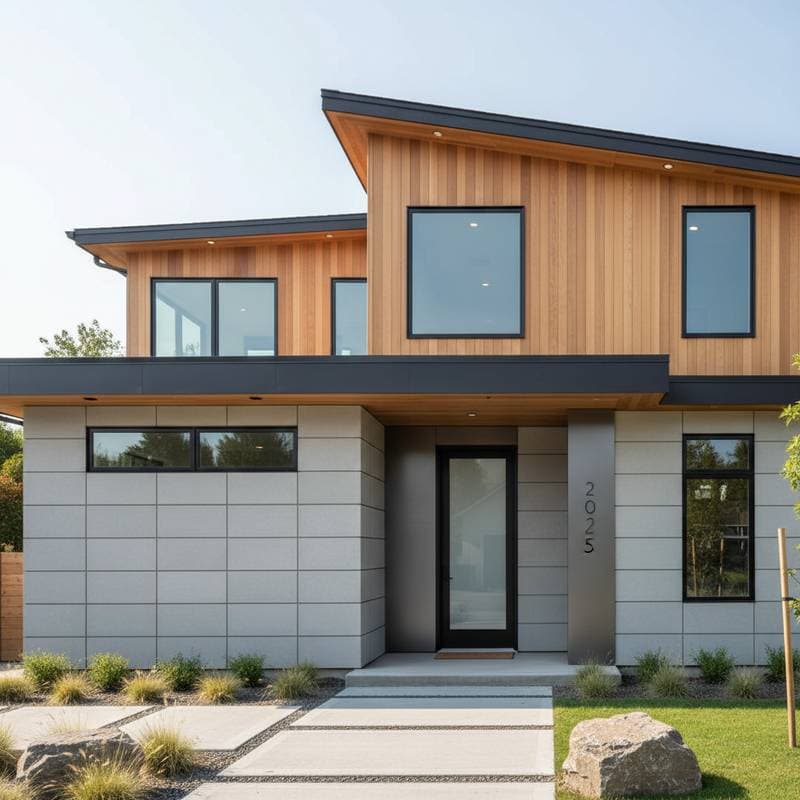
Understanding Hybrid Siding for 2025: Enhancing Curb Appeal and Value
Hybrid siding, also known as mixed-material cladding, transitions from conceptual sketches in design publications to practical applications on residential exteriors. This approach integrates multiple materials across a single facade, allowing homeowners to achieve a personalized aesthetic alongside reliable functionality. Typical pairings include fiber cement panels accented with cedar elements or metal accents bordering composite boards, all aimed at achieving equilibrium in strength, expense management, and visual interest.
This resource provides a thorough overview of initiating, budgeting, and sustaining a hybrid siding initiative. It addresses practical pricing, installation schedules, and protective measures to safeguard the long-term worth of the project.
Selecting Styles and Materials
Essential Profiles
Hybrid configurations frequently incorporate contrasts in orientation and surface texture to create dynamic facades. Popular pairings encompass:
- Horizontal lap siding combined with vertical board-and-batten for farmhouse or transitional architectures.
- Smooth panels paired with wood-grain planks to foster a sleek, contemporary blend.
- Stone veneer foundations topped with fiber cement on upper sections for traditional or craftsman influences.
- Metal panels integrated with composite siding for modern constructions.
Material Choices
| Material | Key Advantages | Potential Considerations |
|---|---|---|
| Fiber Cement | Resists fire, requires minimal upkeep, performs consistently in varying temperatures | Weighs more than alternatives, demands accurate flashing installation |
| Vinyl | Budget-friendly, retains color over time, installs rapidly | Prone to cracking from impacts, performs less optimally in extreme heat |
| Engineered Wood | Offers natural warmth, weighs less than solid wood, arrives with pre-applied finishes | Requires vigilant sealing at edges to prevent moisture ingress |
| Metal (Steel or Aluminum) | Provides crisp profiles, excels in fire and impact resistance | Susceptible to dents, necessitates exact trim work |
| Natural Cedar | Delivers authentic texture, available from renewable sources | Needs periodic staining and sealing for protection |
| Stone or Brick Veneer | Establishes a solid base, enhances property marketability | Involves higher costs, imposes greater load on foundations |
Principles for Harmonious Material Integration
Achieving balance in hybrid designs relies on thoughtful proportions rather than mere juxtaposition. Position denser materials, such as stone or brick, at the base to provide visual stability. Reserve smoother or lighter options for upper elevations. Restrict the palette to two dominant materials plus one supplementary accent to avoid overwhelming the eye and complicating upkeep.
Guidelines for Trim and Accents
Trim elements delineate shifts between materials effectively. Install color-coordinated metal flashings at all junctions to manage water flow. For instance, at the interface of metal siding and fiber cement, incorporate a vertical J-channel or Z-flashing to isolate moisture pathways. Apply paint or powder coating to visible flashings in subdued hues for seamless integration.
Practical Application Examples
- Suburban Ranch Renovation: Swap outdated vinyl for fiber cement lap siding on primary walls, incorporating cedar shingle details on gable ends. This maintains reasonable expenses while introducing inviting texture.
- Modern Farmhouse Project: Employ vertical board-and-batten fiber cement on the front facade, complemented by horizontal engineered wood on adjacent sides for rhythmic variation.
- Urban Infill Development: Pair metal panels on upper levels with composite planks at ground level to yield a robust, forward-thinking appearance.
Preparing for Your Hybrid Siding Project
1. Establish Objectives and Project Boundaries
Determine if the focus centers on aesthetics, enhanced performance, or complete overhaul. Document specific materials for each wall surface, including provisions for trim, soffits, and decorative features. Specify whether the scope extends to insulation enhancements, sheathing replacements, or structural reinforcements.
2. Identify Qualified Contractors
Target professionals with documented experience in at least three hybrid siding installations. Request visual portfolios and client testimonials. Verify licensing, insurance coverage, and certifications from material manufacturers. Solicit detailed proposals that delineate costs for materials, labor, and waste removal to ensure clarity.
3. Evaluate Proposals
Compile a comparison chart such as:
| Component | Proposal A | Proposal B | Proposal C |
|---|---|---|---|
| Material expenses per square foot | |||
| Labor and trim installation | |||
| Demolition and disposal fees | |||
| Painting and finishing costs |
Select the provider who articulates installation sequencing and water management strategies with precision, prioritizing expertise over minimal bids.
4. Review Samples and Conduct Mockups
Demand tangible samples representing each siding type and trim shade. Commission a modest mockup demonstrating material transitions. Secure approval on this prototype prior to commencing full-scale work, mitigating risks of tonal discrepancies and exposing flashing intricacies upfront.
5. Prepare the Site and Manage Workflow
Establish a ten-foot buffer zone around the work area for equipment placement. Shield vegetation and hardscapes with plywood or protective coverings. Anticipate phased removal of one or two wall sections to minimize exposure to elements. Relocate pets and vehicles from active debris areas.
6. Implement Quality Assurance Measures
Conduct inspections at pivotal stages:
- Following weather-resistant barrier application: Examine overlaps and sealed joints.
- Upon starter strip placement: Confirm straight lines and level positioning.
- During mid-installation: Assess flashing accuracy at material boundaries.
- Before finishing applications: Review caulking at seams and fastener security.
- In the concluding inspection: Validate sealing around outlets, fixtures, and edges, ensuring a pristine finish.
Record any discrepancies via written notes and photographs prior to releasing final compensation.
Maintaining Hybrid Siding for Longevity
Hybrid exteriors maintain their initial vibrancy through regular attention, preserving the distinctive contrasts that enhance appeal. With diligent care, these surfaces retain sharpness for years, supporting enduring performance. Organize a dedicated file containing:
- Technical specifications and color identifiers for all products.
- Contact information for warranty services.
- A chronological record of cleaning, recoating, or inspections.
- Before-and-after imagery of critical installation aspects.
Regular washing removes surface grime, while targeted treatments address material-specific needs, such as sealing wood elements annually. Prompt repairs to minor damages prevent escalation, ensuring the investment continues to elevate home value and aesthetic presence.