
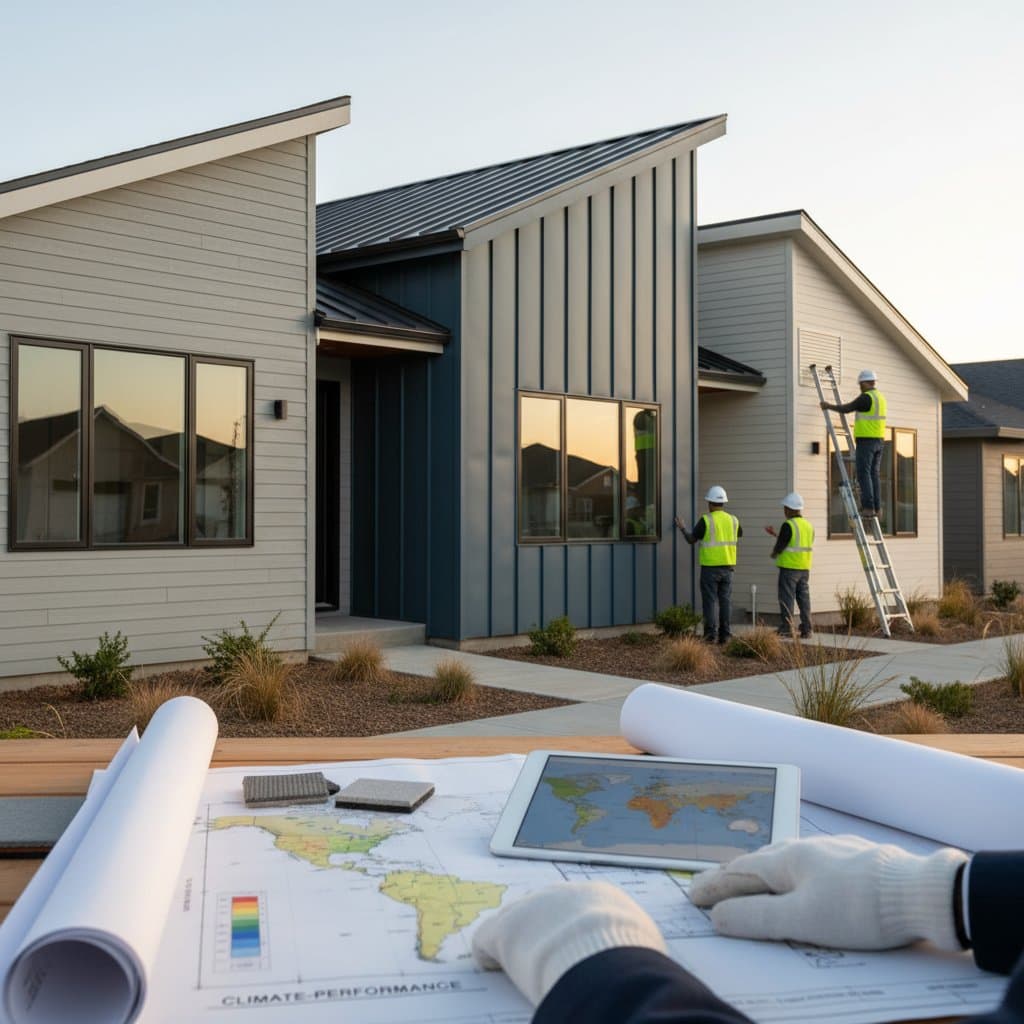
Selecting Optimal Siding for Regional Climates in 2025
Homeowners face a pivotal decision when choosing siding, as this element influences property valuation, thermal performance, and future upkeep expenses. Regional weather patterns, from extreme temperatures to precipitation levels, challenge materials in unique ways. By aligning siding selections with local conditions, individuals secure investments that withstand environmental stresses for generations.
Project Overview at a Glance
- Project Scope: Complete exterior resurfacing or targeted section renewal
- Timeline: Seven to fourteen days for standard single-family residences
- Complexity Level: Moderate to advanced, influenced by site accessibility and ornamental features
- Cost Estimate: Six to sixteen dollars per square foot, including professional installation
Exploring Materials and Design Profiles
A variety of siding materials offer distinct advantages, each suited to specific environmental demands. Profiles, such as horizontal lap or vertical board-and-batten, further customize appearance while affecting performance. Evaluate these options based on durability, installation feasibility, and alignment with architectural style.
Key Siding Materials Compared
| Material | Key Advantages | Potential Drawbacks | Recommended Maintenance |
|---|---|---|---|
| Vinyl | Affordable pricing, effective against moisture, extensive color variety | Susceptible to brittleness in subzero temperatures, prone to deformation in intense heat | Clean annually using mild soap and water |
| Fiber Cement | Resistant to flames, performs steadily in damp conditions, mimics natural wood textures | Substantial weight requires reinforced support, elevated labor expenses | Refresh paint coating every ten to fifteen years |
| Engineered Wood | Authentic grain patterns, reduced mass compared to cement alternatives | Demands meticulous edge sealing, performs poorly in saturated environments | Examine and renew caulking on an annual basis |
| Metal (Steel or Aluminum) | Superior resistance to fire and impacts like hail, long-lasting structural integrity | Vulnerable to dents from severe weather, lacks organic visual warmth | Flush with water biannually to remove residues |
| Stucco or EIFS | Provides robust thermal insulation, delivers smooth, uniform surfaces | Prone to fracturing in areas with repeated freezing and thawing | Address and seal minor fissures without delay |
| Natural Wood | Timeless aesthetic, straightforward local repairs | Demands frequent care, heightened susceptibility to fire | Apply stain or paint renewal every three to five years |
Tailored Recommendations by Climate Zone
In colder climates, where temperatures fluctuate widely, fiber cement or insulated vinyl variants excel by accommodating thermal expansion without compromising integrity. These materials reduce the risk of cracking during winter contractions and summer expansions.
Humid regions benefit from metal or fiber cement selections, which inherently deter fungal growth and material decay. Proper ventilation during installation further safeguards against trapped moisture.
Arid environments favor stucco systems, provided installers apply a comprehensive moisture barrier to prevent subsurface drying cracks. Lightweight profiles minimize heat absorption in sun-exposed areas.
Coastal settings, exposed to saline air and high winds, demand metal sidings or engineered wood with robust edge treatments. These choices resist corrosion and maintain adhesion despite abrasive conditions.
Essential Insight: Align material selection with both thermal variations and humidity levels. A siding effective in continental dryness might degrade rapidly in marine proximity, underscoring the need for localized research.
Ensuring Superior Installation Practices
Premium materials yield suboptimal results without meticulous installation techniques. The exterior assembly requires airtight seals, adequate airflow, and flexibility to endure seasonal shifts. Professional execution transforms siding into a reliable barrier against elemental intrusion.
Vital Installation Components:
- Moisture Barriers: Install unbroken house wrap beneath every panel, ensuring overlaps of at least six inches to direct water outward.
- Flashing Integration: Position metal or pliable flashing to divert runoff from vulnerable areas like window sills and door thresholds.
- Secure Fastening: Employ nails or screws resistant to rust, adhering to manufacturer-specified spacing for optimal hold.
- Thermal Accommodation: Incorporate expansion joints to allow movement, averting warping during temperature extremes.
- Site Management: Contain construction waste, shield nearby vegetation, and communicate timelines to adjacent properties regarding disruptions.
Avoiding Typical Pitfalls:
- Unsealed junctions at edges invite water penetration; apply durable exterior sealant to fortify these areas.
- Inadequate flashing promotes underlying deterioration; conduct thorough checks throughout the process.
- Excessive fastener penetration fractures surfaces; calibrate tools to achieve precise depth.
Core Principle: Adherence to building codes and precision in execution surpasses material quality in preserving long-term performance.
Navigating Contractor Selection and Bids
Skilled labor determines the success of any siding project, as subpar application undermines even the finest products. A structured bidding approach clarifies expectations, controls budgets, and mitigates conflicts.
Comprehensive Project Specifications:
- Specify material composition, profile dimensions, and finish shades.
- Detail demolition and eco-friendly disposal of existing coverings.
- Outline underlayment, flashing, and vapor barrier specifications.
- Include treatments for accents, eaves, and roofline elements.
- Assign duties for regulatory permits and compliance inspections.
Effective Bid Evaluation Process:
- Solicit detailed proposals from a minimum of three qualified firms.
- Verify uniformity in material grades and project boundaries across submissions.
- Inquire about team composition and projected completion phases, beyond mere initiation dates.
- Validate credentials including liability coverage, state certifications, and client testimonials from comparable undertakings.
Structured Payment Terms:
- Limit initial deposit to ten through twenty percent of total.
- Link interim disbursements to verifiable progress markers.
- Withhold final settlement until post-project walkthrough confirms quality and site restoration.
Sustaining Your Siding for Lasting Benefits
Post-installation, siding demands minimal intervention to retain its protective and visual qualities. Maintain organized records encompassing specifications, color formulations, and service histories; these prove invaluable for warranty enforcement and property transfers.
Implement routine upkeep such as gentle pressure washing to eliminate surface accumulations, addressing minor damages swiftly to prevent escalation. Select harmonious color schemes that complement landscaping and architecture, enhancing overall curb presence. Through these practices, homeowners realize sustained energy conservation, elevated market worth, and reduced repair obligations spanning decades.